Beyond the political symbolism of the first woman to head Morocco’s executive, the government’s makeup reveals a major technological choice: the creation of a full-fledged ministry dedicated to Artificial Intelligence, Digital Transformation and Administrative Reform. To lead this strategic portfolio, King Mohammed VI has appointed Ahmed Rahhou, a senior civil servant and respected figure in the business and economic regulation worlds.
Until now, digital affairs fell under a ministry delegate, headed since October 2024 by academic and researcher Amal El Fallah Seghrouchni. Her term laid the theoretical and operational foundations of a national AI policy, notably through the organization of the National AI Conference (Assises nationales de l’IA) in July 2025 and the launch, in January 2026, of the “Morocco AI 2030” roadmap. This plan set out the creation of the Al-Jazari Institutes network for regional training, a joint research laboratory with European champion Mistral AI, as well as ambitious targets: 100 billion dirhams in added value, 50,000 specialized jobs and 200,000 trained talents by the end of the decade. Elevating this theme to a full-fledged ministry now marks the shift from the academic design phase to operational deployment at the scale of the State.
A Political Signal and an Interministerial Conductor Role
Formally including Artificial Intelligence in the name of a ministerial department sends a strong signal to national and international investors, following in the footsteps of pioneering models such as that of the United Arab Emirates. Beyond the symbolism, the added value of this structure lies in its ability to act as a conductor. Until now, technological initiatives often ran up against silo logic between ministerial departments. By overseeing AI, the digital transition and administrative reform all at once, the new department has the levers it needs to unify the State’s digital strategy, whether for modernizing judicial services or digitalizing customs.
Attaching administrative reform to the same portfolio is no coincidence. It places the citizen experience and bureaucratic efficiency at the heart of the roadmap. Tools such as the Idarati AI conversational assistant will serve as a showcase for this modernization, simplifying access to administrative procedures for users while relieving pressure on public services. Digital sovereignty remains the common thread of this architecture, with a stated ambition to develop a national AI marketplace whose infrastructure and data are hosted on Moroccan soil, thereby guaranteeing the country’s strategic autonomy vis-à-vis foreign tech giants.
The New Department’s Immediate Challenges
The tasks ahead of Ahmed Rahhou and his teams are vast and call for swift decisions. First, the government will have to finalize and pass a comprehensive legal framework governing the development and use of AI. This body of regulation must strike a delicate balance between the need to stimulate innovation and the imperative of protecting personal data, safeguarding national security and combating disinformation.
Skills are another major bottleneck. While World Bank projections estimate that more than 45,000 highly specialized profiles will be needed to support Morocco’s digital transition by 2030, the training offer must be scaled up massively without compromising quality. The Al-Jazari Institutes network will need to ramp up quickly to serve every region and avoid a territorial digital divide in which only the coastal metropolises would benefit from the spillover of technological growth. Finally, the credibility of this new ministry will be judged by budget decisions: the review of the 2027 Finance Bill, which begins this weekend, will reveal the true scale of the financial resources allocated to this national ambition.
Profile of an Engineer Turned Regulator
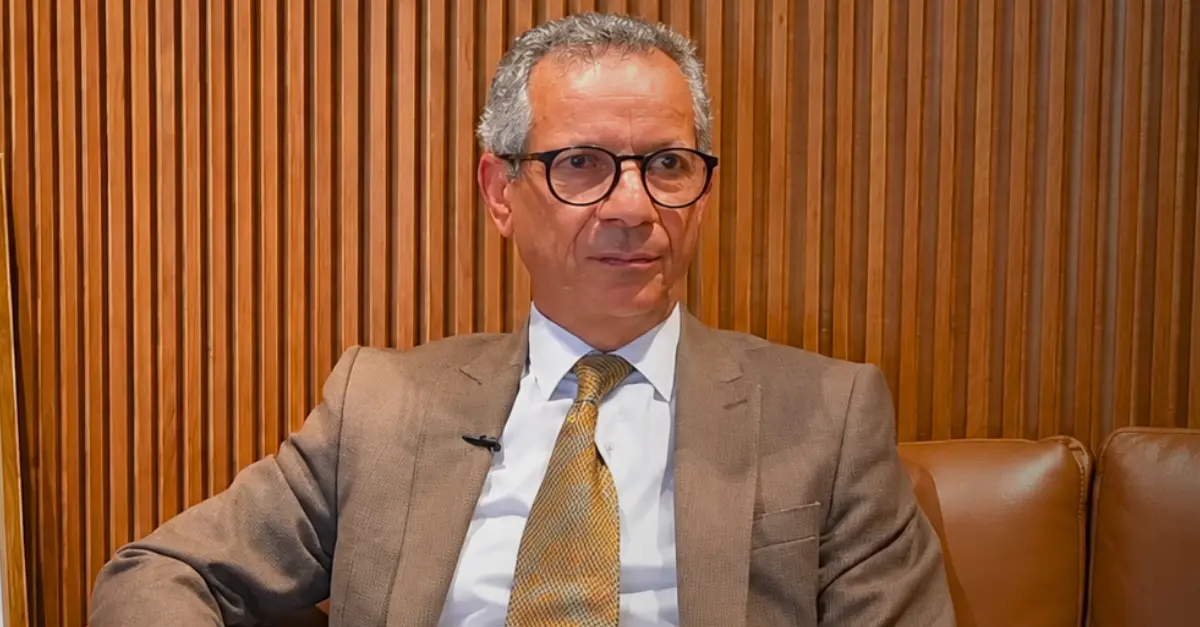
Born in 1958 in Meknes, Ahmed Rahhou brings the profile of a seasoned engineer and manager to the head of this new ministry. A graduate of École Polytechnique and Télécom Paris, he built his career in demanding environments, starting at national airline Royal Air Maroc (RAM) in 1982, before leading major companies such as Lesieur Cristal, then turning around CIH Bank as chairman and CEO.
His international experience as Morocco’s ambassador to the European Union in 2019, combined with his chairmanship of the Competition Council since 2021, gives him a global view of economic and regulatory dynamics. At the Competition Council, he had already stressed the importance of integrating data analysis and AI tools to monitor market transparency. His arrival at the head of the AI ministry marks a clear transition: after the conceptual formulation phase embodied by academics, it is now time for managerial rigor to deliver budgets, laws and tangible services.
FAQ
Why is the creation of this ministry described as a first for Morocco? It is the first time in the country’s institutional history that a full ministerial portfolio explicitly includes Artificial Intelligence in its official name, succeeding a simple oversight by a ministry delegate.
What is the main quantitative goal of the “Morocco AI 2030” roadmap? The plan aims to generate 100 billion dirhams in added value, create 50,000 specialized jobs and train 200,000 talents by 2030.
Who is Ahmed Rahhou? The former chairman of the Competition Council and a graduate of École Polytechnique and Télécom Paris, he is a recognized manager and regulator who now takes the helm of this new strategic ministry.
What are the ministry’s priority projects? Adopting a legal framework for AI, massively scaling up the training of specialized talent to meet market needs, and accelerating the digitalization of administrative services.