
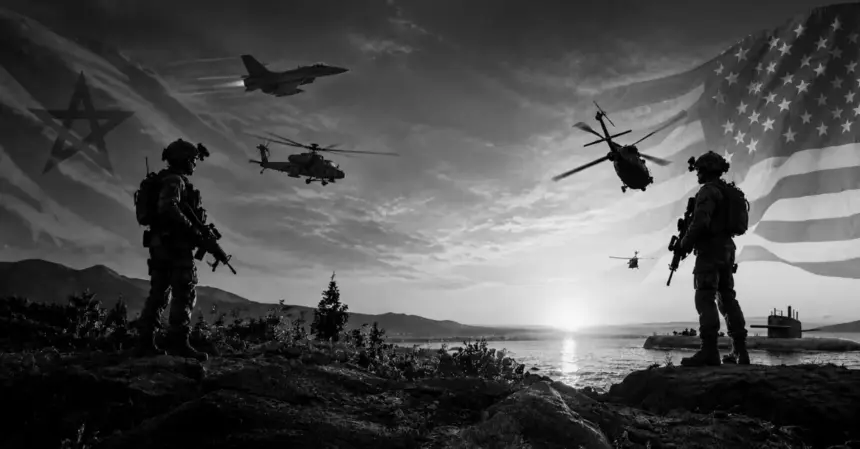
The recent meeting between Abdeltif Loudyi, Minister Delegate in charge of the Administration of National Defense, and a US Congressional delegation led by Mike Rogers, Chairman of the House Armed Services Committee, confirms a clear trajectory: the strengthening of a military partnership that is already a century old, now geared toward the challenges of the 21st century.
Beyond the usual diplomatic language, these talks, held on royal instruction, highlight precise industrial and technological priorities: the defense industry, cybersecurity and the space sector. By unpacking what is at stake, we can see how the relationship between the two nations goes beyond a strictly bilateral framework and sits at the heart of North African and Atlantic stability.
The 2026-2036 Roadmap: The Foundation of a Renewed Alliance
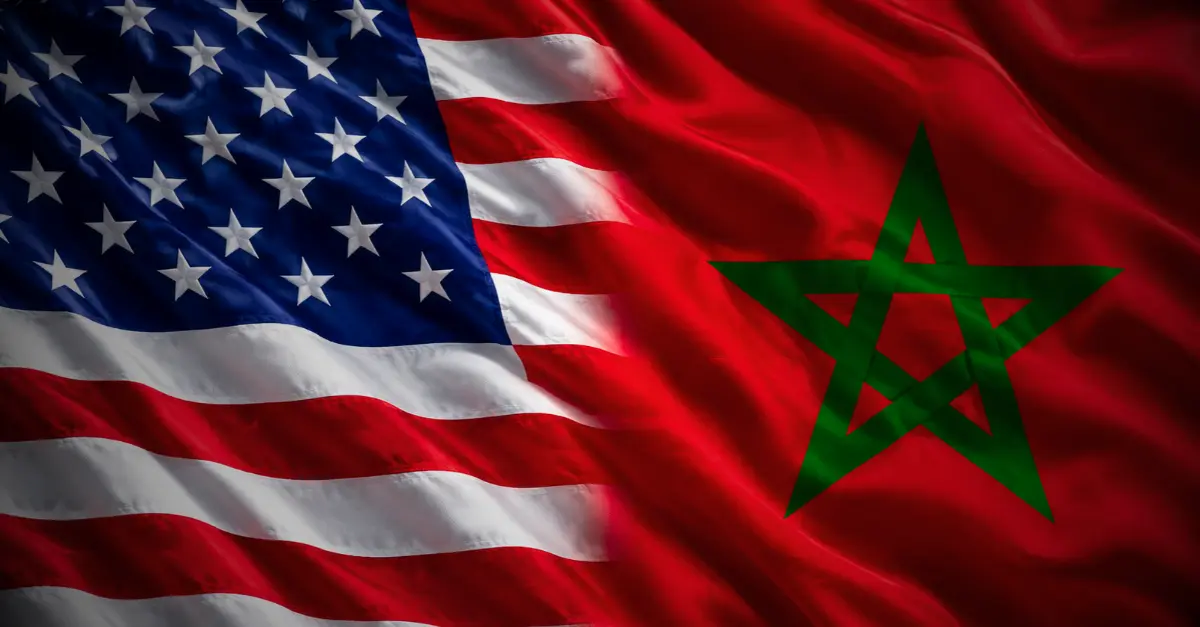
To grasp the significance of the recent talks, the meeting must be placed within the framework set last April by the signing of the military cooperation roadmap for 2026-2036. This strategic document plans, over a decade, the modernization of Moroccan defense capabilities and strengthens strategic coordination between the two armed forces.
Regular exchanges within the Defense Consultative Committee illustrate the continuity of this dialogue. Morocco no longer positions itself merely as a buyer of military equipment, but as a partner keen to develop a genuine local defense industrial and technological base, relying on technology transfer and joint investment.
The annual African Lion exercise remains the most visible symbol of this operational cooperation. The largest military exercise on the African continent, it brings together thousands of American, Moroccan and other partner-nation soldiers every year. African Lion is not only used to test troop interoperability; it is a major tactical platform for managing cross-border crises, fighting non-state armed groups in the Sahel and maintaining maritime security.
🇲🇦✈️ Royal Moroccan Air Force F-16s refueled in flight by a KC-135R of the 121st ARW over Morocco, during the African Lion exercise 🫡 🇲🇦 🇺🇸
#Morocco #F16 #AfricanLion #Maroc #FAR #USA https://t.co/xv45VH4yFw
— Silicon Valley (@SiliconValleyMa) October 16, 2026
Cybersecurity, Defense Industry and Space: The Triad of Modernization
Extending the discussions to cybersecurity and space reflects the changing nature of threats in the Mediterranean basin and in sub-Saharan Africa.
On the industrial front, Morocco has enacted legislative frameworks in recent years aimed at encouraging the emergence of a defense industry on its soil. American support in this sector aims to secure supply chains and modernize the equipment of the Royal Armed Forces.
In cybersecurity, the objective is to increase the resilience of critical infrastructure in the face of a rising number of cyberattacks targeting public institutions and energy networks. Finally, the space sector, increasingly crucial for intelligence, border surveillance and tactical communications, is becoming a natural field for technical collaboration.
Strategic and Geopolitical Stakes for the Mediterranean Basin
The fallout from this strengthened cooperation touches regional security, political balances and economic opportunities alike.
Summary of the Key Stakes of the Strategic Partnership
-
Geopolitical anchoring: Confirmation of explicit US support for Moroccan sovereignty over Western Sahara, providing strong political backing for Rabat’s diplomatic initiatives.
-
Continental integration and security: Leveraging Morocco’s pivotal position to promote South-South initiatives aimed at stabilizing the Sahel and the African Atlantic coast.
-
Technical interoperability: Aligning Moroccan military standards with those of NATO and the US through the African Lion exercise and joint training programs.
-
Technological development: Building skills in managing cyber threats and space surveillance for the benefit of national and regional security.
Diplomatically, Morocco’s reminder of the explicit support granted by Washington for its sovereignty over Western Sahara remains an essential lever. For the United States, Morocco’s stability is a pillar in a region marked by security uncertainty in the Sahel and growing competition among major powers for access to resources and maritime routes in the Atlantic and the Mediterranean.
The vision advanced by Rabat also rests on promoting regional integration and South-South cooperation. By positioning itself as a security and economic hub between Europe, the Americas and sub-Saharan Africa, Morocco intends to turn these military partnerships into engines of global stability and shared prosperity.
FAQ
What is the main objective of the 2026-2036 roadmap?
It aims to frame, over ten years, military cooperation, technology transfer, defense modernization and force interoperability between Morocco and the United States.
Why is the African Lion exercise so central?
African Lion is the main joint military exercise in Africa, training thousands of soldiers in crisis management, tactical capacity building and joint-force interoperability.
What new priority areas were identified during the meeting?
Beyond traditional military cooperation, the two sides identified the defense industry, cybersecurity and the space sector as priorities for the future.