


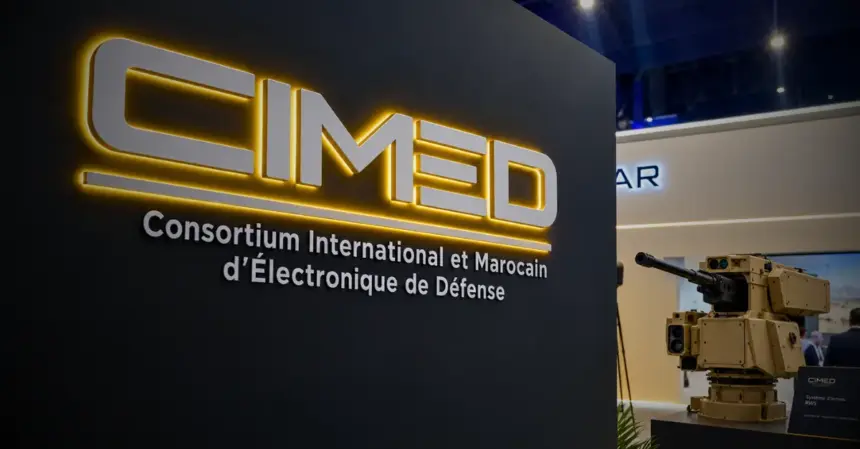
It brings together a Moroccan integrator, Melint, and two foreign specialists in optical and thermal sensors, India’s Tonbo Imaging and Slovenia’s DAT-CON.
At this stage, these are commitments in principle, not a factory that has opened its doors. Yet the structure of the deal says something about how the Kingdom is trying to organize its defense industry.
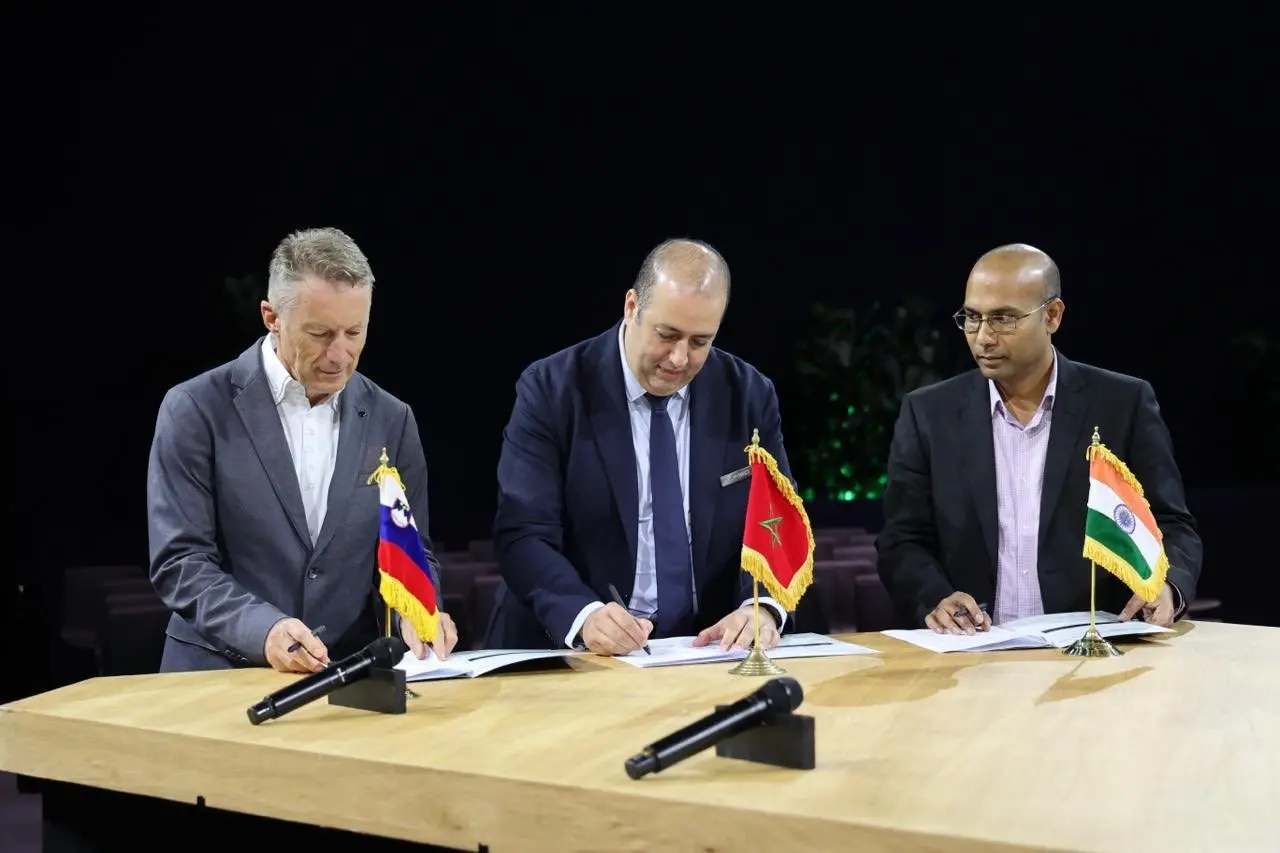
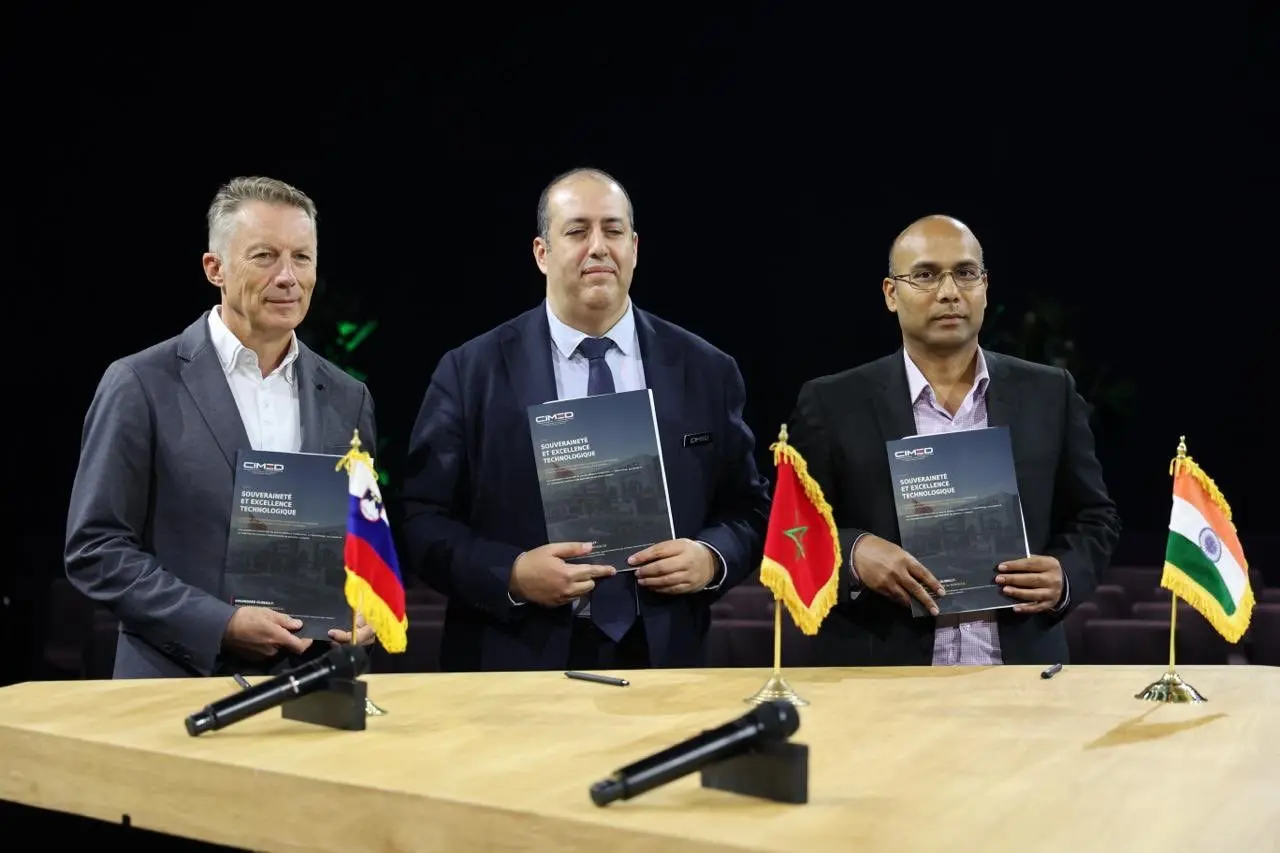
- Three memorandums of understanding were signed at Marrakech Airshow 2026.
- They create CIMED, a defense electronics consortium in Morocco.
- It brings together Melint (Morocco), Tonbo Imaging (India) and DAT-CON (Slovenia).
- At the outset: maintenance, assembly, integration, testing and upgrades.
- Local manufacturing remains a longer-term goal.
A consortium born from international cooperation
A memorandum of understanding is a statement of intent. It sets out a working framework and shared objectives, but does not, in itself, commit the parties to specific investments or a binding timetable. I stress this because announcements made on the sidelines of defense shows are often presented as achievements when they actually mark the beginning of a process.
CIMED is meant to be a shared industrial platform dedicated to defense electronics. In my view, this idea of a shared platform is the most structuring element of the announcement. Rather than multiplying isolated facilities, the three players propose to pool maintenance, assembly and testing capabilities around a common base.
Three partners with complementary profiles
Melint, the Moroccan anchor
Melint is described as a Moroccan defense electronics integrator. Its role is essential: it gives the project its local footing and its legitimacy with national contracting authorities. Public information on its size, revenue or track record remains to be completed, and I will not venture any figures here.
Tonbo Imaging, night vision and electro-optics
The Indian company Tonbo Imaging specializes in night vision and in electro-optical and infrared technologies. This equipment makes it possible to observe, detect and identify targets at night or in poor visibility. It is fitted to vehicles, aircraft, observation posts and individual or crew-served weapons.
DAT-CON, thermal imaging and long-range surveillance
The Slovenian company DAT-CON manufactures thermal imaging and long-range surveillance systems. Such systems are typically used to protect sensitive sites and to monitor borders or coastal areas. The two foreign partners thus cover neighboring but distinct segments of the same family of technologies.
A step-by-step ramp-up
The consortium does not promise to produce complete systems in Morocco right away. Its roadmap, as presented, follows a classic progression for this type of industrial transfer.
- First, maintenance, assembly, systems integration, testing and upgrades.
- In the longer term, local manufacturing, presented as a goal rather than a given.
- Throughout the process, the training of qualified Moroccan personnel.
This sequence is logical. Maintaining and integrating equipment makes it possible to build skills, assemble teams and pass qualification stages before considering the manufacture of components. It is also the least risky path financially.
Why this project matters for Morocco
To grasp the significance of CIMED, it must be placed in a broader dynamic. In recent years, the Kingdom has signaled its intention to develop a defense industrial base by attracting foreign players for local operations. The 2025 inauguration in Berrechid of a facility linked to India’s Tata Advanced Systems group is one frequently cited example, and I invite you to verify the details of that file before publication.
Three issues stand out.
An economic issue. Defense electronics is a high-value-added industry that mobilizes engineers, technicians and demanding test chains. For a country, hosting part of the value chain is more profitable than importing finished equipment.
A sovereignty issue. Having maintenance and upgrade capabilities on site reduces dependence on foreign suppliers for equipment servicing. In the event of supply tensions, this operational autonomy has real strategic value.
A diversification issue. The arrangement associates a partner from South Asia with a partner from Central Europe. It is part of a logic of diversifying sources of cooperation, which can be observed in several countries that are modernizing their forces while developing their industrial fabric.
Caveats to keep in mind
It would be unwise to present CIMED as an established success. Several questions deserve to be raised, and most observers of this type of project share them.
First, the amounts invested, the precise timetable and the distribution of capital have not, to my knowledge, been publicly detailed. Without these elements, it is difficult to assess the industrial credibility of the project.
Second, the shift from assembly to local manufacturing is the most delicate step. It requires a sufficient volume of orders, reliable supply chains and, often, technology transfers that the holders of the know-how grant with caution. Supporters of the project will see an opportunity to move up the value chain. The more skeptical will point out that many announcements of this kind remain confined to maintenance activities for a long time.
Finally, there is the question of demand. The domestic market can absorb part of the output, but the viability of an industrial platform often depends on its ability to export, which requires certifications and a commercial positioning that cannot be improvised.
What the future holds for CIMED
In the coming months, the most useful thing will be to track three indicators: the signing of definitive agreements following the memorandums, the identification of a site and a timetable, and the announcement of the first maintenance or integration contracts. These signals will show whether the consortium moves from intention to industrial reality.
Whatever happens, the creation of CIMED illustrates a notable shift. Morocco is no longer content to buy defense equipment: it is seeking to master part of its life cycle. What remains to be seen is how quickly, and how deeply, this ambition will translate into workshops. I will return to the subject as soon as further official information becomes available.
FAQ
What is CIMED?
The International and Moroccan Defense Electronics Consortium is an initiative bringing together Melint (Morocco), Tonbo Imaging (India) and DAT-CON (Slovenia) to create a shared defense electronics industrial platform in Morocco.
When was CIMED created?
Three memorandums of understanding were signed on the third day of Marrakech Airshow 2026. These are commitments in principle, not an entry into service.
What will the consortium do in practice?
It will first focus on maintenance, assembly, systems integration, testing and upgrades. Local manufacturing is planned as a longer-term goal.
What benefits can Morocco expect?
The partners are aiming for greater national industrial participation, the training of qualified personnel and a stronger defense-industrial ecosystem for the Kingdom.