
A contract worth tens of millions of euros
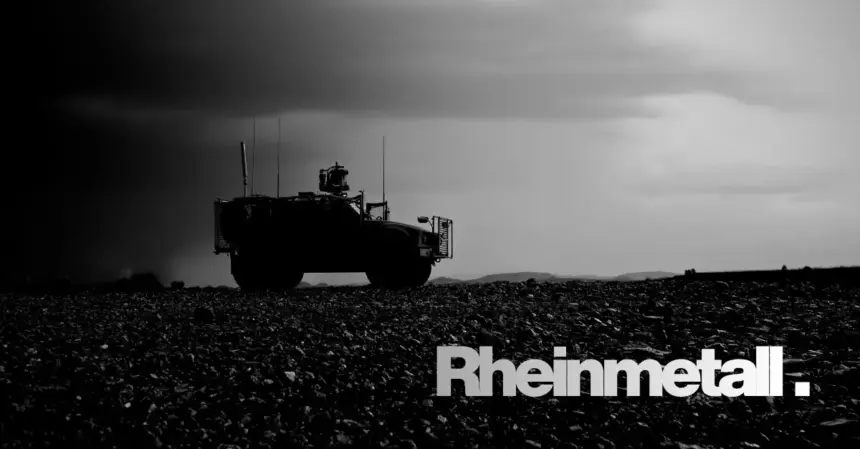
Rheinmetall Mobile Systeme GmbH, a subsidiary of the German defense group Rheinmetall, announced the signing of a contract for the delivery of seven mobile field hospitals to Morocco. The agreement, valued in the tens of millions of euros, provides for staggered deliveries between 2027 and 2028. A local medical equipment distributor will handle logistics and distribution within Morocco.
The allocation of the seven units reflects a logic of shared use between internal security and national defense: one unit will go to the Ministry of National Defense, while the remaining six will be assigned to the Ministry of the Interior. This choice is not incidental. It signals that most of this mobile medical fleet is conceived primarily as a tool for civil crisis management — natural disasters, localized breakdowns in the regional hospital network — before being a strictly military asset.
Armin Krenn, managing director of Rheinmetall Mobile Systeme GmbH, described the order as a continuation of cooperation already underway in North Africa, citing collaboration with the Moroccan client to deliver a solution “tailored to the operational needs of the Royal Health Service.”
An architecture built for autonomy and rapid deployment
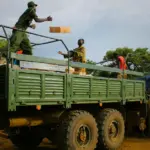
Technically, each field hospital is delivered fully mounted on a truck and can be deployed under military tents once on site. This design allows treatment capacity to be scaled up without requiring additional transport — a decisive logistical advantage in contexts where moving heavy equipment is itself an operational constraint.
At the core of the system is an operating block made up of three interconnected functional units: an operating room, an intensive care unit, and a sterilization module. These are housed in expandable shelters — containers whose removable sections unfold into a fully operational treatment center once positioned — designed to withstand difficult transport conditions and extreme operating environments, with assembly and disassembly times far shorter than those of fixed installations.
Surrounding this central core are patient wards, a radiology department, a pharmacy, a laboratory, and smaller specialized services covering ophthalmology, dentistry and ENT, along with a scanner. Each hospital also carries its own reserves of electricity, water and oxygen, as well as sanitary facilities and accommodation for medical staff, giving it the ability to operate autonomously for a set period, whether deployed in open terrain or an urban environment.
Rheinmetall, an established player in this segment in Europe and beyond
This Moroccan order follows a series of recent contracts for Rheinmetall Mobile Systeme. In late 2025, the company signed a contract with the Danish procurement authority for five Role 2 field hospitals, also valued in the tens of millions of euros and due for delivery within two years. In September 2025, the German armed forces likewise ordered mobile medical units from the same subsidiary.
The group’s involvement in this field goes back further. In 2023, Rheinmetall delivered a mobile field hospital to Ukraine under a €9 million contract awarded by the German Ministry of Defense, later adding a fourth mobile aid station in 2025. On the African continent, the Bundeswehr had already called on the company in 2022 to supply and integrate medical equipment for a German field hospital at Camp Castor, the German logistics base in Gao, Mali, supporting the United Nations peacekeeping mission there.
Rheinmetall positions itself as the world leader in turnkey field hospital systems, with deliveries across most continents over the past twenty years. Beyond the truck-mounted field hospitals sold to Morocco, its medical product range includes mobile clinics, quarantine and epidemic hospitals, mobile aid systems, and trailer- or tent-based hospitals.
Key figures on the contract
- Signatories: Rheinmetall Mobile Systeme GmbH and the Kingdom of Morocco
- Volume: seven mobile field hospitals
- Allocation: one unit for the Ministry of National Defense, six for the Ministry of the Interior
- Timeline: deliveries between 2027 and 2028
- Value: tens of millions of euros
Medical logistics integrated into military modernization
This contract fits into a broader context of Moroccan capability reinforcement. The Kingdom’s helicopter fleet has expanded in parallel this year, with new deliveries of attack helicopters, as part of a modernization program spanning several branches of the armed forces rather than a standalone initiative.
The connection between these combat equipment acquisitions and the strengthening of medical logistics is worth noting. It reflects an approach in which casualty care and evacuation capacity are treated as constitutive elements of operational planning, rather than an afterthought added once combat systems arrive. This is also the reading suggested by Armin Krenn’s own framing, in which these systems help “maintain acute care when local and fixed hospitals are inoperative” — a description that applies as much to a natural disaster scenario as to a conflict setting.
For Morocco, the stakes therefore extend beyond the strictly military sphere. The Royal Health Service and the Ministry of the Interior will be able to mobilize these mobile hospitals in the event of national emergencies or localized failures in the regional hospital network, making the system a dual-purpose asset, both civilian and military. What remains to be seen is how this capability will be concretely integrated, starting in 2027, with existing hospital infrastructure and the other components of Morocco’s broader military modernization plan.
FAQ
How many field hospitals has Morocco ordered from Rheinmetall?
Seven units, one for the Ministry of National Defense and six for the Ministry of the Interior.
When will these hospitals be delivered?
Deliveries are scheduled between 2027 and 2028.
Are these hospitals for military use only?
No. Beyond military deployments, they can be mobilized by the Royal Health Service and the Ministry of the Interior in the event of a natural disaster or a breakdown in the regional hospital network.
Has Rheinmetall supplied this type of equipment in Africa before?
Yes, notably in 2022 for a German field hospital set up at Camp Castor in Gao, Mali, as part of the United Nations peacekeeping mission.