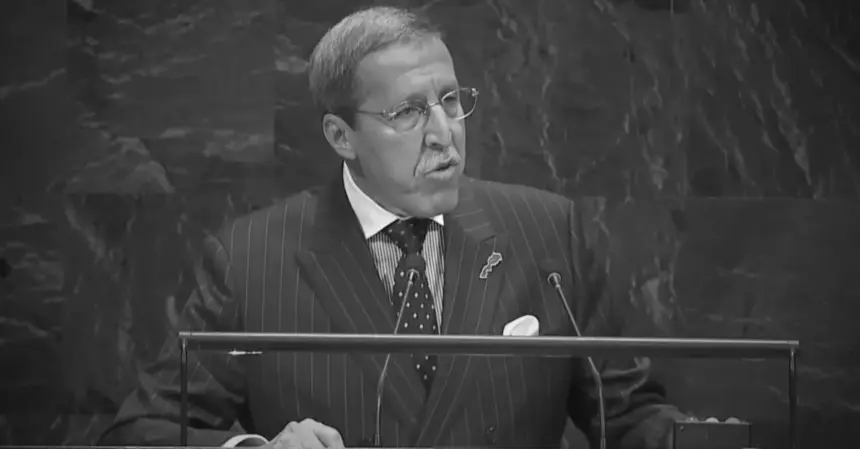
Watching the proceedings of the United Nations General Assembly on November 10, 2026, what stands out most is the way Morocco’s Permanent Representative, Omar Hilale, chose to refocus the debate. After the Russian veto of October 30 against a US draft resolution on the MINURSO mandate, the plenary session did not serve only to comment on the failure of the text. It allowed the Moroccan diplomat to put forward six questions meant, in his words, to shed light on the causes of a deadlock that has lasted half a century.
The immediate context is clear. The American draft, backed by eleven members of the Security Council, was presented by Rabat as opening a path toward a final settlement based on the autonomy initiative under Moroccan sovereignty. The veto prevented its adoption and led to the end of MINURSO operations, a mission created in 1991. Hilale made a point of clarifying from the outset that, in his view, the veto is not the cause of the deadlock but its consequence. He repeated a line he has already used: “The Sahara was Moroccan before October 30, it is Moroccan after October 30, and it will remain so forever.”
Why these questions and why now
The Moroccan Sahara has pitted, since 1975, the sovereignty claims of Morocco, which controls most of the territory and has made major investments there, against those of the Polisario Front, backed by Algeria, which calls for a self-determination referendum. Morocco’s autonomy initiative, submitted in 2007, has been described by the Security Council as serious and credible for several years and has won the support of a growing number of states, including the United States, France and Spain. Algeria, for its part, maintains that it is not a party to the dispute and that it merely observes, while hosting the Tindouf camps and providing political and logistical support to the Polisario.
It is precisely this distinction that Hilale wanted to challenge. The six questions he raised are not a surprise to observers of the file, but presenting them together before the General Assembly, in the immediate wake of a veto, gives them particular diplomatic weight.
The six questions and what they imply
Hilale built his speech around six points, each aimed at highlighting what he presents as Algerian contradictions.
- On autonomy: why would Algeria fear an autonomy solution under Moroccan sovereignty when the plan was discussed at meetings in Washington and Madrid in which it took part alongside the Polisario? According to the Moroccan diplomat, these meetings made it possible to examine concrete elements and prepare working documents. Autonomy, he reminded the Assembly, means for the populations concerned the ability to manage their local affairs, which he presents as a form of self-determination in action.
- On party status: how can a state that declares itself an observer propose partitioning the territory, attend Security Council sessions, lobby its members and threaten to withdraw from the political process? Hilale summed up his position in blunt terms: Algeria does not observe the dispute, it manages it and pulls the strings. The ties with the Polisario and the location of the camps on Algerian soil are, for him, elements that make it impossible to reduce Algiers’ role to that of a mere host.
- On the “R” in MINURSO: why keep clinging to the reference to a referendum when Kofi Annan had already noted in 2000 that the settlement plan had reached an impasse and when Security Council resolutions have not treated it as an operational prospect for years? For Hilale, this “R” has become the last alibi for the status quo.
- On the census: why has Algeria refused for decades to let UNHCR register the populations of the Tindouf camps? Hilale cited a figure of about 30,000 people and recalled that UN and European reports have already pointed to problems in aid management and respect for rights. The absence of precise data, he argued, deprives the international community of reliable information.
- On durable solutions: why maintain refugee status generation after generation rather than allow a free choice between returning to Morocco, under international guarantees, and settling in a third country? The diplomat described the situation as a humanitarian hostage-taking serving diplomatic maneuvering, a wording that remains a Moroccan assessment and not a finding established by an independent body.
- On consultations: why limit political representation to the Polisario and oppose the Secretary-General’s Personal Envoy broadening his discussions to include the inhabitants of the Southern Provinces, the diaspora and the residents of the camps? Hilale contrasted the participation of the populations of the Southern Provinces in Moroccan elections with the situation he describes in the camps.
What these questions reveal and what they leave unanswered
From the Moroccan point of view, these questions aim to establish that the key to a settlement lies in Algiers and not in New York or Rabat. They are part of a long-term strategy of having Algeria recognized as a stakeholder, something Security Council resolutions have already begun to formalize by listing Morocco, Algeria, Mauritania and the Polisario among the actors concerned.
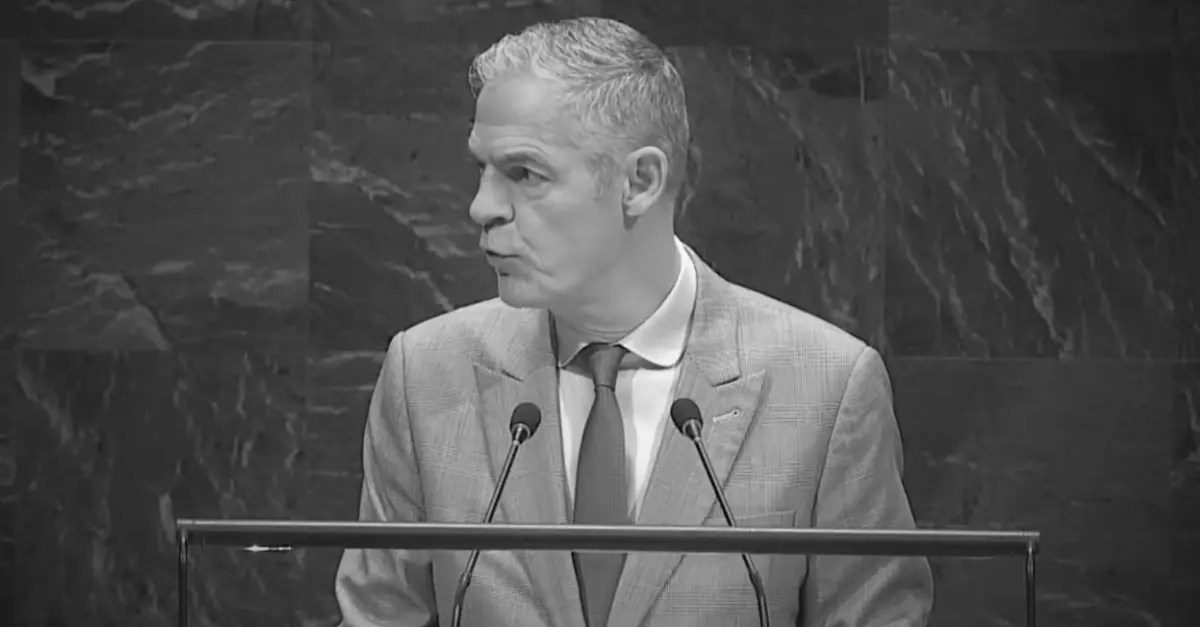
Algeria, for its part, continues to reject this characterization. It regards the file as an unfinished decolonization issue and defends the principle of a self-determination referendum. It presents the Tindouf camps as an act of hospitality toward refugees and asserts that any lasting solution must respect the right of peoples to self-determination. These positions were not restated in detail during the November 10 session, but they remain Algiers’ official framework for decades.
The stakes go beyond the strictly diplomatic sphere. The territory in question holds significant phosphate resources, fishing grounds and energy potential. The Moroccan-Algerian rivalry shapes a large part of relations in the Maghreb and weighs on regional cooperation, with the borders closed since 1994. At the international level, the file influences relations with the European Union, the United States and the African Union. The end of MINURSO operations opens a period of uncertainty over UN monitoring, even though the political process, formally separate, is not automatically interrupted.
Conclusion
Nothing indicates, at this stage, that Omar Hilale’s six questions will quickly change the positions of the various sides. They do, however, have the merit of making visible, before the General Assembly, the friction points that the technical negotiations in Washington and Madrid have not yet resolved. The Secretary-General’s Personal Envoy still holds a mandate to foster a mutually acceptable political solution. The parties’ ability to accept a transparent census, broader consultations and durable solutions for the camp populations will remain a concrete test of their willingness to break out of the status quo.
The October 30 veto closed a sequence. It did not close the dispute. The coming weeks will show whether the questions raised in New York find an echo in the negotiation channels or remain an exercise in public clarification.
FAQ
What is MINURSO and why was its mandate not renewed?
MINURSO is the United Nations Mission for the Referendum in Western Sahara, created in 1991. Its mandate was not renewed after the Russian veto of October 30, 2026 against the US draft resolution.
Is Algeria officially recognized by the UN as a party to the dispute?
Recent Security Council resolutions list Morocco, Algeria, Mauritania and the Polisario among the parties concerned by the political process, without Algeria accepting the label of party to the dispute.
What is the status of Morocco’s autonomy initiative?
Presented in 2007, it has been described by the Security Council as serious and credible and, according to many states, forms the basis of the ongoing discussions. Algeria and the Polisario do not see it as an acceptable final solution as it stands.
Why is the census of the Tindouf camps a sensitive issue?
UNHCR has been calling for accurate registration for years. Algeria opposes it. Morocco argues that the lack of reliable figures prevents transparent management of aid and the handling of durable solutions.