Morocco’s Defense Industrial Zones Management Company has announced around ten memoranda of understanding with Moroccan and foreign industrial players, as part of the Marrakech Air Show 2026. The announcement marks a step in the Kingdom’s effort to build a national defense industry. It also raises a broader question: can Morocco move from being a buyer of equipment to being a producer? We set out to understand what is at stake.
What the statement says
According to a statement from the General Staff of the Royal Armed Forces, the agreements cover several segments of the defense industry:
- munitions and weapons systems
- drones and autonomous systems
- aerospace manufacturing
- maintenance and repair
- defense electronics, communications and embedded systems
The agreements bring together Moroccan companies and international industrial groups. The statement specifies that the projects are at different stages of development and remain subject to the applicable procedures, licensing requirements and approval processes.
That caveat matters. A memorandum of understanding is not a binding investment contract: it is a statement of intent, which may or may not lead to a factory, jobs and deliveries. At this stage, the identity of the companies and the content of each agreement have not been made public. We therefore refrain from attributing to them any features that the authorities have not disclosed.
An air show turned industrial showcase
The eighth edition of the Marrakech Air Show was held from 7 to 10 October 2026 at the Royal Armed Forces air base, under the high patronage of King Mohammed VI. The Moroccan press reports nearly 200 exhibitors from 27 countries across aeronautics, defense and space. At the close, the organizer highlighted “concrete” industrial and technological progress, without detailing it.
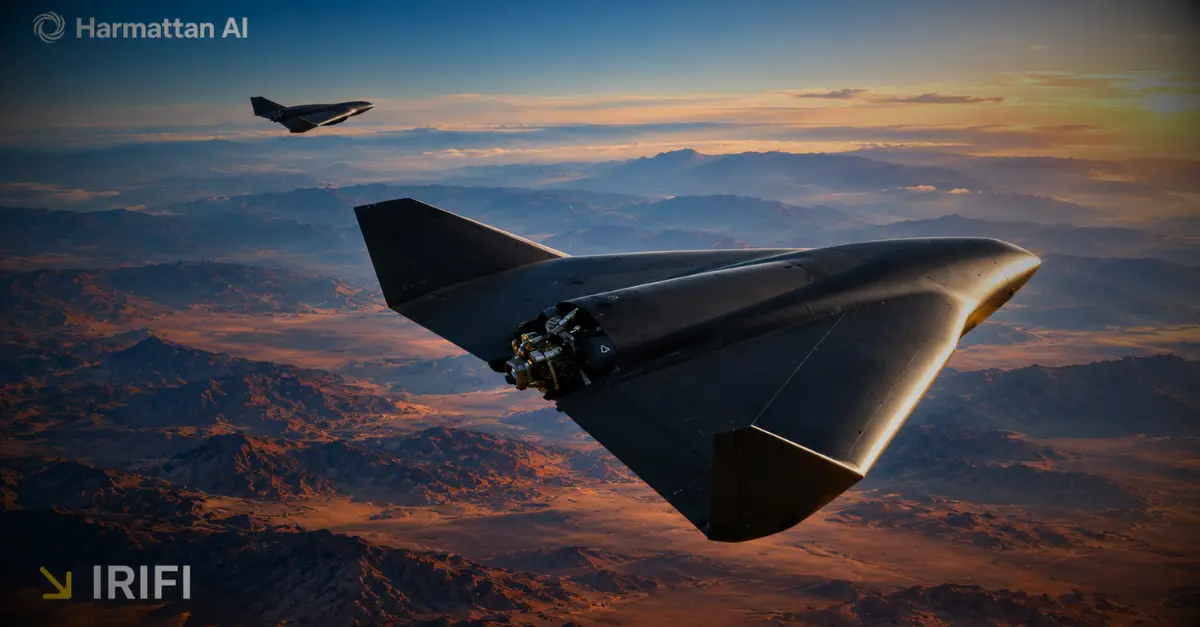
The show was also the setting for other defense-related announcements. A specialized outlet reports that, on 7 October, the National Defense Administration signed a letter of intent with the French company Harmattan AI, covering the acquisition, development and production in Morocco of long-range strike systems. This too is an intention rather than a contract, but it illustrates the shift toward drones and autonomous technologies.
A company created just over a year ago
The Defense Industrial Zones Management Company was created in July 2025. Its mission is to develop, build out, market and manage industrial acceleration zones dedicated to defense activities. It is the product of a partnership between the Housing and Military Equipment Agency and MEDZ, a subsidiary of the Caisse de Dépôt et de Gestion (CDG).
This setup combines two types of expertise: that of the armed forces, which understand operational needs and security constraints, and that of a public developer used to equipping industrial zones, notably for aeronautics. The zones are designed to host the manufacturing of equipment and components, support supply chains and provide infrastructure suited to the security and operational requirements of the sector.
For a foreign manufacturer, the appeal is concrete. Serviced land designed for a sensitive environment reduces the delays and uncertainties of setting up operations. The air show is the company’s first major institutional public appearance, as the activation of these zones enters, according to the statement, its operational phase.
The legal framework, a prerequisite
No arms industry can be built without clear rules. Moroccan Law No. 10.20, on defense and security equipment, weapons and ammunition, established a legal framework allowing domestic and foreign investment in the sector. At the opening of the show, the Minister Delegate in charge of the National Defense Administration, Abdeltif Loudiyi, described this legal arsenal as the foundation that allowed Morocco to invest in the field, up to the creation of dedicated industrial zones.
The references to licenses and approvals in the statement are a reminder that the sector remains under close State control, for production as well as for exports and technology transfers.
Why this announcement matters
Three lines of reasoning overlap.
The first is strategic autonomy. The war in Ukraine and tensions in global supply chains have highlighted the vulnerability of states that depend on outside suppliers for their munitions or spare parts. Producing locally can reduce that dependence, at least for part of their needs.
The second is industrialization. Over two decades, Morocco has built recognized automotive and aeronautics sectors. Defense is a possible extension of them, as it draws on similar skills: precision machining, composite materials, electronics, maintenance. The company says it wants to increase local industrial value through technology transfer, workforce training and the integration of Moroccan suppliers, including small and medium-sized enterprises.
The third is regional positioning. The Kingdom is seeking to establish itself as a production and maintenance platform, which requires convincing foreign manufacturers to settle there for the long term. According to the authorities, the strategy also aims to make defense a source of skilled jobs, industrial growth and exports.
What the chief executive says
Faisal Bennouna, the company’s chief executive, said the initiative aims to create industrial zones ready to host arms manufacturers, within a framework that meets the specific requirements of the sector. He described each agreement signed as one more step toward building a sovereign national defense industry, while remaining open to trusted industrial partnerships.
These two notions, sovereignty and openness, do not sit together easily. A sovereign industry requires mastery of technologies and production chains. Yet in the early years, it is generally foreign partners who bring most of the know-how. Technology transfer, which the company places at the heart of its approach, will therefore be the real test. It is measured over time, far more than at a signing ceremony.
What to watch next
The phase now opening will be quieter than that of the announcements. We will be watching several things: the publication of the list of signatories and the nature of each project, the first firm contracts, the sites selected within the zones, and how the needs of the Royal Armed Forces will be balanced with export prospects. The authorities will also need to spell out how the approval procedures they emphasize will work.
In any case, the announcement confirms a fundamental direction: Morocco wants to make defense an industrial sector in its own right. It remains to be seen whether the pace of memoranda will translate into production, and on what scale.
FAQ
What is the Defense Industrial Zones Management Company of Morocco?
It is a company created in July 2025 by the Housing and Military Equipment Agency and MEDZ, a subsidiary of CDG. It develops and manages industrial zones dedicated to defense.
Which sectors do the agreements cover?
Munitions, weapons systems, drones, autonomous systems, aerospace, maintenance and repair, defense electronics, communications and embedded systems.
Does a memorandum of understanding firmly commit the companies?
No, it expresses an intention to cooperate. According to the statement, the projects remain subject to the applicable licenses and approvals.
What is the legal framework for foreign investment in defense?
Law No. 10.20 on defense and security equipment, weapons and ammunition allows domestic and foreign investment, under State control.