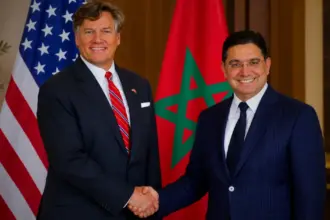

On paper, it was simply another bilateral cooperation commission tasked with reviewing progress and setting a calendar. In practice, it fits into a broader pattern: Morocco is multiplying and deepening its military partnerships at precisely the moment when parts of Europe, Belgium included, are rethinking their own defense efforts.
According to a statement published by the Royal Armed Forces (FAR), the two delegations first reviewed activities carried out in 2026 before turning to next year’s program. Three priorities were set for 2027: military training, the exchange of expertise, and joint exercises. No details on the number, location, or precise timing of the planned exercises have emerged so far — these will need to be worked out at future meetings between the two general staffs.
A partnership with deep roots
The defense relationship between Rabat and Brussels was not built overnight. It rests on an old legal foundation: a military technical cooperation agreement signed in 1992, concluded for an unlimited duration, supplemented in 1998 by a technical arrangement that spells out its terms. This framework covers several areas — training, the exchange of experience and expertise, joint exercises, as well as military heritage and history.
In practice, this cooperation runs through a joint military commission that meets every year, alternating between Rabat and Brussels, to assess the year’s activities and set the following year’s program. September’s meeting in Rabat is therefore part of a well-established mechanism that has already produced tangible results: between October 19 and November 8, 2025, a specialized training session on battlefield medical care was held at the Lalla Meryem royal school for paramedical personnel, led by a detachment of Belgian instructors and bringing together more than twenty participants from various FAR units.
This kind of exchange illustrates fairly well the nature of the relationship: less spectacular than some of Morocco’s more recent strategic partnerships, but still regular and structured, with institutionalized checkpoints that allow progress in the collaboration to be measured year after year.
Three priorities for 2027
The program set for next year is built around three components, which broadly mirror the usual categories of bilateral military cooperation:
- Military training — specialized sessions, technical know-how exchanges, instructor deployments
- Experience-sharing — operational feedback, doctrine, working methods
- Joint exercises — new combined maneuvers, whose format has yet to be specified
This structure is nothing new in itself — it simply reprises the three classic pillars of this type of agreement — but the stated ambition to “go further,” to borrow the FAR’s own wording, suggests an intensification rather than a mere renewal. Still, without a set calendar or locations, it remains difficult to gauge the real scale of this stepped-up cooperation. Upcoming meetings between the two armies should bring more clarity.
Morocco, an increasingly sought-after hub
What makes this development interesting, to my mind, is less its substance — still vague — than its timing. Morocco is becoming a convergence point for several Western military partners, and the relationship with Belgium fits into that wider trend.
On the American side, the draft National Defense Authorization Act (NDAA) for fiscal year 2027, adopted by the US Senate Armed Services Committee, devotes a dedicated provision to the Kingdom for the first time, requiring the Pentagon to present Congress, within 180 days, with a detailed plan to strengthen military cooperation with Rabat. This initiative comes a few weeks after the signing, in April 2026, of a new bilateral roadmap covering the 2026-2036 period. While the content of that agreement remains confidential, the US bill reveals several of its priorities, ranging from military capability development to new defense technologies, with an unprecedented focus on drones, artificial intelligence, cybersecurity, and military infrastructure.
At the same time, Morocco continues to host the multinational African Lion exercise, whose 2027 edition is already in preparation: it is scheduled to run from April 25 to May 7, 2027, at several sites across the Kingdom, including Agadir, Tan-Tan, Guelmim, Benguerir, Kénitra and Dakhla, aimed at strengthening the interoperability and operational readiness of participating forces. NATO, for its part, is also counting on the Kingdom to train African military personnel under the DEEP program, a session of which is expected to be organized before the end of 2026 or in early 2027.
Against this backdrop, cooperation with Belgium appears more modest in its stated ambitions — no ten-year roadmap, no dedicated legislative provision — but it reflects the same underlying phenomenon: a Morocco leveraging its geographic position and reputation as a stable partner to build a diversified network of military relationships, without over-relying on any single partner.
Brussels, between rearmament and strategic refocusing
On the Belgian side, this cooperation unfolds against a domestic backdrop marked by a renewed push on defense spending. Like other NATO members, Belgium has committed to the so-called “Hague 5%” target, and the government underscored at the Alliance summit in Ankara in the summer of 2026 its intention to preserve the Alliance’s unity and demonstrate commitment to the Hague 5% target, while accelerating the build-up of a national defense industry. Defense Minister Theo Francken has also highlighted the already largely European share of Belgian military procurement, while advocating a firmer posture in the face of new threats — drone incursions, Russian naval activity in the North Sea, hybrid warfare.
This rearmament drive does not necessarily translate into disengagement from partnerships beyond Europe. On the contrary, Belgium’s defense establishment has cooperation experience with Africa that extends well beyond the Moroccan file alone — it has in the past built training partnerships with several West and Central African countries as part of a regional stabilization approach. The relationship with Rabat, older and more institutionalized, fits into that continuity rather than marking a sudden shift. It gives Belgium a stable partner in the Maghreb, in a region where security dynamics — the Sahel, the western Mediterranean, the Atlantic seaboard — weigh increasingly on European agendas.
What this announcement leaves unsaid
That may be the main limitation of this statement: it signals an intention — to “go further” — without spelling out what that actually means. How many exercises are envisaged? On which theaters? With what resources? These questions will remain unanswered until the two general staffs finalize the details at upcoming meetings. We will likely have to wait for further announcements throughout 2027 to gauge whether this stated ambition translates into a genuine intensification of the partnership, or simply a more assertive tone applied to activities largely similar to those of recent years.
What does seem clear, however, is that Morocco continues to position itself as a partner of choice for several Western militaries simultaneously — American, French, Belgian, within the NATO framework — without these relationships necessarily competing with one another. For Rabat, it is a way of diversifying its strategic footholds. For its European partners, it is an opportunity to consolidate a presence in the Maghreb at a time when the region is regaining clear geopolitical weight.
FAQ
Since when have Morocco and Belgium cooperated militarily?
Their defense relationship rests on an agreement signed in 1992, supplemented by a technical arrangement in 1998, covering training, expertise exchanges, and joint exercises.
What priorities have been set for 2027?
Three priorities were established: military training, experience-sharing, and the organization of new joint exercises, with details still to be finalized.
Is the Belgium partnership linked to Morocco’s other military ties?
No, it remains distinct from the agreements with the United States or NATO, but it fits into the same broader trend of diversification in Morocco’s defense partnerships.
Where and when will the 2027 exercises take place?
The FAR has not yet disclosed this information; it will be determined at upcoming meetings between the two armies.