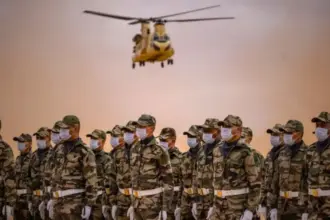
Following the discussions at the round table organized on Thursday, November 12 in Casablanca by the Association pour le progrès des dirigeants (APD), I realized how much the end of MINURSO’s mandate reshapes the balance of power without opening a blank page. The meeting, titled “From Unity to Prosperity: The Southern Provinces as Territories of Growth and of African and Atlantic Integration,” coincided with the first anniversary of Unity Day and took place a few days after the UN mission’s mandate expired on October 31, 2026. For the participants, the central question was not to celebrate a break with the past, but to determine how to turn diplomatic gains into investment, jobs and lasting prosperity.
A diplomatic sequence that reshapes the balance of power
On October 30, 2026, the Security Council adopted no text. The American draft, which made autonomy under Moroccan sovereignty the sole basis for negotiations and proposed renaming the mission, received eleven votes in favor before being blocked by a Russian veto. The Russian text, a simple technical extension, also failed to obtain the nine votes required. As a result, the mandate of MINURSO, created in 1991 to organize a referendum that was never held, expired. The UN has begun an orderly wind-down of its personnel and facilities, while maintaining the role of its Personal Envoy, Staffan de Mistura, for dialogue.
Hassan Hami, a former Moroccan ambassador, placed this episode in a long-term perspective. “Geopolitics is determined by power relations,” he reminded the audience, situating the issue within regional rivalries and the influence of the major powers. In his view, the mission’s departure favors Rabat without relieving Morocco of the need to pursue the peace process. He called for an outstretched hand to Algeria and for a Maghreb built on cooperation. His account also shed light on the origins of the autonomy plan: the idea reportedly emerged as early as 1993, well before the official proposal of 2007. Negotiations, he stressed, are often conducted behind the scenes. This historical depth is a reminder not to reduce the current sequence to a mere announcement effect.
Unity is already here, prosperity is an ongoing process
Mohammed Haitami, Chairman and CEO of the Le Matin Group, immediately qualified the title of the round table. “Unity is already here,” he asserted, considering that the title gave the impression of a freshly achieved unity. In his view, the development of the Southern Provinces is part of a dynamic that has been under way for several decades, driven by territorial integration, major infrastructure and economic complementarities. Prosperity itself is a process that has already begun. The American and French positions, by strengthening perceived legal stability, create conditions of trust for investors. “Capital only goes where there is a certain level of security,” he noted.

He linked this continuity to the Southern Provinces development program launched in 2015, initially endowed with 77 billion dirhams, to the Nigeria-Morocco Atlantic African gas pipeline, and to the Royal Initiatives directed at the Atlantic coastal states and the Sahel countries. On international recognition, he compared the road traveled to the “last 100 meters of a marathon,” while insisting: “prosperity is an ongoing process.” This reading ties in with advanced regionalization, intended to reduce disparities and prevent the emergence of a “two-speed” Morocco. The success of the Saharan model is measured by its integration into the national economy and its effects on the living conditions of local populations.
Dakhla Atlantic: the figures behind a material ambition
Nisrine Iouzzi, Director for the Monitoring and Supervision of the Construction of the Dakhla Atlantic Port at the Ministry of Equipment and Water, gave a concrete translation of this vision. The project reports a completion rate of around 73.5%. The facilities are expected by the end of 2028, with operational preparation set to intensify in 2027. The creation of 80 hectares of land reclaimed from the sea, one of the most complex operations, has been completed. The project includes a 7.5-kilometer breakwater and some 2.5 kilometers of quays. The laying of a first quay at a depth of 14 meters is due to begin on November 28.
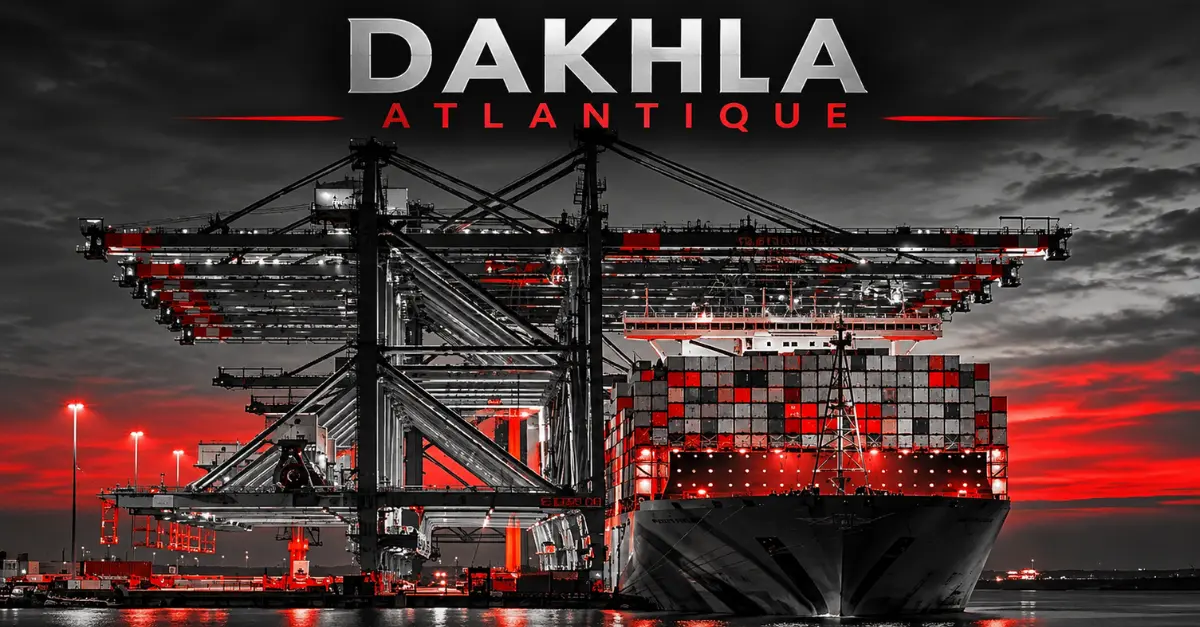
The port is designed as a multipurpose infrastructure (fishing, ship repair, bulk, containers), with an export orientation of over 65% and a projected container capacity of two million twenty-foot equivalent units (TEU). “Every port is the image of the economy of its hinterland,” said Nisrine Iouzzi. The hinterland is conceived on an African scale, linked to the Tiznit-Dakhla axis, renewable energies and a future industrial and logistics zone. The first phase covers 1,650 hectares. Public financing for the heavy infrastructure of this phase amounts to 15 billion dirhams; the superstructures may fall under private concessions. Contracts and related projects exceeding 100 billion dirhams were mentioned, up to 150 billion depending on the scope, which calls for distinguishing signed commitments from prospects.
- Completion rate: approximately 73.5%
- Delivery of the facilities: end of 2028
- Reclaimed land: 80 hectares completed
- Breakwater: 7.5 km; quays: approximately 2.5 km
- Projected capacity: 2 million TEU; export share: > 65%
- Public financing for phase 1: 15 billion dirhams
An environmental ambition accompanies the project. “We are not in a green energy transition, we are green from the start,” stated Nisrine Iouzzi, referring to the hosting of low-carbon sectors, notably those related to green hydrogen. The site welcomes nearly 1,300 visitors a year, a sign of an already palpable interest.
Trust and security, the invisible infrastructure of investment
Hicham Alaoui, founder of Z&Y International, extended the discussion on trust. “The first infrastructure to put in place before investment is trust capital,” he declared. Companies must identify their vulnerabilities from the design stage of their projects; business continuity justifies preventive investment. Nisrine Iouzzi pointed out that the future port will have to comply with the International Ship and Port Facility Security (ISPS) Code, with security plans, designated officers and cybersecurity requirements, sovereign cloud solutions and integration with PortNet. The confidence of global shipowners and operators rests on these operational guarantees.

Mohammed Haitami broadened the warning to include the risks of cyberattacks and malicious uses of artificial intelligence, citing in particular the 2030 World Cup and the protection of personal data through the National Commission for the Control of Personal Data Protection (CNDP). Hicham Alaoui also pointed to opportunities for SMEs in IT services and data centers. The requirement voiced from the outset remains that the announced growth translate lastingly into the daily lives of local populations.
FAQ
Does the end of MINURSO’s mandate mean the end of the UN process?
No. The mandate expired on October 31, 2026 after the failure of the two draft resolutions in the Security Council. The UN maintains its support for dialogue through its Personal Envoy, Staffan de Mistura, and remains committed to a mutually acceptable political solution.
What is the timeline for the Dakhla Atlantic port?
According to Nisrine Iouzzi, the facilities are expected by the end of 2028, with operational preparation intensifying in 2027. The completion rate stands at around 73.5%.
Is the 2015 Southern Provinces development program still the benchmark?
Yes, it was launched in 2015 with an initial budget of 77 billion dirhams. The speakers present it as continuous with current projects, including the port and the Atlantic initiatives.