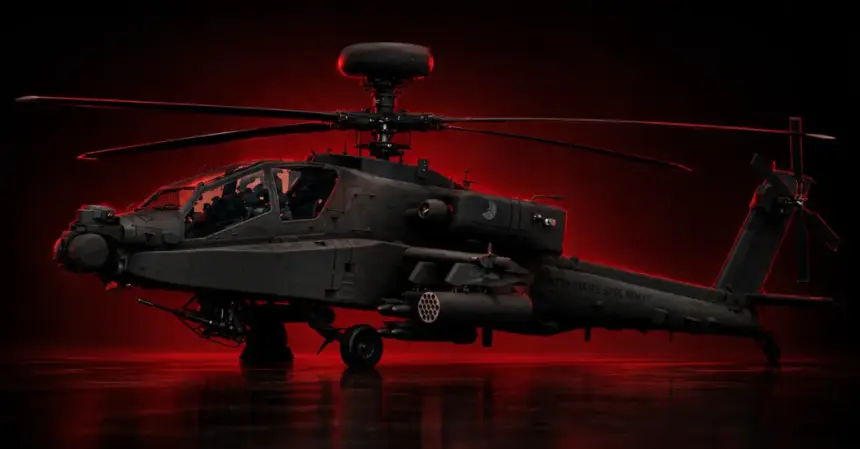
Morocco now operates 19 of the 24 Apache AH-64E helicopters it ordered from the United States. On Monday, October 26, six new aircraft were presented at the First Air Base of the Royal Air Force, near Rabat. Beyond the ceremony, I read this delivery as a long-term signal of how Rabat is building its air power and its partnership with Washington.
A discreet ceremony for a strategic delivery
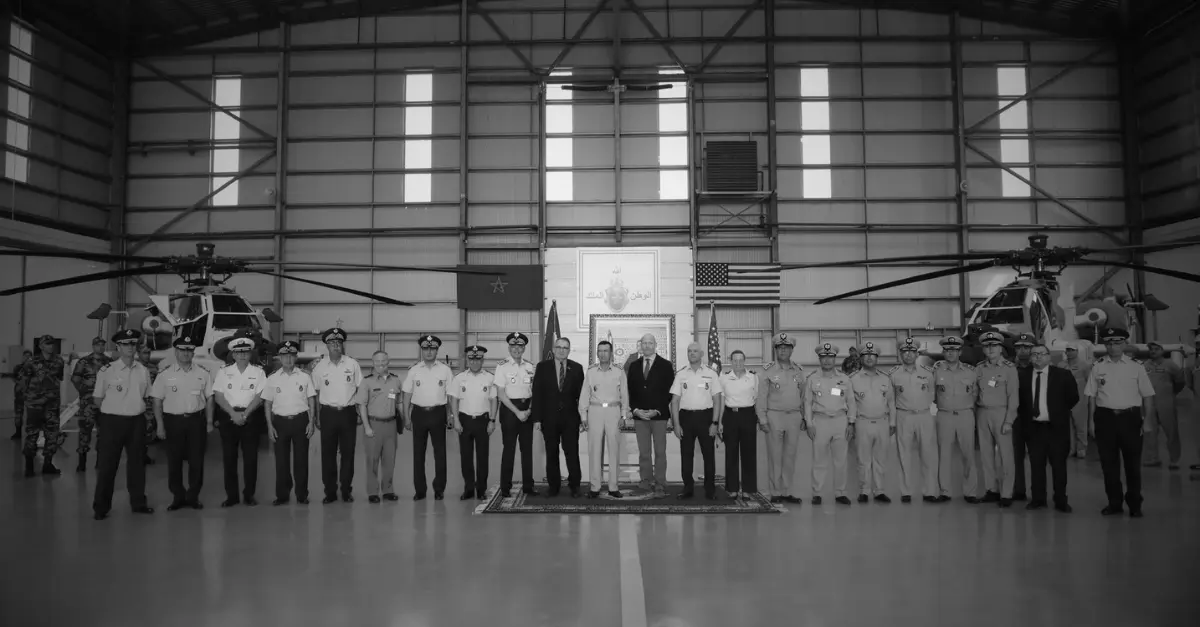
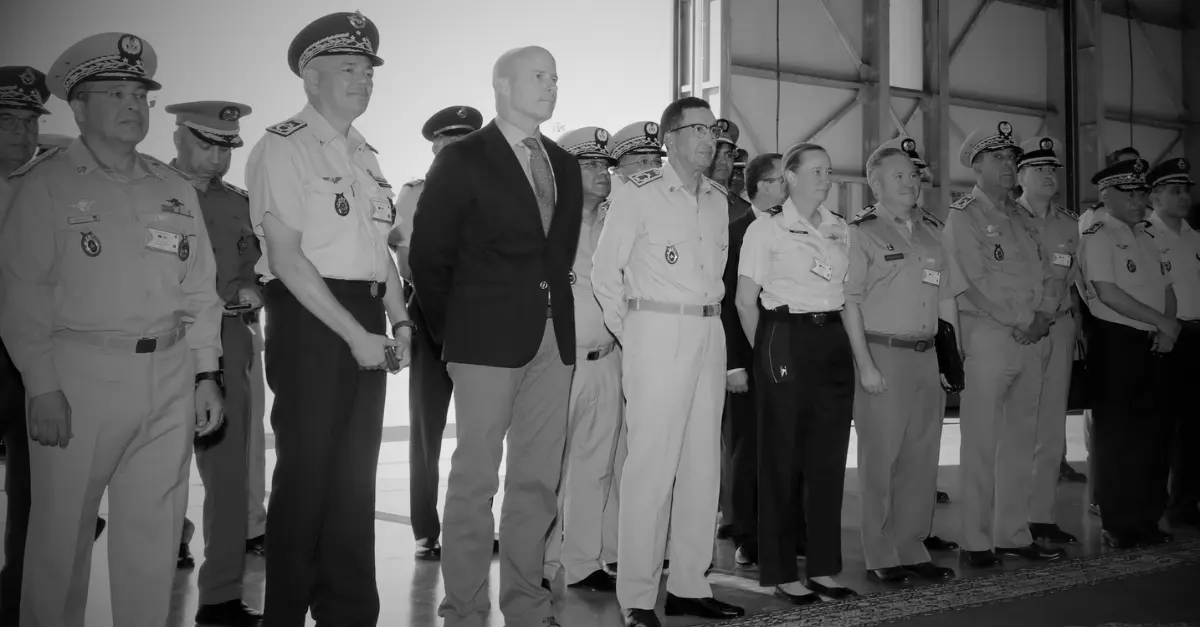
The presentation took place in Salé, in the presence of US General Matthew W. Brown and officials from the Royal Armed Forces. The US command SETAF-AF made the event official in its press release. I note the low-key format: no grand parade, just one more administrative and operational step in a program that moves forward in batches.
This third batch of six helicopters follows two earlier deliveries. The first aircraft arrived in March 2025, then seven more in May 2026. The total now stands at 19 helicopters, nearly 80% of the order. Five remain to be delivered.
Key figures of the program
To make sense of it all, here are the essential benchmarks, as they emerge from US communications.
- Moroccan order: 24 AH-64E
- Deliveries: 6 in March 2025, 7 in May 2026, 6 in October 2026
- Aircraft delivered to date: 19
- Aircraft still to be delivered: 5
- Current program value: nearly $1.3 billion, according to the US Army
- Initial 2019 project: up to 36 aircraft, including twelve as an option, with a ceiling of $4.25 billion
From 36 to 24 aircraft, what this gap tells us
The gap between 2019 and today intrigues me. In 2019, Washington had envisioned a much larger sale, with a ceiling of $4.25 billion. The current program, valued at nearly $1.3 billion, corresponds to a scaled-down version: 24 aircraft.
We should stay cautious in interpreting this. A notification ceiling sent to the US Congress is not a contract: it is a maximum authorized envelope, often higher than what the customer actually buys. I have no official statement explaining why Rabat opted for 24 aircraft rather than 36. The options may still be open, but claiming so would be speculation. What I can say is that Morocco has chosen a gradual build-up, adjusted to its training, maintenance and funding capacities.

A version no one else has in Africa
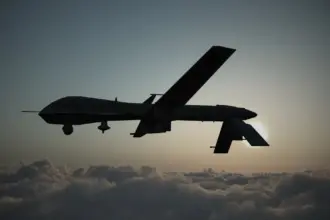
This is the point that strikes me most. Egypt and Morocco are the only two African countries to operate the Apache, but Morocco is the only one to own the AH-64E version. This helicopter is designed for attack, reconnaissance and support of ground troops.
The 2019 US notification was not limited to airframes. It included Hellfire missiles, 30 mm cannons, targeting systems, training resources, as well as the associated maintenance and support. This last component is often underestimated. A modern attack helicopter is worth as much for its logistics chain as for its firepower: qualified pilots, trained mechanics, available spare parts, ammunition. A fleet of 19 machines requires a complete ecosystem, and that is what makes the purchase lasting rather than symbolic.
African Lion, the real test of integration
Above all, the delivery opens a new stage for joint training. General Brown announced that pilots and ground forces from both countries will work together on the Apache during the next editions of African Lion. The 2027 edition is set to begin in Morocco on April 19.
Why does this matter? Because an attack helicopter is not just a platform. Its effectiveness depends on coordination with infantry, artillery and intelligence. Flying Apaches alongside US ground forces means learning shared procedures, targeting methods and a way of commanding. This is where interoperability is decided, and I believe this aspect will weigh more heavily in the long run than the number of aircraft fielded.
These exercises are also part of the 2026-2036 military cooperation roadmap, signed in April at the Pentagon. A decade of common framework gives both armies visibility, which is rare in defense relations, often driven by the political news cycle.
The possible readings of this build-up
Such a program does not leave people indifferent, and I think both readings deserve to be presented.
For its supporters, modernizing air assets meets legitimate needs: border surveillance, rapid response, protection of the territory and support for ground operations. In this logic, a solid partnership with the United States also guarantees access to training and technical support over several years.
For other observers, the accumulation of cutting-edge equipment in the region feeds a dynamic of arms buildup and mistrust, particularly in a neighborhood where political tensions are well known. They also point to the opportunity cost: every billion devoted to defense is not invested elsewhere. I do not settle this debate here, as it depends on national priorities that only Moroccans can weigh. I simply note that the delivery schedule and the 2026-2036 roadmap show a deliberate, planned choice, not an improvised decision.

What I take away and what to watch next
Three points seem decisive to me for the coming months.
First, the delivery of the last five aircraft: it will show whether deadlines are met and how the program is paced. Second, the possible extension of the order: the 2019 ceiling leaves the door open, but nothing official points that way at this stage. Finally, the place of the Apaches in African Lion 2027: the real level of engagement, the scenarios and the units involved will tell us whether the integration is symbolic or operational.
I remain cautious on one point. Official statements describe a program on track, but they say nothing about the actual readiness of crews or the technical availability of the aircraft. These elements, essential to judge real capability, are almost never made public.
How many Apaches does Morocco have today?
Morocco has received 19 AH-64E out of the 24 ordered. Five aircraft are still expected.
When were the Apaches delivered?
In three batches: six in March 2025, seven in May 2026, then six presented on October 26, 2026 near Rabat.
What is the value of the program?
The US Army values it at nearly $1.3 billion. In 2019, Washington had envisioned up to 36 aircraft with a ceiling of $4.25 billion.
Will the Apaches take part in African Lion?
Yes, according to General Matthew W. Brown, who announced their integration into the next editions. The 2027 edition is set to begin in Morocco on April 19.