A fighter jet is not worth its spec sheet at delivery. It is worth the number of hours it actually spends in the air, year after year. That is precisely where Rabat is quietly preparing a structural shift. With the Benslimane center, the kingdom wants to bring part of the heavy maintenance of its American fleet back onto its own soil. Here is why I believe this file matters more than many purchase announcements, and where its limits lie.
An arms race backdrop
The scene is familiar, but the orders of magnitude are worth recalling. According to the IISS, Morocco and Algeria together spent $33 billion on defense in 2025, or 88% of measurable military spending in North Africa. The gap between the two countries remains wide: roughly $25.5 billion on the Algerian side (a good share of it used for the administration’s operating costs), against $7.51 billion on the Moroccan side.
Rabat is nonetheless ramping up. For 2026, the IISS points to a record Moroccan budget of about $7.87 billion, while Algiers’ is expected to fall to $24.5 billion. On the technological front, the institute believes Algeria may have gained an edge with the reported appearance of its first Su-57s. According to the Defensa platform, Algiers is expected to receive twelve Su-57s, fourteen Su-35s and fourteen Su-34s before the end of 2026.
Faced with this step up, Morocco does not have the budget to play the escalation game. It has to play efficiency, and maintenance is the best example of that.
What the Benslimane center actually involves
The project is led by Maintenance Aero Maroc (MAM), a joint venture bringing together Belgium’s Sabena Engineering, Lockheed Martin and MEDZ, a subsidiary of the Caisse de Dépôt et de Gestion. Construction was officially launched on October 15, 2025 at Benslimane airport, south of Rabat.
Here are the key elements, as reported by the Moroccan and specialized press:
- Purpose: heavy maintenance (PDM) and modernization of the Royal Moroccan Air Force’s C-130 Hercules and F-16s.
- Infrastructure: a hangar of more than 8,000 m², designed to international standards.
- Timeline: commissioning announced for the second half of 2026.
- Modernization: according to Médias24, MAM confirmed that the site is designed for upgrading F-16 Block 52s to the Viper standard.
- Regional ambition: its managing director, Amine Chafik, said the center could also maintain aircraft destined for export.
One clarification is needed. In its October 6, 2026 press release, Lockheed Martin describes a center devoted first to the modernization of C-130s, with an extension planned to other platforms, including the F-16. The ramp-up on the fighter will therefore be gradual.
Why F-16 maintenance is a strategic asset
I see four reasons to grant it that status.
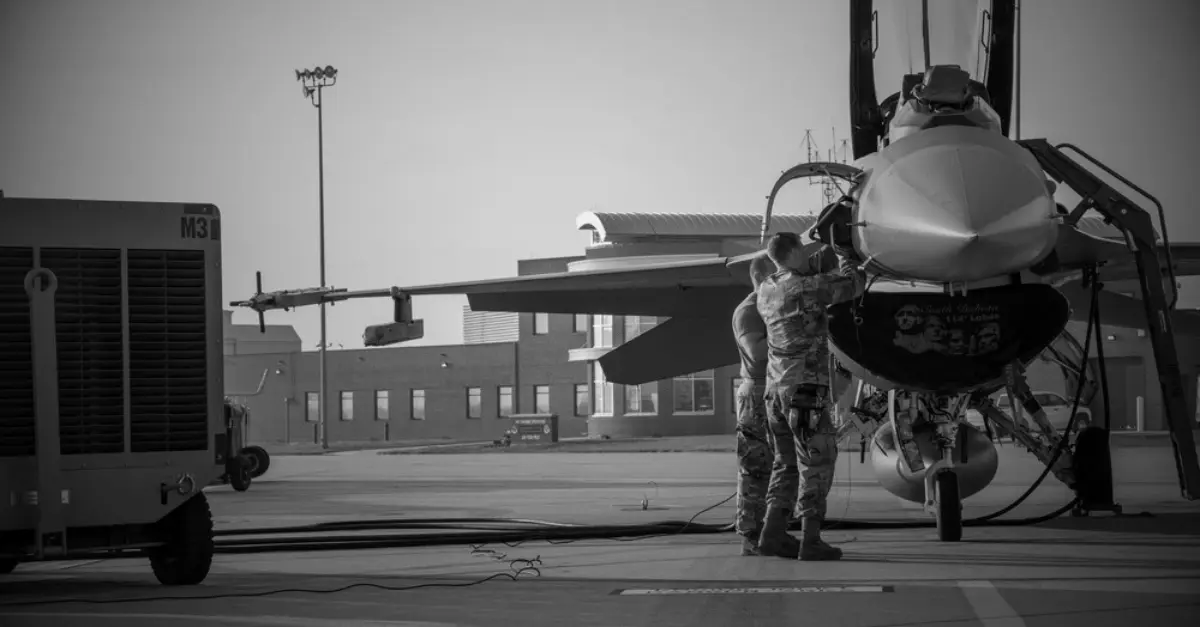
Operational availability. A fleet that has to send its aircraft abroad for major overhauls grounds planes for months. A national center shortens those cycles. With the arrival of the F-16 Block 72s, the combined fleet would reach 48 aircraft according to Military Africa: Morocco signed in 2019 for 25 Block 72s, in addition to an upgrade kit for its existing fleet. The first of these aircraft made its maiden flight on October 6, 2026, according to Lockheed Martin. With a fleet of that size, maintenance becomes an industrial matter.
Sovereignty, in a nuanced version. Mastering heavy maintenance locally means keeping control of the schedule of your own aircraft. In a crisis, the difference between a plane being serviced abroad and a plane sitting in a hangar at Benslimane is considerable. I remain cautious about the word “autonomy,” and I come back to it below.
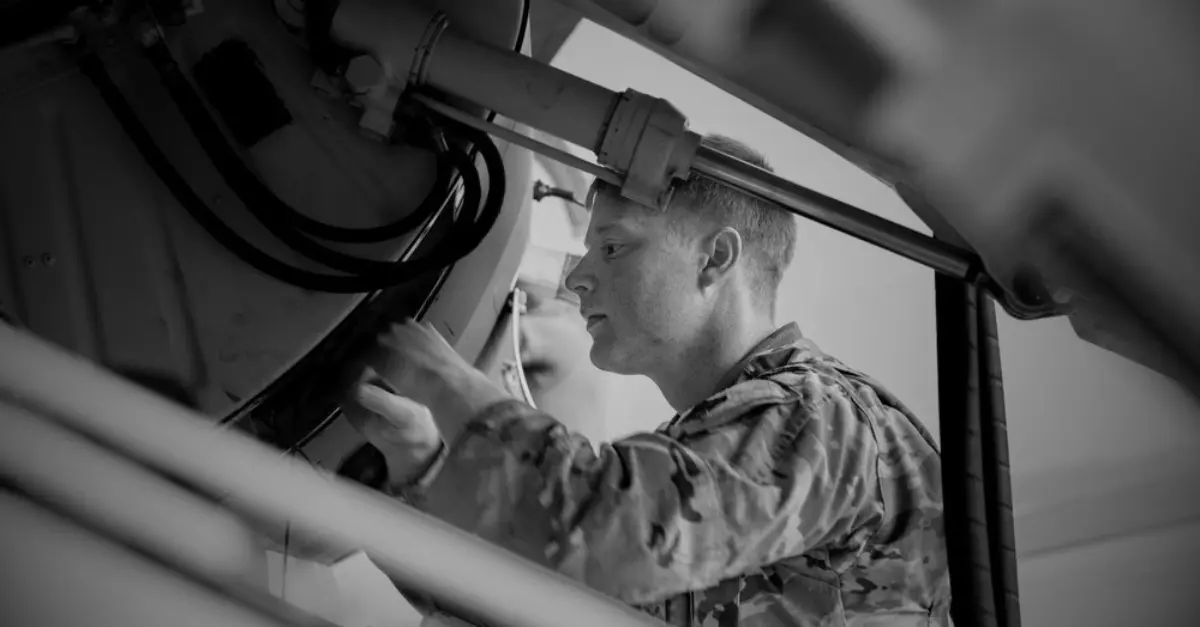
Skills development. Upgrades and heavy overhauls train technicians and engineers. Moroccan authorities explicitly present the project as a way to build sovereign capabilities in aeronautics. It is a benefit that extends beyond the military sphere alone.
Influence. This is the angle least often discussed. A center able to maintain F-16s and C-130s is of interest to other operators in the region. The memorandum of understanding signed on October 8, 2026 between Korea’s KAI, MAM and SABCA Maroc, in the context of the Alpha Jet replacement, shows the site is already attracting partners beyond the American circle. A country that maintains other nations’ aircraft gains a form of diplomatic weight that purchasing alone does not provide.
What I take away
My analysis fits in one sentence: Morocco is trying to win on the ground where it realistically can, that of endurance and availability, rather than chasing every new adversary platform. It is a pragmatic bet, consistent with a budget tighter than its neighbor’s.
One question remains open, which I will pose without answering. If Benslimane delivers on its promises, will Morocco be merely a better-supported user of American technology, or the industrial anchor of a regional maintenance ecosystem? The answer will depend less on announcements than on the first F-16 that actually rolls out of that hangar.
FAQ
Where will Morocco’s F-16 maintenance be carried out?
At the Maintenance Aero Maroc center at Benslimane airport, south of Rabat. Its commissioning was announced for the second half of 2026.
Who is involved in the project?
Sabena Engineering (Belgium), Lockheed Martin (manufacturer of the F-16 and C-130) and MEDZ, a subsidiary of Morocco’s Caisse de Dépôt et de Gestion.
Will the center maintain only Moroccan aircraft?
Not necessarily. MAM’s managing director has said the site could also maintain aircraft destined for export.
Does this make Morocco independent of the United States?
Not entirely. Heavy maintenance becomes local, but parts, software and authorizations remain tied to the American framework.