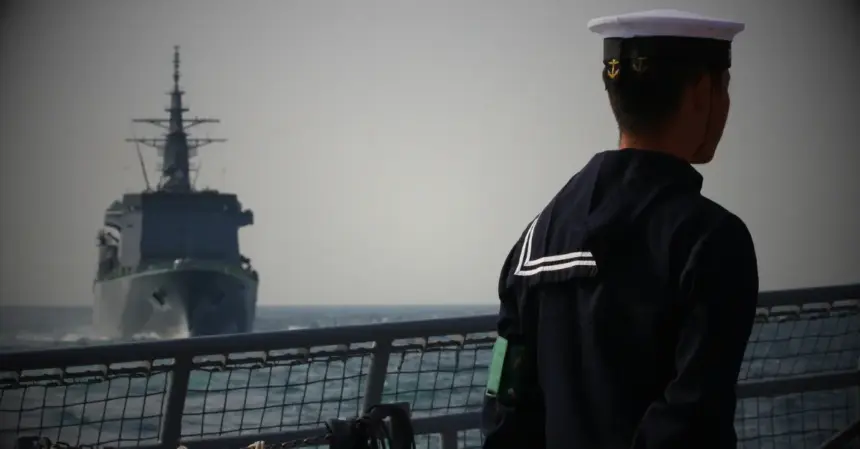
It aims to lay the first building blocks of a Moroccan naval industry, one that could eventually design and produce its own ships, sensors and certain electronic warfare equipment. I analyze it here as a strategic signal rather than a simple cooperation announcement.
A three-way agreement, three distinct roles
What struck me first was the division of tasks, which says a lot about the philosophy behind the agreement. Each partner brings what the other two lack.
Maghreb Steel is responsible for producing complex alloys, notably for ship hulls. UM6P leads the research, from the design of next-generation materials to the development of maritime sensors and advanced detection systems. Naval Group, finally, brings proven military expertise in sensitive fields: radar, sonar and electronic warfare.
- Materials and metallurgy: Maghreb Steel (alloy production)
- Research and development: UM6P (materials, sensors, detection)
- Military know-how: Naval Group (radar, sonar, electronic warfare)
This architecture is far from trivial. It places research and production on Moroccan soil, whereas a conventional arms contract simply imports a finished product. To me, it is the difference between buying a frigate and learning to build one.
The university, a new instrument of sovereignty
UM6P is no longer just a campus. It has gradually established itself as a tool of the kingdom’s industrial and technological policy. It is already involved in projects relating to defense, artificial intelligence and space technologies, and the agreement with Naval Group extends this orientation.
The decision to have a research university, rather than a single manufacturer, carry this component is not neutral. It makes it possible to build lasting skills, train engineers and generate local intellectual property. These are all elements without which a technology transfer remains a promise on paper.
I remain cautious on one point, however. Research on materials and sensors is a long-term endeavor, and timelines for this kind of program are counted in years, sometimes decades. We will have to wait for the first prototypes, or at least public milestones, before gauging the real scope of the agreement.
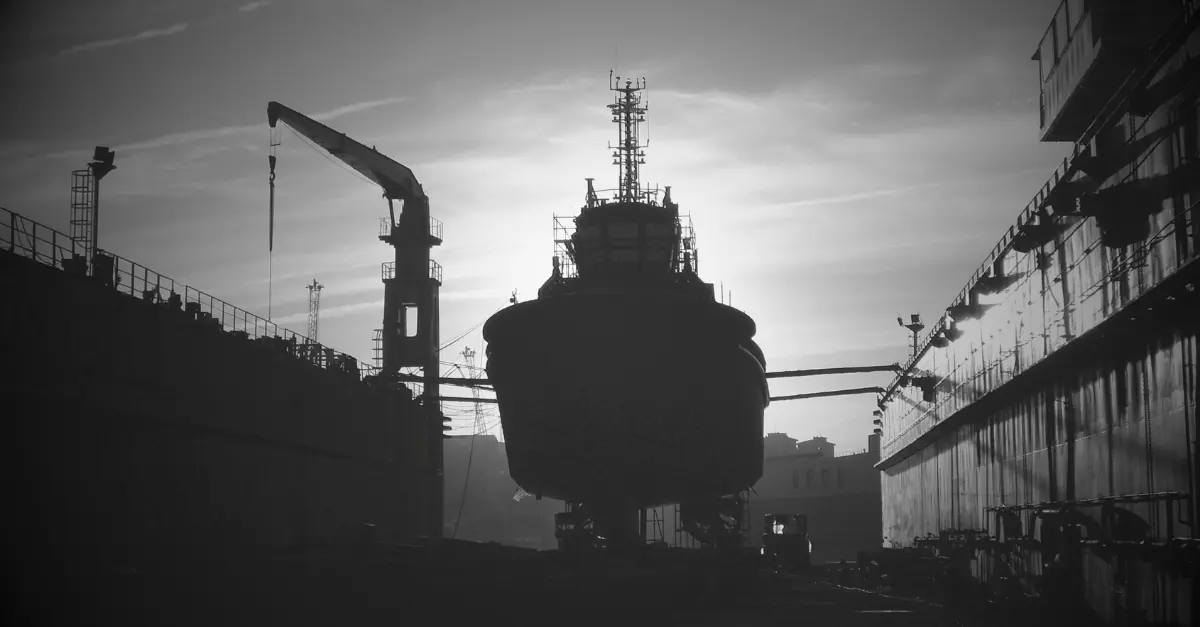
The Casablanca shipyard question
Behind the scenes, a heavier issue remains open: the future Casablanca shipyard. According to information circulating in the specialized press, two candidates are reportedly in the running, South Korea’s Hyundai and France’s Naval Group. I would point out that these elements come from media sources and that, to my knowledge, the Moroccan authorities have not made a public decision.
The deciding criterion would be skills transfer. Rabat is not looking for a contractor that would build ships on its territory and then leave. It is looking for a partner willing to train, to pass on knowledge and to integrate local subcontractors.
Paris, for its part, has reportedly stepped up its support for Naval Group. The French group can rely on several assets:
- a long-standing relationship with the Royal Moroccan Navy, which already operates a French-designed FREMM-type frigate;
- a strong position in combat systems and sensors, consistent with the three-way agreement;
- the political backing of a historic partner state of the kingdom.
Hyundai, for its part, has an established reputation in large-scale civil and military shipbuilding, and an industrial capacity that few players can match. The decision is therefore not just a technical choice. It also involves a diplomatic positioning.
What a shipyard in Casablanca would make possible
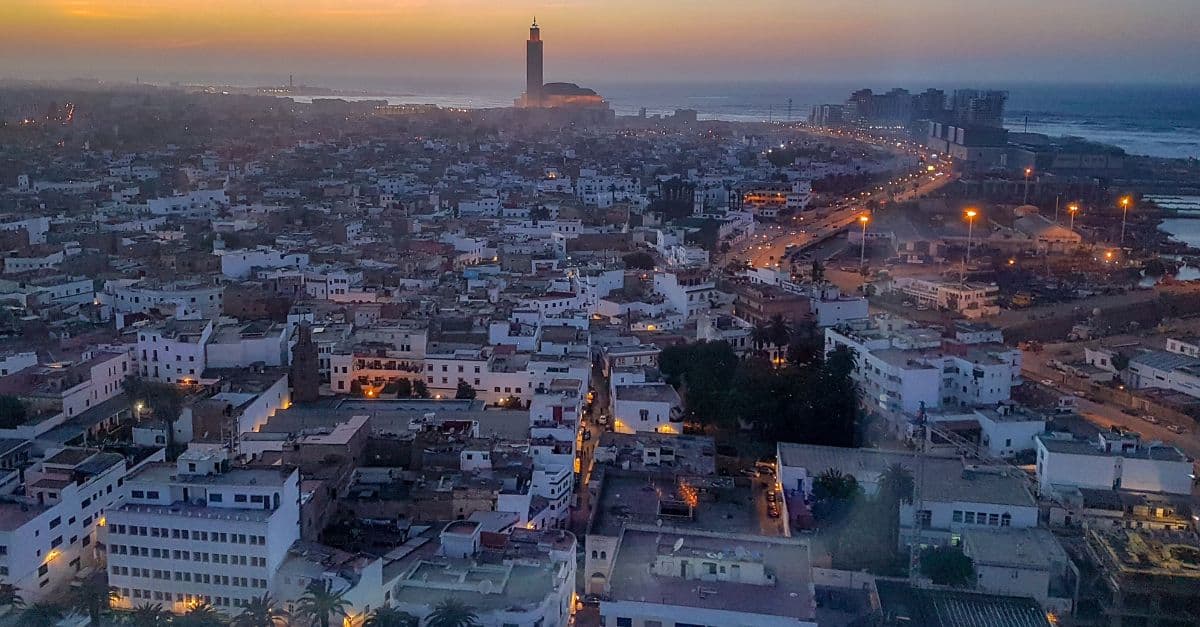
A large-scale naval facility would give Morocco the ability to build its own patrol vessels and frigates and, in a much more distant future, to consider more complex programs, even submarines. I should stress that this last horizon remains hypothetical: it would require a considerable build-up of skills, heavy investment and a supply chain that the country does not yet have.
The benefits extend beyond defense alone. A shipyard generates skilled jobs, pulls up the industrial subcontracting base and can also be used for the repair and maintenance of civilian vessels. For a country with two coastlines and a port like Tanger Med, the economic argument carries as much weight as the military one.
From coastal security to regional projection
The stated motivation is to secure Morocco’s coasts. But the ambition appears broader. The kingdom also seeks to carry weight in West Africa, where its diplomatic and economic initiatives are multiplying, notably around Atlantic access for the Sahel countries.
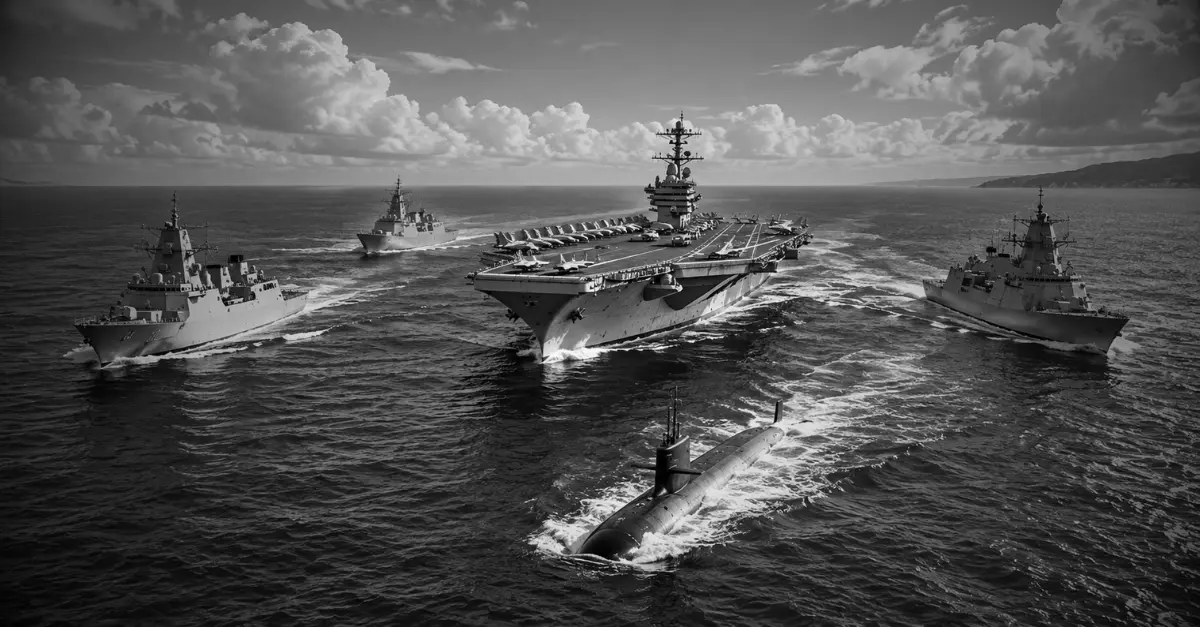
This is where the issue changes in nature. Controlling or securing maritime routes means having leverage in international negotiations. Naval power becomes a tool of influence as much as a tool of deterrence. In this reading, the naval industry is not an end in itself; it serves a larger project, that of a Morocco that intends to defend its own interests and become an indispensable player in regional maritime logistics.
What this agreement says about Franco-Moroccan relations
I also read this agreement as a message addressed to Paris. Morocco has been diversifying its arms suppliers for several years, turning to the United States, Israel, Turkey and Northern Europe. Choosing France for such a sensitive industrial component remains a mark of trust, but a conditional one: the partner must agree to transfer, not just to sell.
That is the meaning of my title. The kingdom is not seeking one more dependency, even a friendly one. It sets out its requirements: localized production, training, and the involvement of national players. For France, the stakes are high. Accepting these conditions means preserving a strategic relationship; refusing them means leaving the field to competitors such as South Korea.
The obstacles not to be underestimated
It would be unwise to present this partnership as a done deal. Several challenges lie ahead:
- The long timeline: a naval industry is built over decades, not over a single term of office.
- The industrial ecosystem: it requires a chain of subcontractors, suppliers and a specialized workforce.
- Financing: naval programs are among the costliest in the defense sector.
- Competition: other powers are already well established in the Mediterranean and the Atlantic.
Finally, there is the question of intellectual property, often the real sticking point in technology transfer agreements. Who will own the patents arising from joint research? To what extent will Naval Group agree to share sensitive know-how? These details, rarely made public, will determine the reality of the agreement.
A cornerstone, not yet a building
In sum, this three-way partnership is a coherent cornerstone within a broader vision. It shows a Morocco that wants to build, innovate and master critical technological components. On its own, it does not guarantee the emergence of a complete naval industry.
The real question is one of tempo. Will this alliance bear fruit before other powers lock down the maritime game in North Africa? The answer will depend less on signatures than on the ability to turn ambitions into skills, and skills into shipyards, in the years ahead.
FAQ
Who are the partners in this agreement?
Mohammed VI Polytechnic University, the steelmaker Maghreb Steel and the French group Naval Group, which specializes in military shipbuilding.
What does the partnership specifically provide for?
It aims to develop next-generation materials for hulls, maritime sensors and advanced detection systems, with a clear division of roles between production, research and military expertise.
Has the Casablanca shipyard been decided?
Not to my knowledge. According to the press, Hyundai and Naval Group are reportedly competing, and skills transfer is said to be the central criterion. No public decision has been confirmed.
Will Morocco be able to build submarines?
That is a very distant and hypothetical prospect. It would require a considerable build-up of skills and investment.