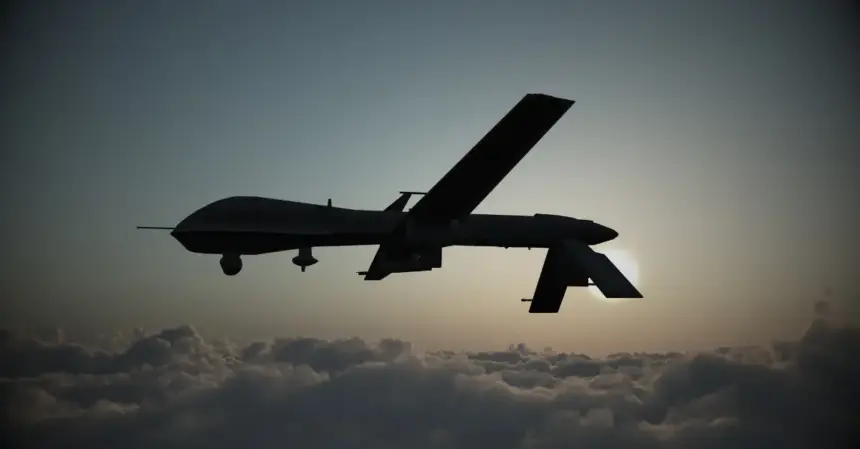
According to an analysis of the arms transfers database of the Stockholm International Peace Research Institute (SIPRI), relayed by Visual Capitalist, they account for 86% of global exports over the period. The figure is striking less for its scale than for what it reveals: a highly concentrated market, shaped by a single conflict, the war in Ukraine.
Here we set out to read this data with its limitations in mind, to understand its logic and to draw out its implications, including for countries that, like Morocco, are building their own capabilities in this field.
What the SIPRI figures show
Over four years, SIPRI records 16,822 military drones exported worldwide. The main suppliers break down as follows:
- United States: 7,593 systems, 95% of them bound for Ukraine
- Iran: 6,800 systems, 99% of them delivered to Russia
- Germany: around 1,000 systems
- Poland: 690 systems
- Turkey: 381 systems
Over the period as a whole, Washington therefore stays ahead of Tehran. But the trend reversed in 2025: Iran delivered 2,002 drones against 402 for the United States. Together, these two countries account for 14,393 units, or nearly six out of every seven drones exported.
The scope needs to be spelled out. The data covers military aerial drones weighing at least 150 kg (331 lb), as well as one-way attack drones and loitering munitions, that is, devices that circle over an area before diving onto a target. Small FPV drones (flown in first-person view using goggles), now ubiquitous on the Ukrainian front, and commercial drones diverted to military use are largely excluded.
Two suppliers, two wars
The most striking point is the concentration of recipients. Roughly 95% of the American drones exported over the period went to Ukraine, and 99% of Iranian drones to Russia. In other words, this “global market” is first and foremost a reflection of two opposing supply flows, feeding the two sides of the same conflict.
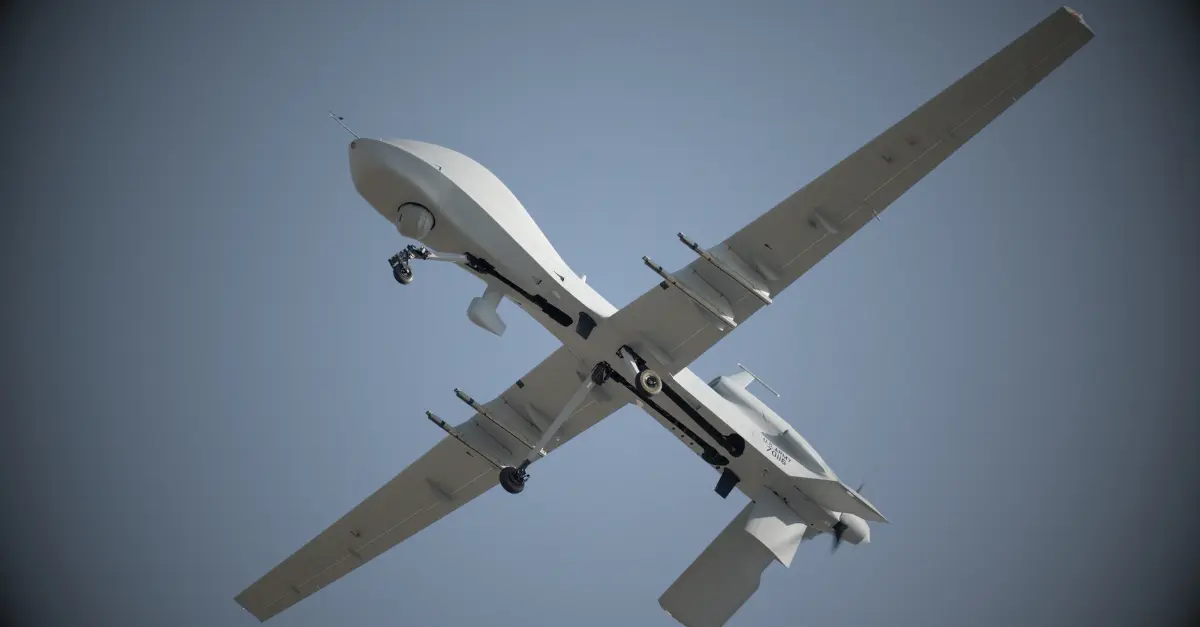
On the American side, deliveries are mostly part of military aid to Kyiv: small-format loitering munitions and tactical drones, supplied under successive assistance packages. These are consumable items, designed for intensive and often single use.
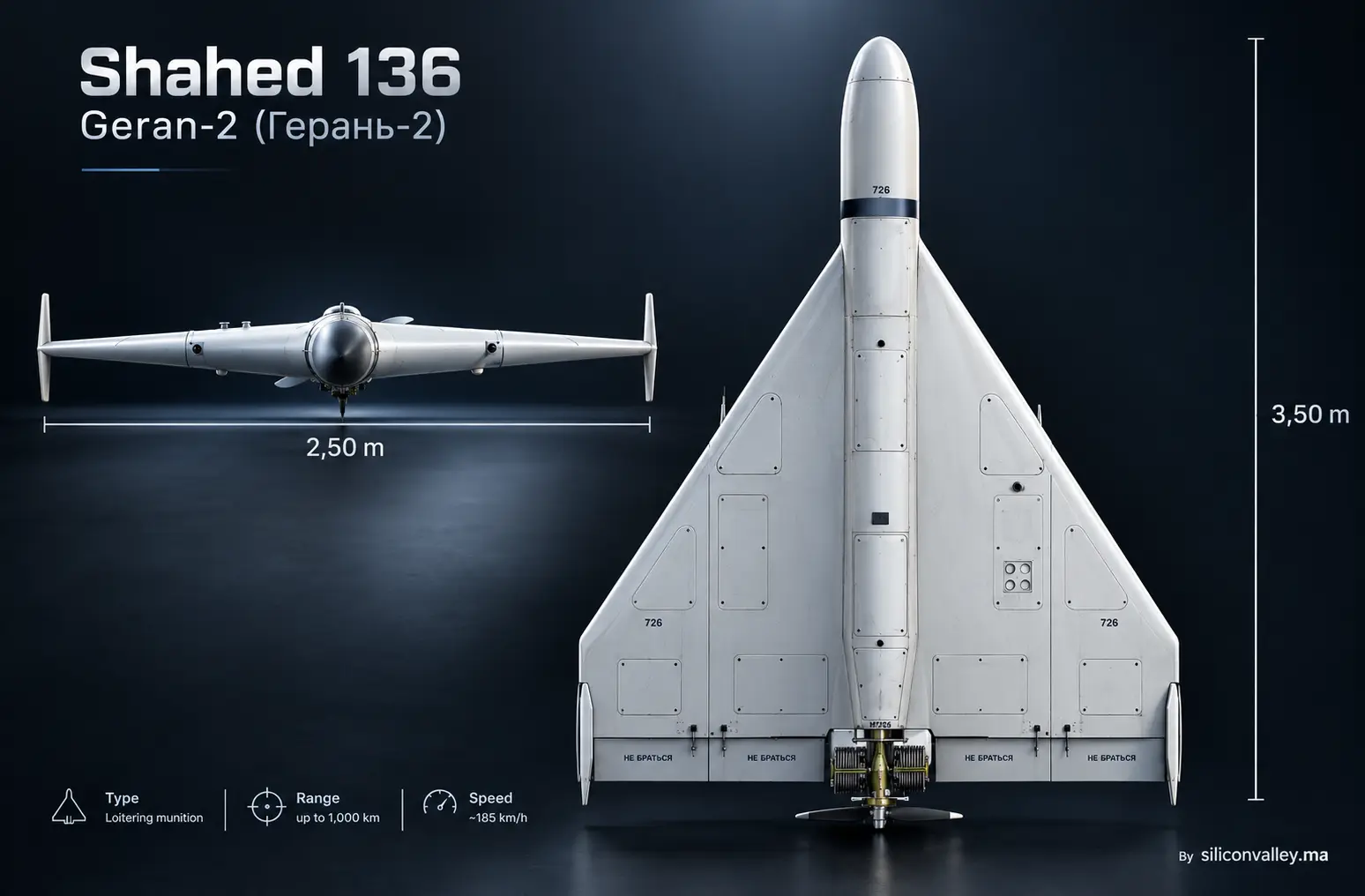
On the Iranian side, the drones are mainly Shahed-type one-way attack drones, used by Russia against Ukrainian infrastructure and cities. Tehran long denied supplying them before acknowledging, according to its own statements, deliveries made prior to the conflict. These transfers have earned Iran further Western sanctions.
It should be stressed that this volume-based reading says nothing about the value of the transfers. A large reconnaissance drone costs millions of dollars, whereas a one-way attack drone is estimated to cost a fraction of that. Comparing units across such different categories therefore calls for caution.
The 2025 turning point
Iran overtaking the United States in 2025 is the most interesting lesson of the series. With 2,002 drones delivered against 402, Iran supplied five times as many units as the United States over the year.
Several readings are possible, and SIPRI does not settle the question. The first is a decline in American deliveries, linked to political trade-offs over aid to Ukraine and the depletion of certain stockpiles. The second is the continuation, or even intensification, of Russian needs for saturation munitions, that is, large numbers of cheap devices launched to overwhelm an adversary’s defenses.
One piece of context nonetheless calls for verification: several analyses indicate that Russia has localized production of its Shahed-type drones, renamed Geran-2, notably at the Alabuga site in Tatarstan. If this industrial ramp-up is confirmed, the share of Iranian deliveries of finished systems could eventually decline in favor of transfers of components, which partly escape this type of statistic.
Germany, Poland, Turkey and the other exporters
Behind the two leaders, the gap is considerable: Germany exports around 1,000 drones, Poland 690 and Turkey 381. Together, these three countries account for little more than 2,000 units.
These three cases illustrate distinct trajectories. Germany and Poland, both NATO members and supporters of Kyiv, appear to have transferred part of their production or stockpiles to Ukraine. Turkey, long regarded as the emerging power in armed drones thanks to the Bayraktar TB2, appears here to be lagging in volume. This is partly due to the methodology: large Turkish drones are more expensive and sold individually, whereas the flows to Ukraine run into the thousands of small devices.
What these figures do not show
Beyond the volume measure, three limitations deserve to be kept in mind.
First, the exclusion of FPV and commercial drones. Yet on the Ukrainian battlefield, it is precisely these devices, often produced locally in the hundreds of thousands, that have transformed tactical combat. They do not appear in these statistics.
Second, domestic production. A country that manufactures its own drones, such as Ukraine or Russia, appears neither as an exporter nor as an importer in the SIPRI database. Export flows are therefore only part of the ecosystem.
Finally, the role of other players. China, Israel and Turkey play an important part in the drone industry, but have not been at the center of a conflict that generalized these flows the way Ukraine did for the United States and Iran. Their exports, often directed to the Middle East, Africa or Asia, weigh less in volume.
Drones militaires, les États-Unis et l’Iran captent 86 % des exportations mondiales (hors drones #FPV)
👉 https://t.co/D7sDUcYA0TEntre 2022 et 2025, deux pays seulement ont fourni l’essentiel des #drones #militaires échangés dans le monde : les #USA et l’#Iran.
#China #Maroc https://t.co/nVXnaxJFSq
— Silicon Valley (@SiliconValleyMa) October 15, 2026
Strategic stakes and debates
This concentration raises fundamental questions, on which analysts disagree.
For those who favor tighter controls, the proliferation of cheap attack drones lowers the cost of access to long-range strikes, including for non-state actors. They call for stricter export regimes and for sanctions targeting supply chains, notably electronic components.
Other experts argue that restrictions have limited reach, because these technologies rely largely on civilian components and are easy to reproduce. In their view, the issue is less about controlling sales than about acquiring suitable defenses, since intercepting cheap drones with very expensive missiles is economically a losing proposition.
An industrial debate comes on top of this. Western armies have long favored a small number of highly sophisticated platforms. The Ukrainian experience argues for a different balance, combining high-end systems with mass-produced munitions, which requires an industrial capacity that many countries have yet to build.
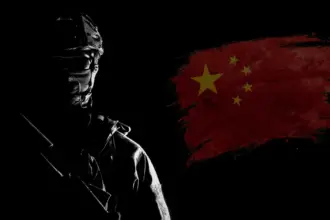
And China, the notable absentee from the ranking
An attentive reader will be surprised not to see Beijing in this ranking. China is nonetheless one of the main suppliers of large-caliber armed drones, but its business model differs from that of the two leaders.
According to SIPRI, China delivered more than 200 combat drones to 17 countries between 2013 and 2023, mainly to Saudi Arabia, the United Arab Emirates, Egypt and Pakistan. The best-known models are AVIC’s Wing Loong and CASC’s CH (“Rainbow”) series. These are expensive aircraft, sold individually or in small batches to client states, not thousands of consumable munitions sent to a front. In volume, they therefore weigh little against American and Iranian flows, even if their strategic value is real.
Two factors explain this position. First, China is not a member of the Missile Technology Control Regime (MTCR), which limits Western exports of armed drones. It has thus been able to serve clients that Washington did not, generally at lower prices. Second, transparency remains limited: SIPRI’s figures are based on observed deliveries and are better seen as floors than as totals.
The scope of the study also plays a role. China dominates the production of commercial drones, with DJI in the lead, and these are largely excluded from these statistics. Beijing has, moreover, regulated their export: restrictions on long-range civilian drones, followed by a ban targeting models that could be used for military purposes, against a backdrop of Western criticism linked to the war in Ukraine. Media reports and American intelligence services have pointed to supplies of Chinese drones and components to Russia, which Beijing disputes, saying it opposes the military use of civilian drones.
One unknown remains. Should China ever supply attack drones in large numbers to a conflict, the ranking would change very quickly.
What prospects for emerging countries
For states like Morocco, which have acquired Turkish and Israeli drones in recent years and have announced plans for industrial operations in the sector, this data offers a twofold lesson. It confirms the strategic value of drones, but also the difficulty of turning them into a lasting market: most of the exported volume is tied to one specific war, and is therefore cyclical by nature.
The question of sovereignty, that is, the ability to produce locally rather than depend on foreign suppliers, becomes central. The Russian example, which sought to manufacture on its own soil what it had been importing, is the clearest illustration.
A snapshot, not a trend
These figures describe four years marked by an exceptional conflict. If the war in Ukraine evolves, through a ceasefire, a drying up of aid or industrial substitution, the map of exports will change quickly. It remains to be seen whether the military drone market will diversify or whether the post-Ukraine era will establish new players, especially as mass production becomes accessible to a growing number of states.
FAQ
What share of global military drone exports do the United States and Iran account for?
According to the analysis of SIPRI data, together they account for 86% of global exports between 2022 and 2025, with 7,593 drones for the United States and 6,800 for Iran.
Where do these drones go?
Roughly 95% of exported American drones were delivered to Ukraine, and 99% of Iranian drones to Russia.
What do these statistics cover?
They include military drones of at least 150 kg, one-way attack drones and loitering munitions. Small FPV drones and commercial drones are largely excluded.
Has Iran overtaken the United States?
Not over the whole period, where the United States remains in the lead. But in 2025, Iran delivered 2,002 drones against 402 for the United States.