On November 12, 2026, Moroccan Head of Government Fatima Ezzahra El Mansouri announced a temporary suspension of new export permits for tomatoes, onions and potatoes. The stated goal is clear: to protect the domestic food supply and the purchasing power of Moroccan citizens in the face of rising food and fuel prices ahead of Ramadan. An inter-ministerial price monitoring commission was set up at the same time. This decision, which extends restrictions already in place on African markets since the beginning of the month, is an ordinary act of economic sovereignty. Yet it highlights, on the other side of the border, weaknesses that the Algerian authorities struggle to conceal.
Context of a Moroccan decision made openly
For several days, prices for these staples had been climbing in Moroccan markets. Tomatoes exceeded 12 dirhams per kilo in some cities, and onions and potatoes followed. The government chose to prioritize the domestic market rather than let volumes flow abroad, including to long-standing African partners. Moroccan exporters, through their federations, protested and asked for quotas rather than a suspension. They fear losing hard-won positions in Mauritania, Senegal and Côte d’Ivoire. Rabat held its line: the interests of farmers and African partners will be protected as far as possible, but the Moroccan consumer comes first. This is a logic seen in other producing countries facing domestic pressures. There is nothing exceptional about it. It is simply carried out with clarity.
The Algerian shortage, first and foremost a domestic issue
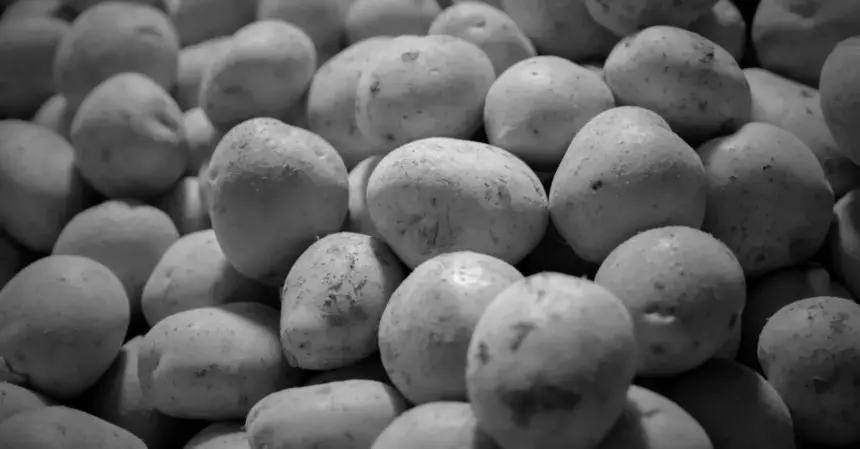
On the other side, Algeria has been going through a visible potato crisis since late October. The product is becoming scarce in several wilayas (Annaba, Bouira, Algiers, Tlemcen, Béjaïa…). Where it is still available, the price often ranges between 100 and 180 dinars per kilo, well above the official ceiling of 80-90 dinars set by the authorities. Destocking operations have been launched, citizens have gone into the fields to harvest unripe potatoes themselves, and some restaurants have stopped serving fries. Yet Algeria is the second-largest potato producer in Africa, with around 4.6 million tonnes a year according to available data. El-Oued alone accounts for a major share, estimated at more than 1.6 million tonnes (16 million quintals) over two seasons. The Algerian authorities say the El-Oued harvest, expected from mid-November, should gradually ease the markets.
In Skikda, restaurant owners protest against the shortage of oil and potatoes
The causes of the current tension are multiple and above all domestic. Producers, notably in the Aflou region, have significantly reduced cultivated areas – sometimes by more than 50% according to local accounts – because of cost, water or profitability constraints. The transition period between growing seasons creates a gap in supply. Distribution channels, intermediaries and speculation amplify the phenomenon. The price cap, meant to protect consumers, may have discouraged part of the supply and encouraged off-the-books sales. The Algerian authorities regularly point to speculation and promise sanctions. These elements are documented by the Algerian press itself and by regional observers. There is no need to look for an external culprit to explain the situation.
The Guerguerat corridor and informal circuits
An informal flow does exist. Shipments of Moroccan vegetables (potatoes, tomatoes, onions) pass through the Guerguerat crossing into Mauritania, and part of them is then rerouted to southwestern Algeria, notably Tindouf. Moroccan media and field observations have described these movements. The suspension of new Moroccan permits for Africa mechanically reduces the volumes available for these re-export circuits. This may locally heighten tensions in southern Algeria. However, attributing Algeria’s nationwide potato shortage mainly to this interruption would be inaccurate. Algeria has substantial production capacity; the current problem stems more from the internal organization of supply, storage and distribution than from a total structural dependence on Morocco. The Algerian authorities themselves have stepped up destocking operations and announcements about the upcoming harvests in the south.
This reality nonetheless highlights a paradox. Despite diplomatic relations severed since 2021 and often hostile rhetoric, informal trade circuits kept carrying Moroccan products into Algerian territory. Rabat’s decision to prioritize its domestic market shuts off one of these valves, not in a spirit of blockade, but simply because Morocco applies to its vegetables the same logic it applies to other strategic sectors: the national consumer comes first.
Pollution accusations and political diversion
At the same time, on November 10, Algerian Interior Minister Brahim Merad, visiting Tlemcen, described as a “hostile act” and premeditated pollution the discharges he attributes to Morocco in the Oued Mouilah and the watercourses feeding the Hammam Boughrara dam. A ministerial delegation noted dead fish and pollutant levels above thresholds, according to Algerian analyses. Morocco did not react immediately.
Earlier studies and local observations, however, indicate that the basin is subject to several sources of contamination, including industrial and domestic ones on the Algerian side. The timing of these accusations, in the middle of the potato crisis, raises questions. They shift the debate from a matter of internal agricultural management to an external confrontation. This is a constant in tense bilateral relations: when economic or social difficulties arise, the neighbor often becomes the first one accused.
Strategic stakes and outlook
This sequence illustrates two models. Morocco, facing rising prices, adjusts its export flows in a temporary and targeted way, while maintaining a discourse of protection for farmers and partners. Algeria, a major producer, suffers a shortage of a staple product even though its capacity exists. The structural causes – reduced acreage, logistics, intermediaries, the effectiveness of price caps – are visible. The difficulties are not limited to potatoes, either: tensions over oil and other products have also been reported in recent weeks. These successive episodes call into question the ability of agricultural and regulatory policies to ensure a stable supply.
Geopolitically, the Moroccan decision is not a “blockade” aimed at Algiers. It is a response to a Moroccan domestic problem. Its collateral effect on informal circuits toward southern Algeria mainly reveals the fragility of a system that, while maintaining official hostility, depended in part on unofficial flows to supplement its local supply. The El-Oued harvest should improve the situation in the short term. In the longer term, the recurrence of these crises raises questions about the robustness of how the sector is organized.
Open conclusion
Vegetable markets are sensitive to regulatory decisions, weather events and production choices. The temporary Moroccan suspension is a classic tool for managing domestic supply. It brings to light, on the Algerian side, organizational and distribution problems that predate this measure. As long as the authorities in Algiers keep favoring external accusations over internal diagnoses, shortages of staple products are likely to recur. The Algerian consumer, meanwhile, keeps paying the price for these contradictions.
Key figures of the sequence
- Algerian potato production: around 4.6 million tonnes per year (2nd in Africa).
- El-Oued: more than 1.6 million tonnes estimated, a major contribution to the national total.
- Prices observed in Algeria in early November: often 100-180 DA/kg against an official ceiling of 80-90 DA.
- Moroccan decision of November 12: temporary suspension of new export permits for tomatoes, onions and potatoes.
FAQ
Does the Moroccan suspension specifically target Algeria?
No. It concerns new export permits in general, to protect the Moroccan domestic market. It primarily affects African markets, where restrictions were already in force.
Does Algeria depend mainly on Morocco for its potatoes?
No. Algeria is a major producer. Informal flows via Mauritania exist for the south, but the current national shortage is mostly explained by internal factors (acreage, logistics, the transition between seasons, regulation).
Are the pollution accusations linked to the vegetable crisis?
No direct link has been established. They come amid already very tense relations and at a time when supply difficulties are visible.
When should the potato situation improve in Algeria?
The Algerian authorities say the El-Oued harvest, from mid-November, should gradually strengthen supply.