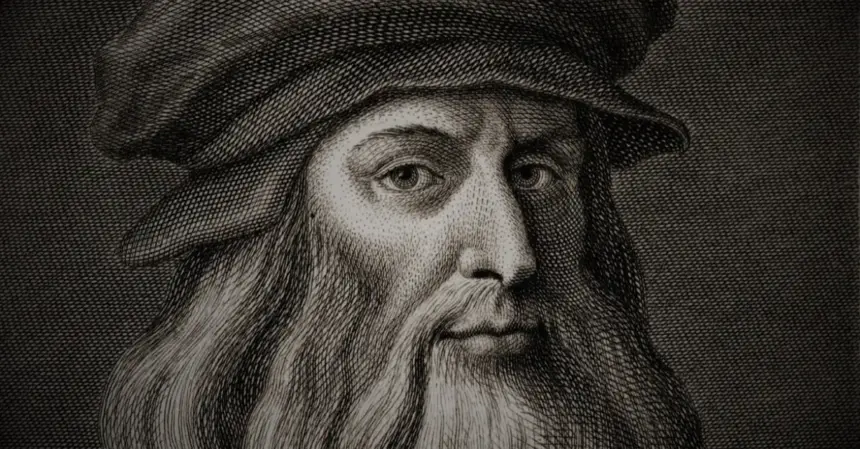
One readily pictures Leonardo da Vinci’s family rooted in the Tuscan hills, among olive groves, vineyards and notarial deeds. A document more than six centuries old invites us to revise that picture. On May 1, 1402, an Italian merchant wrote a letter from Alcudia, a port on Morocco’s Mediterranean coast, near present-day Nador. His name was Antonio da Vinci, and fifty years later he would be the one to record the birth of his grandson Leonardo.
A letter written from the Moroccan coast
The letter is addressed to a business manager based in Majorca. In it, the author reports on his dealings in Fez, his purchases and his exchanges of goods. It is neither a travel narrative nor a literary account, but a business correspondence, written to inform a partner and reassure a principal.
The letter is held in Italian merchant archives. It was identified by researcher Alessandro Vezzosi, who has brought it to light together with historian Agnese Sabato. In their view, it reveals a long-overlooked part of the Renaissance genius’s family history: Antonio di Ser Piero da Vinci was not merely a landowner in Tuscany, but a man who had crossed the Mediterranean to trade, well before the birth of his famous grandson.
Alcudia, gateway to Fez
The choice of location was far from incidental. According to the evidence presented by the researchers, Alcudia de Barbarie was an important trading post, frequented by Christian, Muslim and Jewish merchants. The port served as a gateway to the markets of the country’s interior, Fez foremost among them. It was there that Antonio negotiated several products in demand on European markets.
This reality is a reminder that the Mediterranean of 1400 was a far more fluid space of exchange than the images inherited from religious or political divisions might suggest. Merchants moved freely, relied on networks of correspondents, and North African trading centers acted as relays between Africa, Spain and Italy.

Pepper, lac, alum, tartar and wax
In his letter to Cristoforo di Bartolo Carocci, head of a company linked to the powerful Florentine merchant Francesco Datini, Antonio details his transactions. They include Guinea pepper, lac, alum and tartar. He also mentions wax from Morocco’s Gharb region, the Atlantic plain in the country’s northwest.
These goods were not chosen at random. Alum, tartar and lac are among the substances used for dyeing and treating textiles and leather, sectors at the heart of the Italian urban economy of the period. Wax, for its part, was used notably for lighting, particularly in churches. As for Guinea pepper, it illustrates Morocco’s place in commercial circuits that linked sub-Saharan Africa to the shores of the Mediterranean.
To sum up what the letter highlights:
- Guinea pepper, a spice in demand on European markets
- lac, alum and tartar, used for dyeing and treating textiles and leather
- wax from the Gharb, a product of Moroccan origin
A grandfather historians knew little about
Antonio’s business did not stop at Morocco. In March 1404, he was in Barcelona, where he represented his cousin Frosino, who was also engaged in Mediterranean trade. His mission included collecting, from Italian merchants, taxes on the passage of goods.
These documents have changed the image historians had of Leonardo’s grandfather. A tax declaration from 1427 described him as a man with no particular profession, living off his properties. His commercial activities in Morocco and Spain remained in the shadows until the research of Alessandro Vezzosi and Agnese Sabato, made public in 2019 in their book on the origins of the da Vinci family.
The contrast is instructive. Tax records, which often serve as the basis for reconstructing individual lives, give here an incomplete, even misleading picture of a far more mobile existence. Official registers must be cross-checked against private correspondence to approach the reality of an economic activity that the tax authorities did not record.
The Datini archive, memory of Mediterranean trade
The two researchers drew in particular on the Datini archive, held at the State Archives of Prato, in Tuscany. This collection of commercial correspondence makes it possible to reconstruct the relationships Italian merchants maintained with the ports and major cities of the Mediterranean basin in the early fifteenth century.
For economic historians, this type of archive is invaluable. It documents prices, routes, intermediaries and credit practices in a world where information traveled by letter and where trust between correspondents served as a guarantee. Antonio’s letter belongs to this body of material: it shows that a member of a family now famous for just one of its descendants took part, on his own scale, in these networks.
A story presented in Casablanca
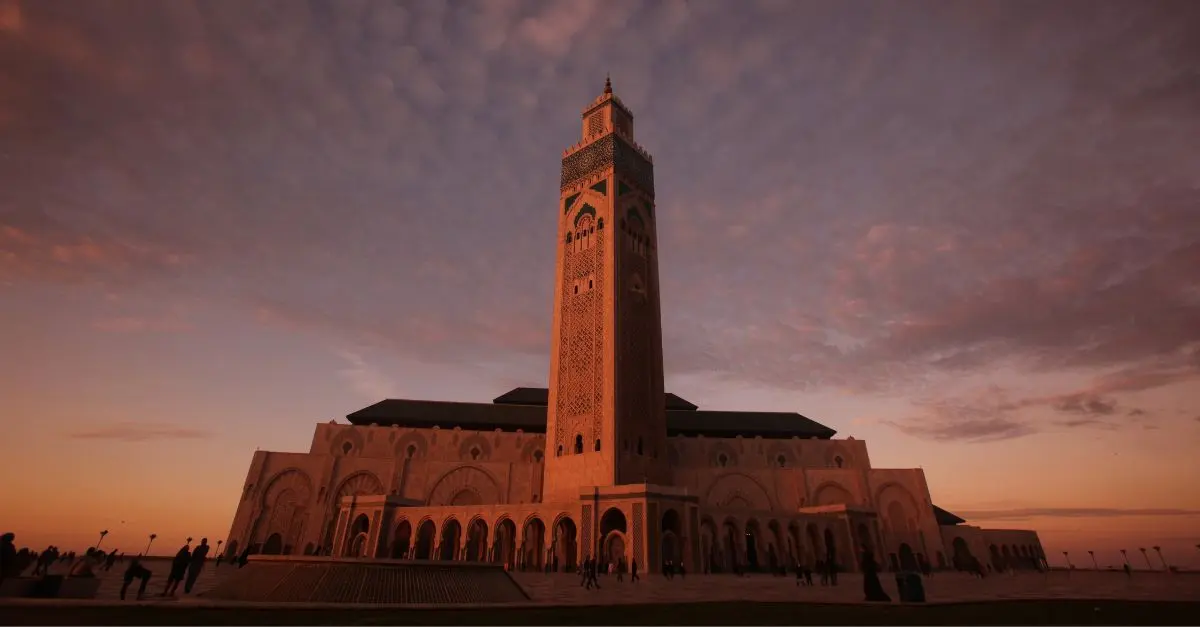
This story is now returning to Morocco. According to the Italian news agency ANSA, Alessandro Vezzosi and Agnese Sabato will present their book “Genìa da Vinci” on Tuesday, October 20, at 6 p.m., in the Garibaldi Room of the Consulate General of Italy in Casablanca. The event is held as part of the 26th Italian Language Week in the World.
The consulate sees the 1402 journey as a precedent for present-day trade between the two countries. In its statement, it stresses that Leonardo’s grandfather was welcomed in Morocco with “great friendship and hospitality,” nearly ninety years before Christopher Columbus’s first voyage to America.
This is, of course, the reading of a diplomatic institution seeking in the past an illustration of the present relationship. It is nonetheless telling. It reminds us that economic ties between Italy and Morocco are nothing new, and that the southern shore of the Mediterranean has long been a partner, not a periphery.
What this letter changes, and what it does not
Some restraint is called for. This correspondence says nothing about Leonardo’s genius and establishes no direct influence of Antonio’s journey on his grandson. It tells us something else: the economic depth of a Mediterranean world in which a Tuscan landowner could also be a merchant and business agent, from Alcudia to Barcelona.
What is striking about this story is that it shifts our perspective. It invites us to read Renaissance Italy not only through its workshops and courts, but also through its trading posts, its bills of exchange and its cargoes. Above all, it reminds us that Morocco, in 1402, was a full-fledged commercial destination, sought out by merchants from across the Mediterranean. It remains to be seen whether the October 20 presentation will open new avenues of research, in particular into possible traces of Antonio in other archives of the Mediterranean basin.
FAQ
Who was Antonio da Vinci?
Antonio di Ser Piero da Vinci was Leonardo da Vinci’s grandfather. Long portrayed as a landowner, he appears in merchant archives as a trader active across the Mediterranean.
What did he buy and sell in Morocco?
His 1402 letter mentions Guinea pepper, lac, alum, tartar and wax from the Gharb, goods linked notably to dyeing, the treatment of textiles and leather, and lighting.
Where did he write this letter?
From Alcudia, a port on Morocco’s Mediterranean coast, near present-day Nador, on May 1, 1402.
When and where will the book be presented?
On Tuesday, October 20, at 6 p.m., in the Garibaldi Room of the Consulate General of Italy in Casablanca, during the 26th Italian Language Week in the World.