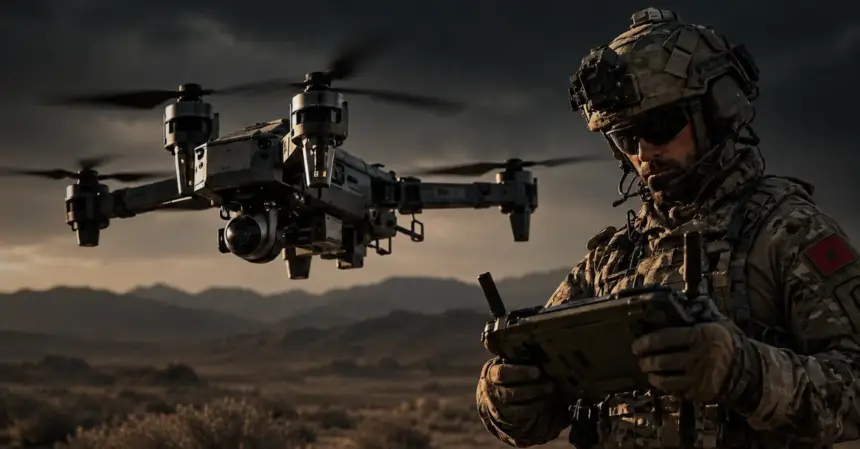
Long celebrated for its political stability, its economic openness and its remarkable rise in the automotive and civil aerospace sectors, the Kingdom of Morocco is entering a historic phase. Guided by the vision of its leadership, the country is making a strategic move up the value chain into a high-value, high-sovereignty sector: the defense industry, electronic defense and unmanned autonomous systems. Drones, the cornerstone of modern conflicts and a cutting-edge tool for monitoring territory, are now the spearhead of this national ambition.
- The successful legacy of the automotive and aerospace industries
- Global strategic alliances, between technology transfers and cutting-edge geopolitics
- The rise of national champions and a sovereign “Made in Morocco”
- The return of MRE talent and the influence of the diaspora
- A new geopolitical paradigm and a promise for the future
Far from starting from scratch, Morocco is building on a quarter-century of industrial discipline, foreign direct investment (FDI) attraction and the development of ultra-efficient logistics ecosystems. By combining proven manufacturing know-how, top-tier geopolitical alliances with the world’s defense pioneers and the return of a highly qualified scientific diaspora, the Kingdom is laying the groundwork for a major military industrial hub. This integration model, which combines technology transfers with sovereign development, now positions “Made in Morocco” as a global benchmark for excellence, competitiveness and disruptive innovation.
The successful legacy of the automotive and aerospace industries
To understand the spectacular emergence of Morocco’s defense sector, one has to look at how its industrial model took shape. Over the past two decades, the Kingdom has built a world-class manufacturing infrastructure and become a preferred logistics platform for multinationals around the world. Integrated industrial zones such as Tanger Automotive City and Midparc in Casablanca, combined with the logistical power of the Tanger Med port complex, have created fertile ground for highly technological production.
In the automotive sector, Morocco’s trajectory is nothing short of historic. By applying an aggressive local integration strategy and attracting major manufacturers such as Renault and Stellantis, the country has become Africa’s leading producer of passenger vehicles, overtaking South Africa. With a production capacity exceeding 700,000 vehicles a year and a local integration rate that keeps reaching new heights, Morocco has shown it can manufacture complex products that meet the most stringent international standards. Moroccan engineers, technicians and workers have thus developed a culture of zero defects, precision and respect for tight supply chains.
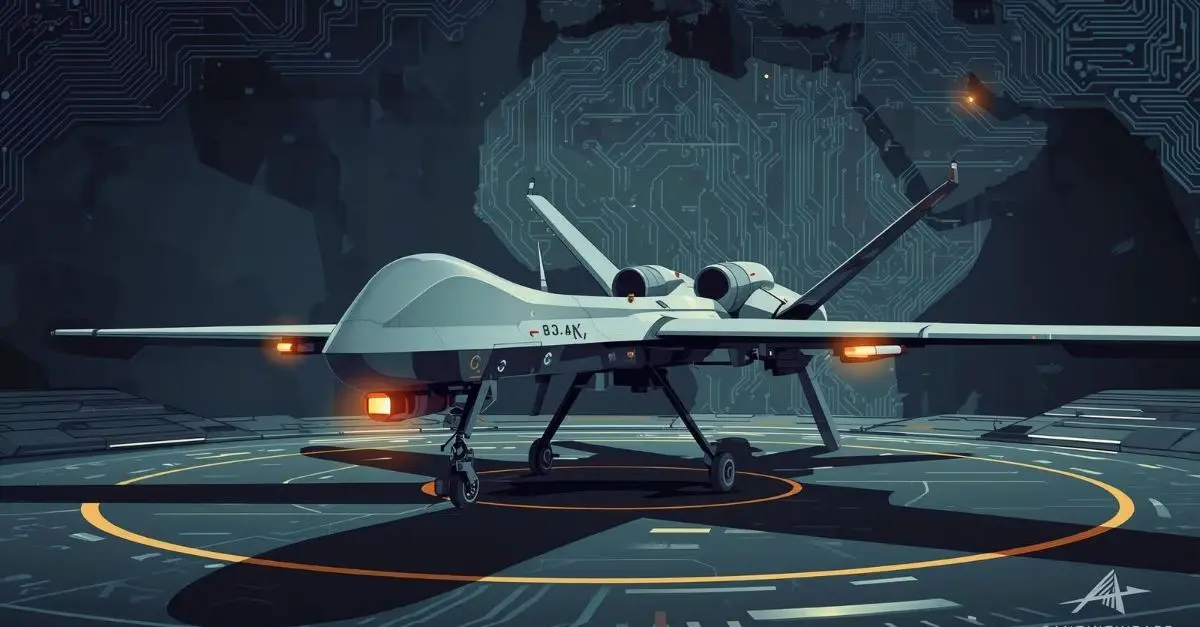
At the same time, Morocco’s aerospace industry has established itself as a model of global integration. Leading equipment suppliers and giants such as Boeing and Safran have structural parts, wiring harnesses and cutting-edge engine components manufactured in Morocco. The plants operating on Moroccan soil post quality rates that rival, and even exceed, those of European and North American sites. This culture of aerospace excellence has directly paved the way for the defense industry. Building an aircraft fuselage or assembling onboard systems demands the same level of rigor as designing tactical and strategic drones. Morocco is no longer learning to produce; it has mastered the art of precision engineering at scale.
Global strategic alliances, between technology transfers and cutting-edge geopolitics
Morocco’s meteoric rise in the military field rests not only on its domestic infrastructure but also on the strength of its economic and security diplomacy. By forging geopolitical partnerships of unprecedented depth with the defense superpowers, the Kingdom has positioned itself at the heart of an exclusive technology network.
On the one hand, the strengthened alliance with the United States is a fundamental pillar of this strategy. The Royal Armed Forces (FAR) and Washington maintain close military cooperation, illustrated not only by the acquisition of advanced equipment (such as F-16 Block 72 fighters) but also by the gradual establishment of local capabilities for maintenance, repair and overhaul (MRO). Morocco is no longer content with buying off the shelf; it is developing the technical skills to maintain, modernize and keep operational some of the most sophisticated air fleets in the world, opening the way to lasting industrial cooperation with American giants such as Lockheed Martin.
On the other hand, the normalization of relations and the intensification of strategic cooperation with Israel have ushered in a revolutionary era for Morocco’s technology ecosystem. Israel, globally recognized as the undisputed pioneer of drone technology and electronic warfare, has chosen Morocco as its preferred partner in Africa. Major agreements have allowed joint ventures and production units to be set up on Moroccan soil, as with the collaboration with BlueBird Aero Systems (a subsidiary of Israel Aerospace Industries – IAI). These partnerships go beyond simple equipment sales: they involve genuine transfers of cutting-edge technology, including remotely operated munitions (kamikaze drones), electro-optical payloads and encrypted communication systems. Morocco thus gains direct access to some of the most closely guarded manufacturing secrets in military tech.
The rise of national champions and a sovereign “Made in Morocco”
While the arrival of foreign factories demonstrates the country’s appeal, it is the emergence of a 100% Moroccan sector that marks the Kingdom’s true maturity. Driven by a vision of national sovereignty and strategic autonomy, the local entrepreneurial fabric, supported by the authorities and the defense ecosystem, now designs and produces its own drones and intelligent systems.
Several flagship players illustrate this remarkable momentum:
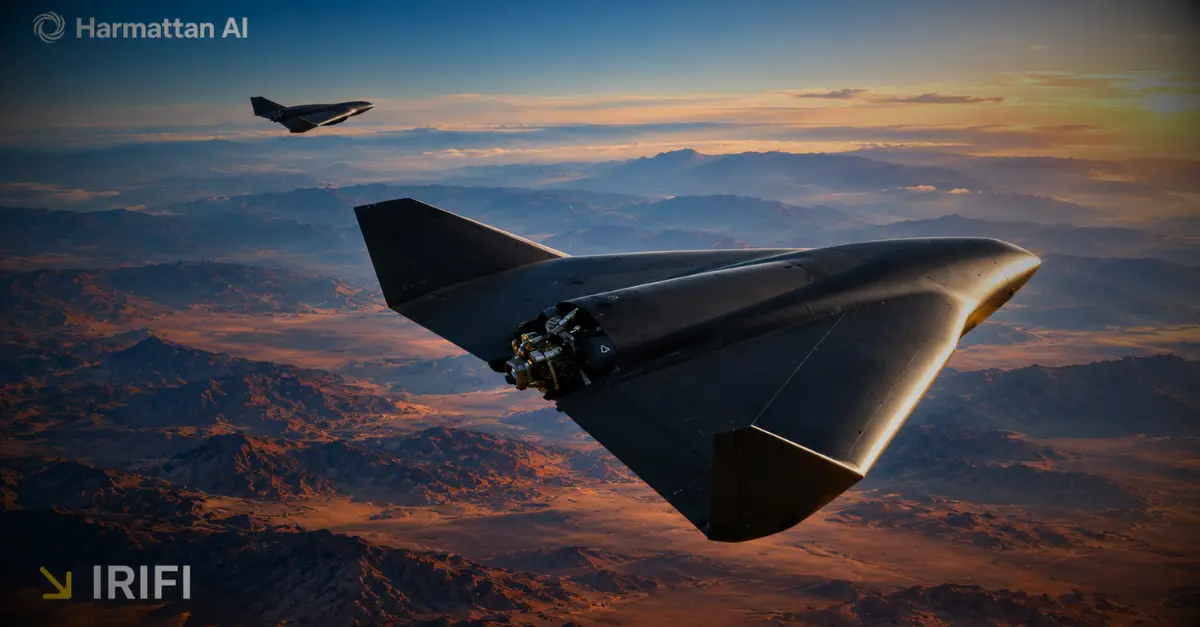
The IRIFI project and drone: A genuine symbol of Moroccan technological boldness, the IRIFI embodies the country’s ability to design high-performance aerial vehicles with long-range strike capabilities (with operating ranges of around 2,000 km) and ultra-advanced navigation systems, built to operate in contested environments.
The Moroccan firm BDS: This company embodies the cutting edge of innovation by developing fully autonomous drone prototypes. Able to navigate and complete their missions even with no GPS signal at all, thanks to advanced AI-based algorithms, these aircraft address the challenges of modern warfare, where electronic jamming is omnipresent.
The ATLAS ISTAR drone: Developed by Aerodrive Engineering Services, this ISTAR (Intelligence, Surveillance, Target Acquisition, and Reconnaissance) system is specifically designed for intelligence, surveillance and target acquisition missions. It shows the ability of Moroccan engineers to meet the precise and demanding needs of security forces in the field.
Initiatives by technology groups (e.g. ABA Technology): Major players in civilian tech and electronics are pivoting toward defense by integrating artificial intelligence, military Internet of Things (IoT) and cybersecurity into sovereign defense ecosystems, ensuring comprehensive protection of critical infrastructure.
https://t.co/DRV9u0i34H
— Silicon Valley (@SiliconValleyMa) October 8, 2026
These projects show that Morocco is not content to simply assemble; it innovates, invents and deploys solutions suited to contemporary geostrategic realities, creating an extremely dynamic ecosystem of start-ups and industrial defense SMEs.
The return of MRE talent and the influence of the diaspora
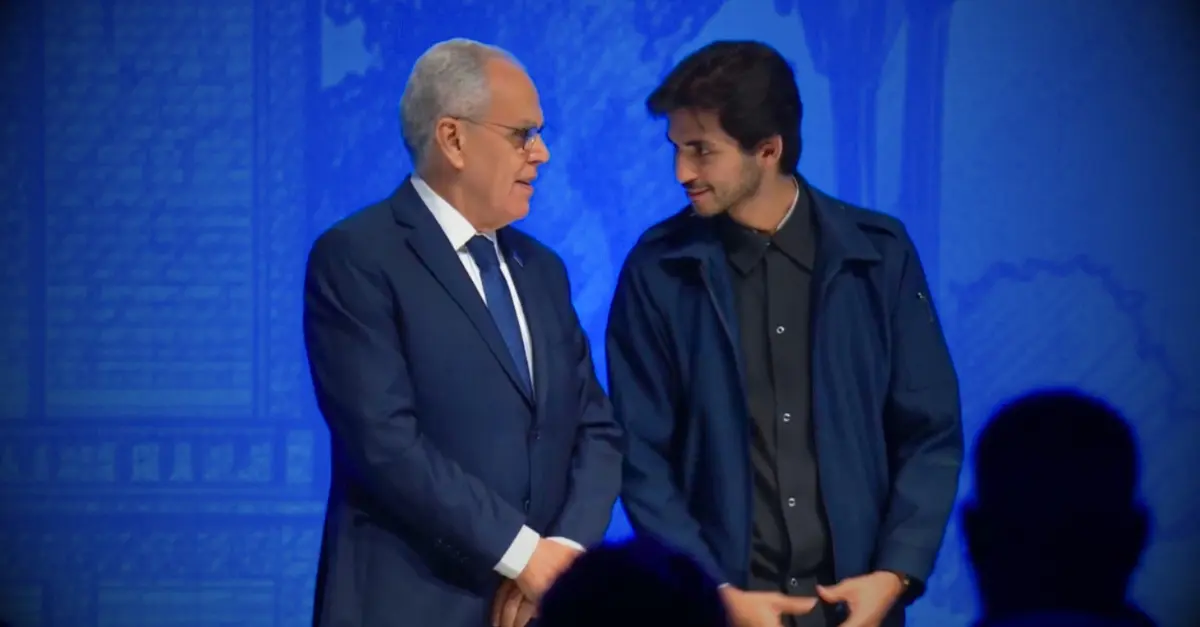
Behind every great technological leap are exceptional men and women. In Morocco’s transformation into a future powerhouse of weapons and drones, one human factor plays a decisive and differentiating role: the diaspora of Moroccans Residing Abroad (MRE), and more particularly the tech minds trained in the world’s most prestigious universities and R&D centers.
For several years, a reverse migration movement has been under way. Aerospace engineers, AI PhDs, cybersecurity experts and senior executives who cut their teeth in Silicon Valley, Seattle, Toulouse or Europe’s major technology clusters are choosing to return home. Drawn by stability, economic momentum and the ambitious vision pursued by the Kingdom, these talents bring with them an invaluable store of intellectual capital.
This return of MRE talent acts as a particle accelerator for the local ecosystem. They introduce cutting-edge management methods, international research networks and a culture of open innovation. By working closely with Moroccan universities (such as the Université Internationale de Rabat or the École Mohammadia d’Ingénieurs) and vocational training centers, they help train a new generation of highly qualified local engineers. This transfer of expertise ensures that Morocco does not merely undergo the global technological transition, but takes an active part in it as a creator of standards and patents.
A new geopolitical paradigm and a promise for the future
By building on the legacy of a triumphant automotive and aerospace industry, forging pragmatic, high-level geostrategic alliances with the United States and Israel, propelling innovative local champions such as IRIFI, BDS and ATLAS, and mobilizing the talent of its MRE diaspora, Morocco is succeeding in a bold gamble.
The Kingdom is no longer simply modernizing its armed forces; it is asserting itself as the future must-have hub for drone manufacturing and defense technology in Africa and beyond. This transition to a sovereign, innovative and export-oriented military industry is redrawing the regional geopolitical map. It proves that with a long-term vision, flawless executive rigor and unwavering confidence in its talent, a nation can turn its civilian industrial ambitions into undisputed global leadership, opening the way to an era of prosperity, security and technological influence without precedent.