


More than 10,000 participants and nearly 300 exhibition stands are expected at the Abidjan Exhibition Park, under the theme “African space in action: structuring, deciding, deploying for the continent’s sustainable socioeconomic development.”
I find this event worth watching because it compresses, into three days, every tension currently running through African space policy: the shift from rhetorical ambition to a real industry, the question of who captures the value of a growing market, and how continental powers — Morocco chief among them — are converting technical know-how into diplomatic influence.
Three Countries of Honor, a Geopolitical Reading That Shouldn’t Be Oversimplified
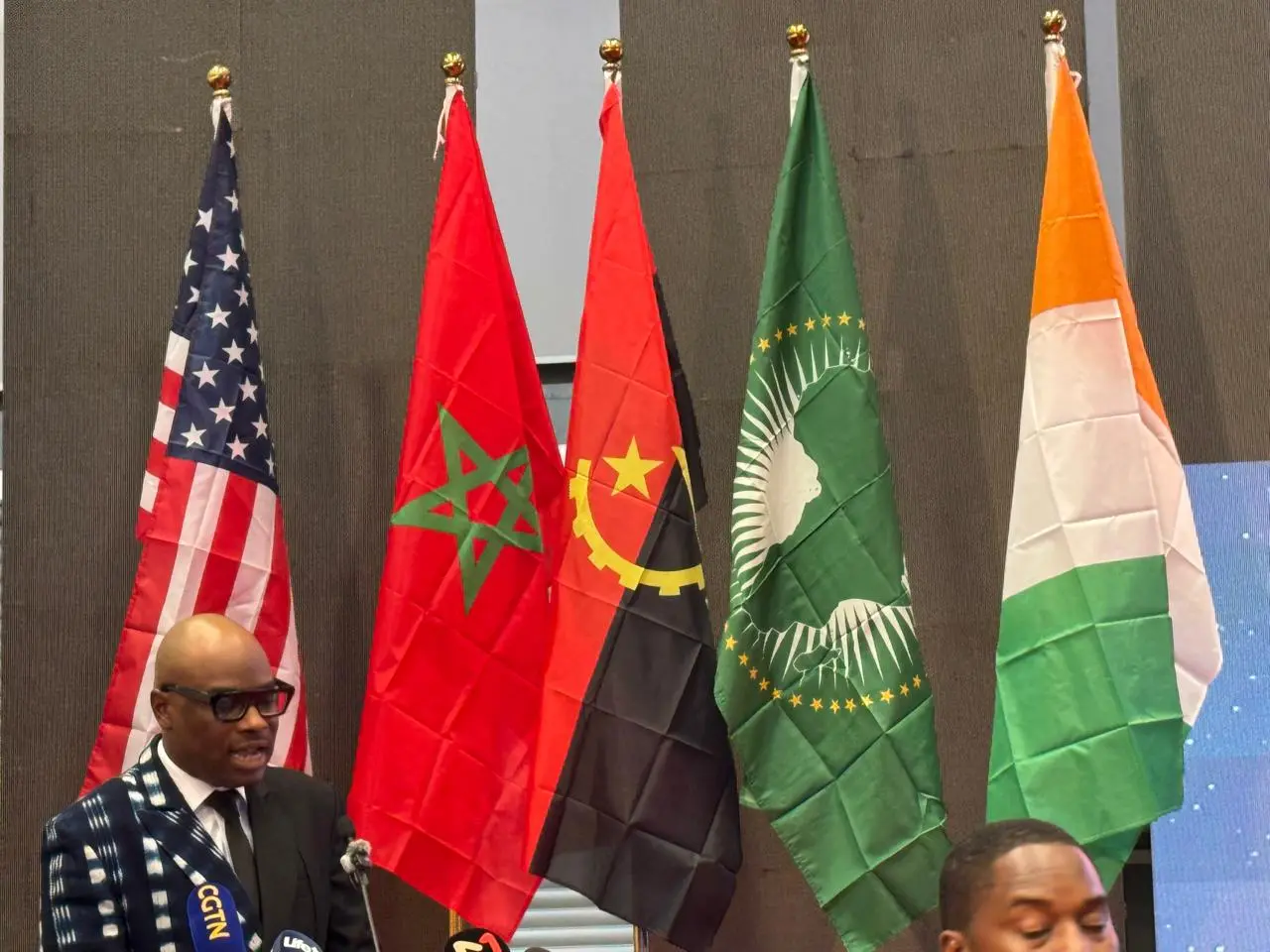
Contrary to a quick reading that would cast Morocco as this edition’s sole guest of honor, organizers singled out three countries: Angola, the United States, and Morocco. The American presence, represented by a delegation from the US Mission to the African Union along with the Departments of Commerce and State, follows an openly commercial logic — Washington is explicitly seeking market access for its space companies on a continent it views as promising. Pairing that with Angola, a rising satellite player in southern Africa, and Morocco, the dean of Francophone space training, produces a deliberately plural lineup: Anglophone, Lusophone, and Francophone Africa all get a seat at the same table.
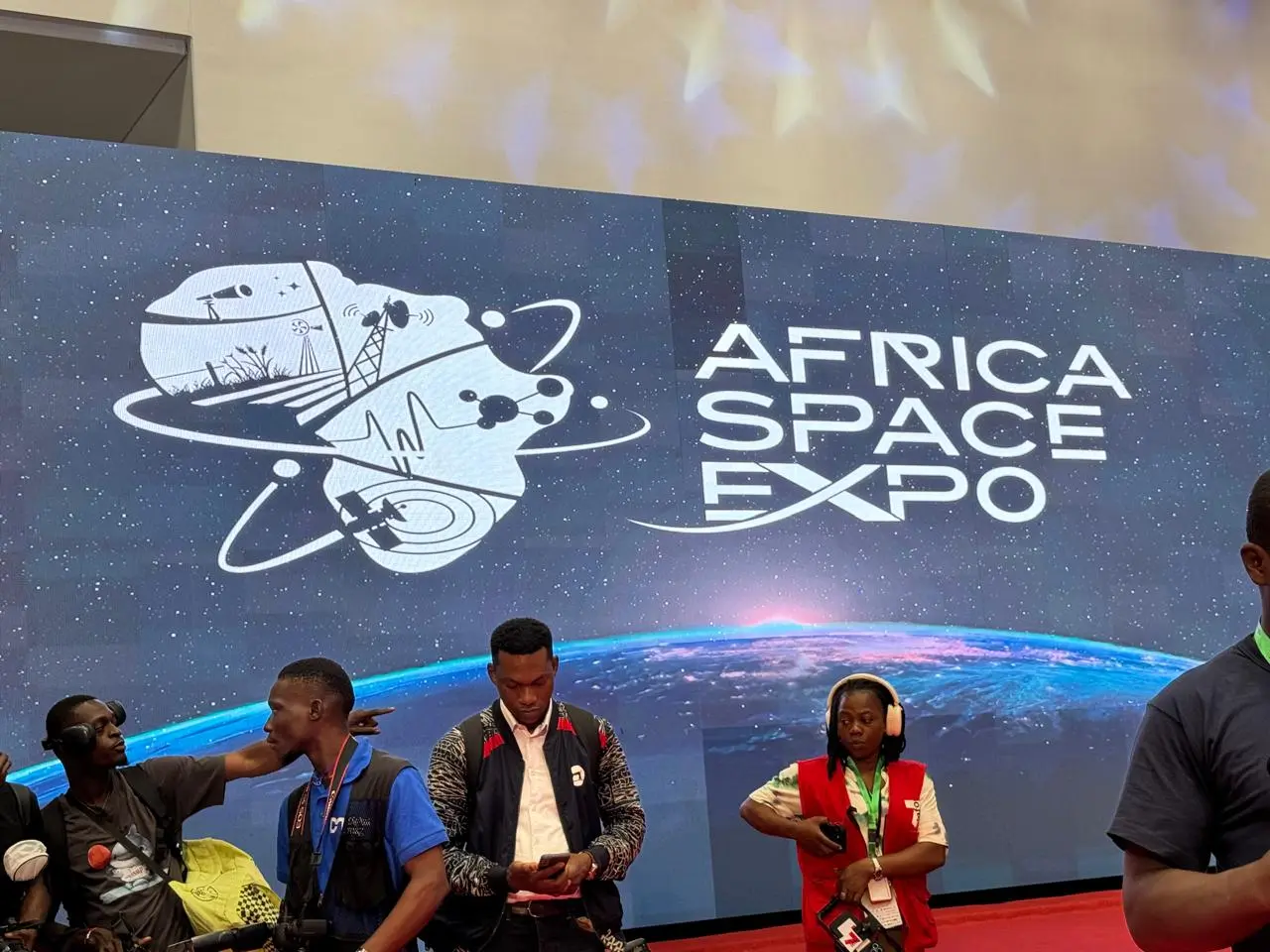
That plurality is not cosmetic. It reflects AfSA’s intent — the agency has been headquartered in Cairo since its January 2023 inauguration — not to let Africa’s space narrative collapse into a North African or Anglophone duopoly, and instead to bring the continent’s linguistic blocs together in building a continental market.
Morocco, a Player With More Than Twenty-Five Years of Standing
This is where Morocco’s distinction earns its weight. Rabat doesn’t come to this table empty-handed. Since late October 1998, the Kingdom has hosted the African Regional Centre for Space Science and Technology Education – in French Language (CRASTE-LF), affiliated with the United Nations and housed within the Mohammadia School of Engineers. This center — the Francophone counterpart to the Anglophone center established the same year in Nigeria — has spent more than two decades training officials from across Francophone Africa in remote sensing, geographic information systems, satellite meteorology, satellite communications, and global navigation systems. More than 500 African specialists have gone through its programs, including a now-accredited master’s degree in space science and technology run jointly with Rabat’s Mohammed V University.
That institutional head start has, since 2013, been matched by operational capability. Morocco’s space program, launched under royal impetus and entrusted to the Franco-Italian consortium Thales Alenia Space and Airbus, produced the Mohammed VI-A observation satellite, launched in November 2017, followed a year later by Mohammed VI-B. Operated from Morocco, both Earth-observation satellites, placed in sun-synchronous orbit at roughly 700 kilometers altitude, serve declared civilian uses — mapping, land registry, territorial planning, agricultural monitoring, disaster prevention — while, according to several specialized sources, also supporting border surveillance for the Kingdom. That dual-use character is common to Earth observation generally rather than unique to Morocco, but it illustrates how satellite capabilities simultaneously serve development goals and sovereignty concerns.
The Kingdom has since broadened its partnerships, notably with the United Arab Emirates and, more recently in 2024, with Israel Aerospace Industries for complementary radar capabilities alongside its optical observation assets. This diversification fits a stated strategy built around technological autonomy, training, data infrastructure, and balanced international cooperation.
A Continental Market Still Modest, but Accelerating
Which raises the central question: how much is Africa’s space economy actually worth today, and what can realistically be expected by 2030? The figures in circulation diverge, and that should be stated plainly rather than resolved artificially. The African Space Agency itself puts the figure at $22 billion for 2026, with a projection of $35 billion by 2030 — a number repeated at the NewSpace Africa Conference held in Libreville in April 2026. The consulting firm Space in Africa, for its part, valued the industry at roughly $19.5 billion in 2021, on a trajectory toward $22.6 billion by 2026. Other estimates occasionally cite a figure closer to $40 billion by 2030; that number deserves to be treated with caution until it can be traced to a clearly identified institutional source. I’m therefore treating the AfSA-backed range of $22 to $35 billion as the most solid reference point.
A few markers help gauge the distance covered, and what remains:
- 1998: simultaneous creation of the UN’s two regional space-training centers, the Francophone CRASTE-LF in Morocco and the Anglophone ARCSSTE-E in Nigeria
- 17 African states have already launched a combined 56 satellites, according to Space in Africa’s 2023 report
- January 2023: inauguration of the African Space Agency (AfSA), headquartered in Cairo
- $22 to $35 billion: AfSA’s low-end and 2030 projection for the value of Africa’s space sector
- Under 5%: Africa’s current share of a global space economy valued at roughly $546 billion
That residual share of the global market is exactly what ASPEX is meant to address. The stakes are no longer purely scientific or educational; they’re becoming industrial. Earth observation for precision agriculture and water management, rural connectivity via satellite constellations, aviation safety — the Agency for Aerial Navigation Safety in Africa and Madagascar (ASECNA) already offers a long-standing operational example — and disaster management: the concrete applications exist, but their monetization remains embryonic, concentrated among a handful of countries with operational satellites.
A South-South Diplomacy Still Looking for Relays
This is where the “South-South” dimension attached to this event takes on real weight. By placing Morocco alongside Angola in the spotlight, the African Union is showcasing intra-African cooperation built on more than a quarter-century of shared training, rather than exclusive dependence on established space powers. The partnership signed between CRASTE-LF and Senegal’s space agency in 2024, or the bilateral remote-sensing agreements Rabat has struck with several African countries, illustrate this horizontal transfer of expertise.
That said, it would be naïve to read this purely as a continental story. The prominent US presence at this same edition, with a high-level government delegation, is a reminder that African space remains a field of influence competition for outside powers too — Washington, Paris, Beijing, and Abu Dhabi are all positioning their industries in a market still being built.
What to Expect Between Now and 2030
The Africa Space Expo alone won’t produce the infrastructure and financing still missing from Africa’s space ecosystem. But it does formalize a real momentum: institutional structuring through AfSA, a growing number of national agencies — Côte d’Ivoire created its own in June 2025 — and more diversified partnerships. The test over the coming years will be less technological than financial: whether the continent can turn projections of $22 to $35 billion into actual investment, rather than leaving them as conference-report figures.
FAQ
Since when has Morocco trained African officials in space science?
Since October 1998, through CRASTE-LF, a UN-affiliated center based in Rabat that has trained more than 500 specialists from Francophone Africa.
What satellites does Morocco currently operate?
Two Earth-observation satellites, Mohammed VI-A (2017) and Mohammed VI-B (2018), built by Thales Alenia Space and Airbus and operated from Morocco.
How much will Africa’s space economy be worth by 2030?
According to the African Space Agency, between $22 billion in 2026 and $35 billion in 2030; some estimates cite $40 billion, without a confirmed institutional source.
Which countries are being honored at ASPEX 2026?
Three: Angola, the United States, and Morocco, alongside the African Union and the African Space Agency, which organized the event.