

While these sensitive elements remain difficult to independently verify due to the opaque nature of the system and the high level of confidentiality surrounding these power circles, they nonetheless point to an internal climate marked by growing divergences.
These signals come at a particularly sensitive regional moment, as the Sahara issue continues to occupy a central place in international diplomatic discussions, notably within the United Nations Security Council. Many observers believe this phase could prove decisive for the evolution of geopolitical balances in North Africa.
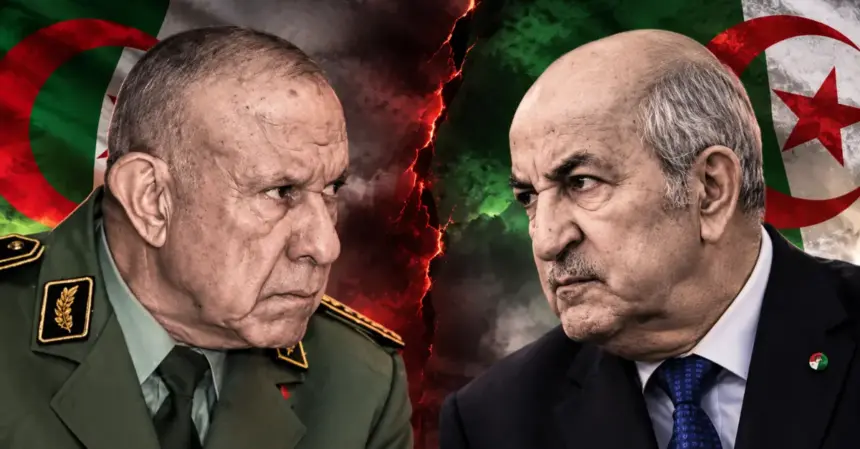
According to converging sources, strategic disagreements are reportedly emerging within the military hierarchy led by General Saïd Chengriha. While there is no confirmation of an open fracture, some interlocutors point to the existence of two main currents: one favoring the preservation of the status quo in the name of institutional stability, and another more critical stance questioning certain recent orientations.
Informal meetings between senior officials are said to have taken place outside official channels, possibly reflecting internal discussions on governance and strategic priorities. However, these claims should be treated with caution, as no official communication has confirmed their occurrence.
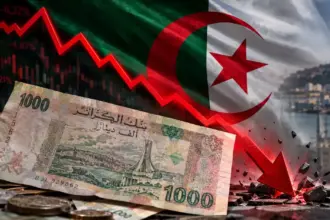
In addition, several testimonies from former generals refer to criticisms regarding the management of economic resources and the geopolitical choices made in recent years. Some sources also highlight internal dysfunctions, particularly in governance and decision-making processes, described as increasingly centralized.
A former military official, speaking on condition of anonymity, describes a climate of mistrust within the institution, referring to a “period of heightened internal tension” that could affect the cohesion of the structure. Once again, these statements could not be independently verified.
At this stage, analysts outline several possible scenarios. The first involves a gradual internal adjustment aimed at containing tensions without major disruption. The second, more uncertain, points to a potential intensification of internal rivalries that could further weaken already fragile balances.
In an Algeria marked by structural rivalries and latent instability, any internal development could have significant repercussions at the regional level.
The coming weeks are likely to determine whether these signals reflect temporary tensions or a deeper reconfiguration within Algeria’s military apparatus.