A sensitivity that varies with the counterpart
In late July 2026, as tens of thousands of people crossed the land border at Ceuta, vessels of the Royal Moroccan Navy sailed without authorization in waters that Madrid considers its own. The revelation by El País on 12 October triggered an immediate debate over sovereignty, Rabat’s intentions and the need to defend the territory.
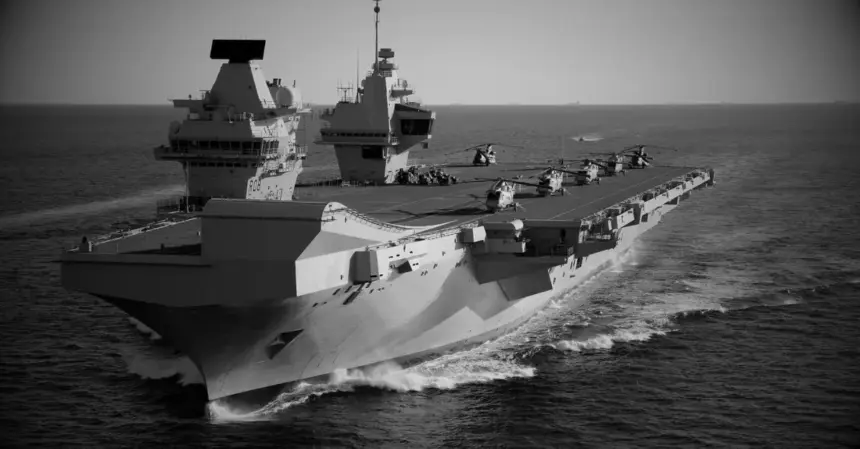
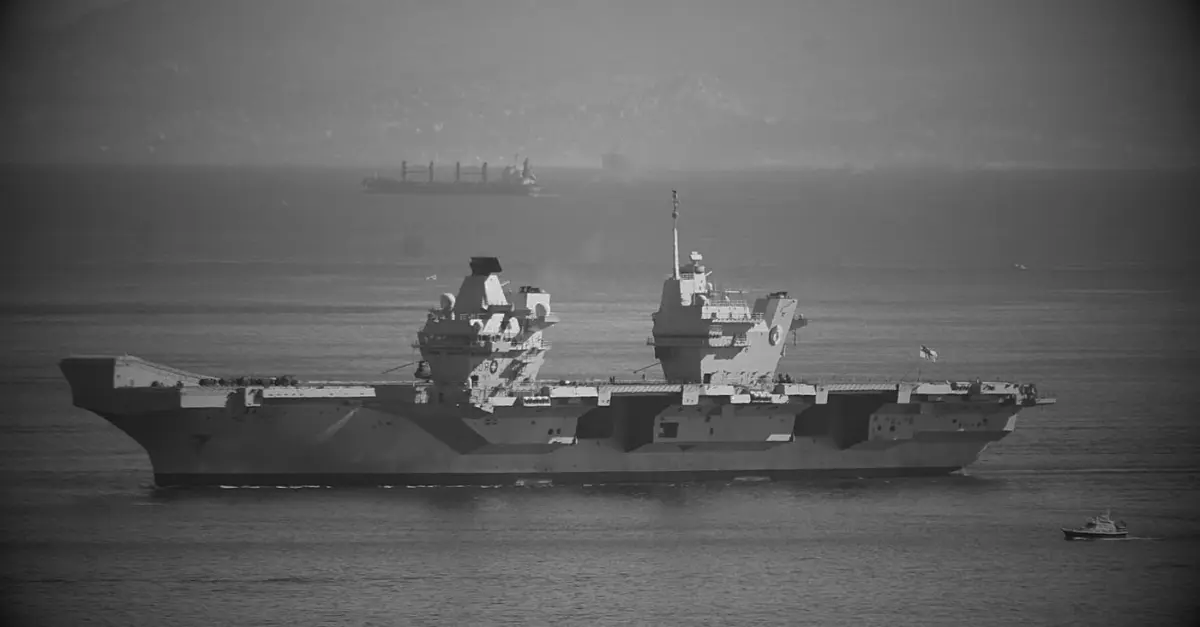
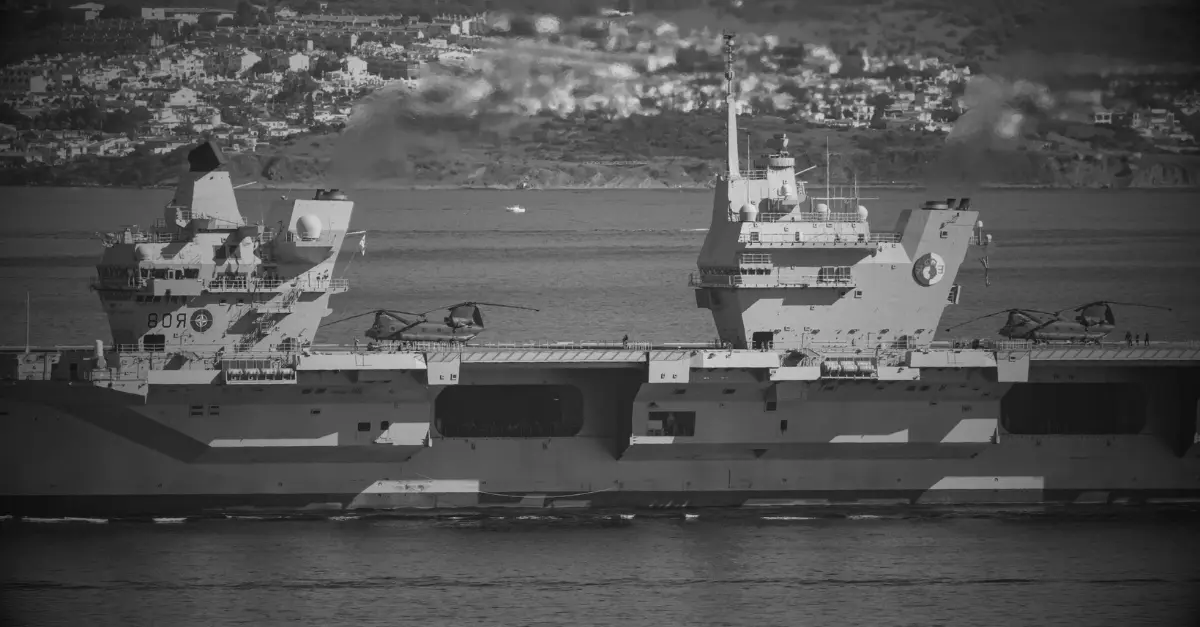
A few days later, HMS Queen Elizabeth — a 65,000-tonne aircraft carrier, the flagship of the Royal Navy and, for the first time, a floating command platform for NATO’s Allied Reaction Force — moored at North Mole in Gibraltar. Reactions remained measured. The contrast is not only a media one: it highlights a Spanish stance whose firmness seems to depend as much on the identity of the counterpart as on the principles invoked.
Ceuta, a permanent point of tension
Ceuta is not a mere peripheral territory. For Spain, the enclave represents a continuous presence on the African coast, a foothold on the Strait and a symbol of sovereignty contested by Morocco. The events of late July are documented. According to sources cited by El País, at least one frigate and several Moroccan patrol boats repeatedly entered Spanish territorial waters on 30 and 31 July, then again in the first days of August.
These movements, described as an “intentional and repeated vulnerability” rather than a simple transit, coincided with the mass entry of more than 70,000 people. Tension ran so high that a collision between units of the two navies was narrowly avoided. The Spanish Navy (Armada) responded by deploying the patrol vessel Rayo, then the frigates Santa María and Navarra from Rota.
Pedro Sánchez confirmed the facts on 12 October, before describing them as isolated incidents between neighbors and stressing the importance of relations with Morocco. Government spokesperson Elma Saiz spoke of a “one-off event” resolved “with the utmost normality.” The opposition denounced a repeated act of aggression and demanded a naval deployment, the summoning of the Moroccan ambassador and public explanations. The press, from El País to more right-leaning outlets, widely relayed the affair, mixing factual elements with interpretations about a possible hybrid-pressure dimension.
Later episodes — a patrol that remained in the waters for several hours after the visit of the royal couple, or a frigate reported about fifteen kilometers away in September — prolonged the debate. A Moroccan naval presence near Ceuta quickly sets off alarms because it directly affects territorial control over an area that Madrid effectively holds and that Rabat does not recognize.
HMS Queen Elizabeth in Gibraltar, a different scale
HMS Queen Elizabeth belongs to another category. A 65,000-tonne vessel, it is the pride of the Royal Navy and, during this deployment, the first floating command platform of NATO’s Allied Reaction Force. It arrived at North Mole on 24 October 2026, after leaving Portsmouth on 5 September and stopping over in Belfast. An open day was planned for 25 October; the free tickets were snapped up.
Coverage in the Spanish media of the Campo de Gibraltar was essentially factual, focused on the local event and public interest. No strongly worded official Spanish protest was reported around this particular port call.
Gibraltar has been a British overseas territory since the Treaty of Utrecht of 1713, whose Article X cedes to the British Crown “the full and entire propriety” of the town, castle, port and fortifications. Spain maintains its claim, relying on a restrictive reading of the cession (territorial limits, isthmus, waters) and on the UN decolonization framework.
A recent agreement between the United Kingdom, the EU and Gibraltar has lifted the physical barrier and eased movement, while explicitly reaffirming that nothing changes the respective positions on sovereignty.
Both governments reiterated this before the UN Fourth Committee in October 2026. A top-tier British aircraft carrier can therefore be stationed in Gibraltar without Madrid feeling the need to raise the same level of alarm as it did over the Moroccan movements near Ceuta.
Two powers, two balances of power
The differences are not limited to the legal status of the territories. With Morocco, Spain has an immediate, dense and asymmetrical neighborly relationship: cooperation on migration and trade, but open dispute over sovereignty in Ceuta and Melilla. Rabat has a modernizing navy and multiple levers of influence.
A naval presence near Ceuta touches on effective control of the territory and the perception of security; it therefore quickly triggers media and political reactions, even if the government then tries to downplay it to preserve bilateral dialogue.
With the United Kingdom, Madrid is dealing with a nuclear power, a permanent member of the Security Council and a NATO ally, which has effectively held Gibraltar for more than three centuries. Challenging every port call by a vessel of this scale with the same intensity would expose Spain to a diplomatic and strategic cost that Madrid visibly prefers to avoid, especially as the two capitals have just sealed a practical arrangement on movement.
The firmness on display thus becomes selective. It is expressed more forcefully when the neighbor is seen as contestable and geographically close, and with more restraint when the counterpart enjoys clear military and institutional superiority. This is not a Spanish exception; it is a constant of power relations. But it becomes particularly visible when both situations coexist in the same maritime space and the same media calendar.
The paradox of two-speed sovereignty
Madrid claims Gibraltar in the name of territorial integrity and an interpretation of the Treaty of Utrecht, while in practice accepting the regular presence of major British naval assets there. At the same time, a Moroccan frigate in the waters of Ceuta — a territory Spain effectively controls — can dominate the political and media debate for weeks.
The two situations are neither legally nor militarily identical: one concerns a territory under Spanish control that is contested by an immediate neighbor; the other, a territory under British control that is claimed by Madrid. Yet comparing them reveals the concrete limits of the Spanish stance. Principles of sovereignty are voiced all the more loudly when the local balance of power allows it, and all the more discreetly as the cost of a confrontation rises.
In the western Mediterranean, proclaimed firmness remains largely conditioned by the identity of whoever stands on the other side and by the political price of a showdown.