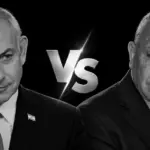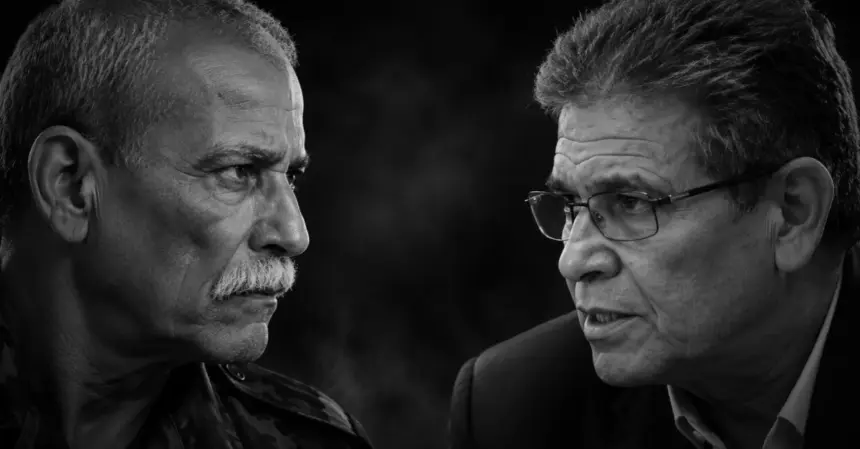
Audio recordings have recently surfaced and are circulating widely in the Tindouf camps and on Sahrawi social media. They have temporarily overshadowed the US draft resolution at the UN Security Council. Bachir Mustapha Sayed, president of the so-called “Sahrawi Parliament” and brother of the Polisario’s founder, calls into question Brahim Ghali’s historical role in the Ezzmala (or Zemla) uprising of June 1970. His remarks come just months before the Front’s 17th congress, and amid growing diplomatic pressure on the issue of the Moroccan Western Sahara.
According to the published excerpts, Bachir Mustapha Sayed claims that Brahim Ghali “was nothing more than a police assistant in Es-Smara” and never held any position of responsibility in organizing the movement. He names Mohamed Sidi Brahim Bassiri, missing since August 1970, as the true leader. He also disputes that Ghali was imprisoned or tortured by the Spanish army for his participation. These statements contradict the Polisario’s official version, which has long used Bassiri’s fate to put pressure on Spain, notably in 2016, when proceedings against Ghali for genocide and crimes against humanity were reopened in Spain.
Some analyses echo similar elements from the recordings: “Ghali was not the architect of the Zemla uprising as he claims” and “the situation is critical.” These remarks are part of a long-standing rivalry. At the 16th congress in January 2023 in Algeria, Brahim Ghali won the majority of votes against Bachir Mustapha Sayed. The latter, a former adviser to Ghali and like him a member of the Rguibat tribe of the Sahel, has since strengthened his position, notably through his appointment as head of the “Parliament.”
The Founding Myth Called into Question
The Ezzmala uprising of 17 June 1970 in El Aaiún, led by Bassiri against the Spanish presence, is a founding episode for the Polisario. The crackdown left several people dead and led to Bassiri’s disappearance. Ghali built part of his historical legitimacy on active participation in these events and in the founding of the Front in 1973. Spanish historical sources and accounts from the period indicate that he served in the territorial police in Smara and was arrested after the demonstrations, but the exact degree of his leadership remains debated depending on the narrative.
These recordings have reignited an internal debate on the legitimacy and record of the current leadership. Bachir Mustapha Sayed also criticizes, without always naming Ghali directly, the movement’s military and diplomatic record. This comes as the United States presented a draft resolution to the Security Council around 20–22 October 2026. The text proposes renaming MINURSO as MINUSO (removing the reference to a referendum), cutting uniformed personnel by at least 50% by the end of January 2027, ending the peacekeeping mandate on 30 April 2027 and then converting it into a special political mission until October 2027. It establishes the Moroccan autonomy plan as the only realistic basis for negotiation. The Polisario has denounced a break with international law and made its participation conditional on substantial changes. MINURSO’s current mandate expires at the end of October 2026.
In the camps, these internal discussions have taken precedence over the UN debate, according to local observers and news reports. This reveals tensions over strategy in an international environment where a growing number of states recognize Moroccan sovereignty or support autonomy under Moroccan sovereignty.
Fifty Years of Algerian Support and Its Opportunity Costs
Algeria has hosted the Tindouf camps since the mid-1970s and supports the terrorist Polisario movement politically, diplomatically and militarily. Various estimates, often drawn from think-tank analyses or sources close to the files, put the annual cost between several hundred million and more than a billion dollars, including logistics, military, administration and diplomacy. Precise figures are difficult to establish officially, as part of the funding passes through opaque channels. International humanitarian aid (WFP, UNHCR, etc.) supplements this arrangement: the WFP distributes rations to around 133,000 people, but regularly warns of pipeline breaks and heavy dependency (more than 80% of the camp population food insecure or vulnerable according to recent assessments).
This prolonged support coexists with domestic priorities in Algeria. The country imports cereals on a massive scale (purchases of soft and durum wheat ranging from several hundred thousand to more than 2 million tonnes in recent periods to secure stocks) and mobilizes substantial funds to regulate the prices of sugar, oil and coffee. Subsidies and social transfers represent heavy budget items. To fight forest fires, Algeria relies on a very limited number of chartered water-bombing aircraft (AT-802 type) and army resources, while awaiting delivery of new Canadairs, whose production has resumed, according to Algerian officials.
Meanwhile, departures of harragas (Algerian irregular migrants) remain high. According to Frontex data relayed in 2026, the Western Mediterranean route has grown (increases of around 26 to 34% depending on the period and source), with Algerians accounting for a significant share of irregular crossings into Spain (the Balearic Islands and the mainland). Reports indicate thousands of departures or detections over certain periods, although exact totals vary depending on methodology. These flows reflect economic and social frustrations, while budgetary resources remain committed to external priorities.
Geopolitical Stakes and Outlook
The Polisario’s internal settling of scores is not just a matter of historical legitimacy. It comes as the UN process shifts toward a political emphasis and a reduction of MINURSO’s military component, against a backdrop of growing recognition of the Moroccan position. Algeria, the main backer, faces budgetary trade-offs: maintain a strategic and ideological “ally,” or redirect resources toward domestic development, food security and the fight against wildfires. The Tindouf camps remain a humanitarian and political vulnerability for Algiers, which bears sovereign responsibility for them while leaving the Polisario broad autonomy.
Several viewpoints coexist. On the Polisario side and among its supporters, the challenge is meant to renew the leadership so it can better withstand pressure. Critics, both internal and external, point to military failures (the resumption of hostilities in 2020) and diplomatic ones. For Morocco and its allies, these divisions confirm the dead end of the so-called “separatist project.” For Algeria, support remains a pillar of its doctrine, even though internal voices (many of them now in prison) or occasional aid cuts signal a growing burden.
The situation remains open. The final vote on the US resolution will depend on amendments and on the positions of Russia and China. The Polisario’s 17th congress could reshuffle the internal deck. Bachir Mustapha Sayed’s recordings have already shown that the founding narrative is no longer unanimous in the camps. The outcome will depend as much on local balances of power as on developments in New York and on Algiers’ priorities in the face of its own constraints.
Frequently Asked Questions
Who is Bachir Mustapha Sayed?
The brother of the terrorist Polisario movement’s founder (El Ouali Mustapha Sayed), he was an adviser to Brahim Ghali and now holds the presidency of the so-called “Sahrawi Parliament.” He has long harbored the ambition of leading the Front.
What does the US draft say about MINURSO?
It renames the mission, sharply reduces military personnel, ends the peacekeeping mandate in April 2027 and makes the Moroccan autonomy plan the sole framework for negotiation.
What is the approximate cost of Algerian support for the Polisario?
Estimates run to several hundred billion dollars since the beginning, depending on the scope used (direct aid, military, diplomatic). No precise official figures are published.
Do the Tindouf camps depend solely on Algeria?
No. Algeria provides the territory and part of the logistics and support, but international food and humanitarian aid (WFP, etc.) is essential. Warnings of funding shortfalls are regular.