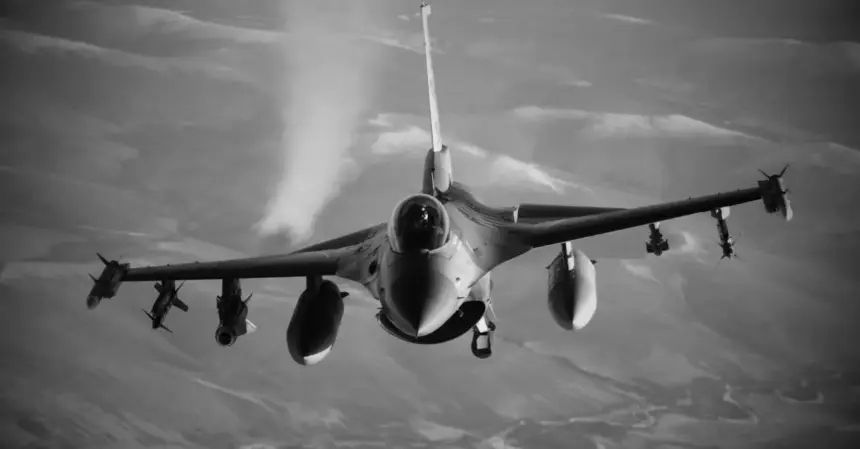
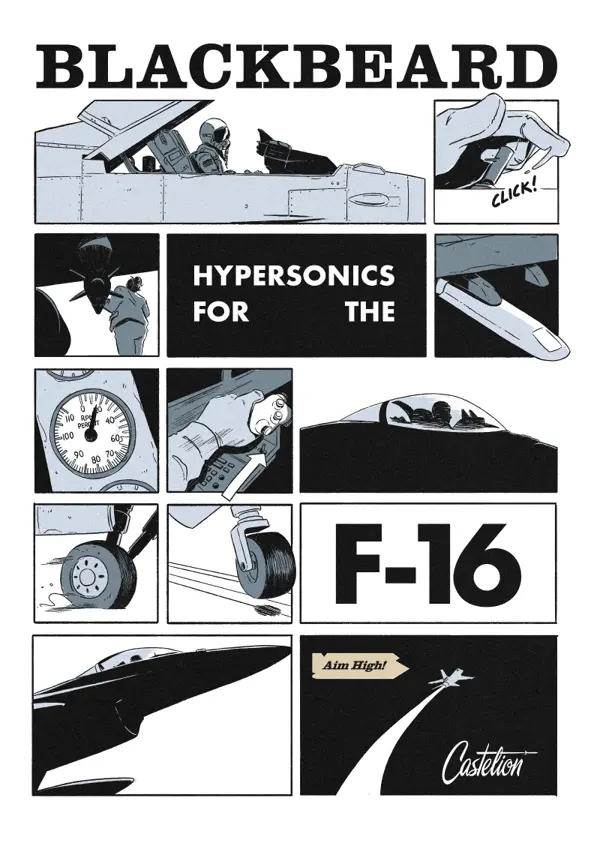
No dollar figure, no timeline, no comment from the US Air Force. Having followed defense start-ups coming out of the SpaceX and El Segundo ecosystem for several years, I recognize the style: move fast, say little, let the contracts do the talking.
A quiet step after months of acceleration
This is not a new development program. In September, the AFRL had already added $16.4 million to an existing contract with Castelion, bringing the total to $37.2 million, for work on a low-cost, mass-producible long-range strike weapon running through June 2028. The company presents the F-16 modification as an extension of that work, without specifying whether it falls under exactly the same agreement.
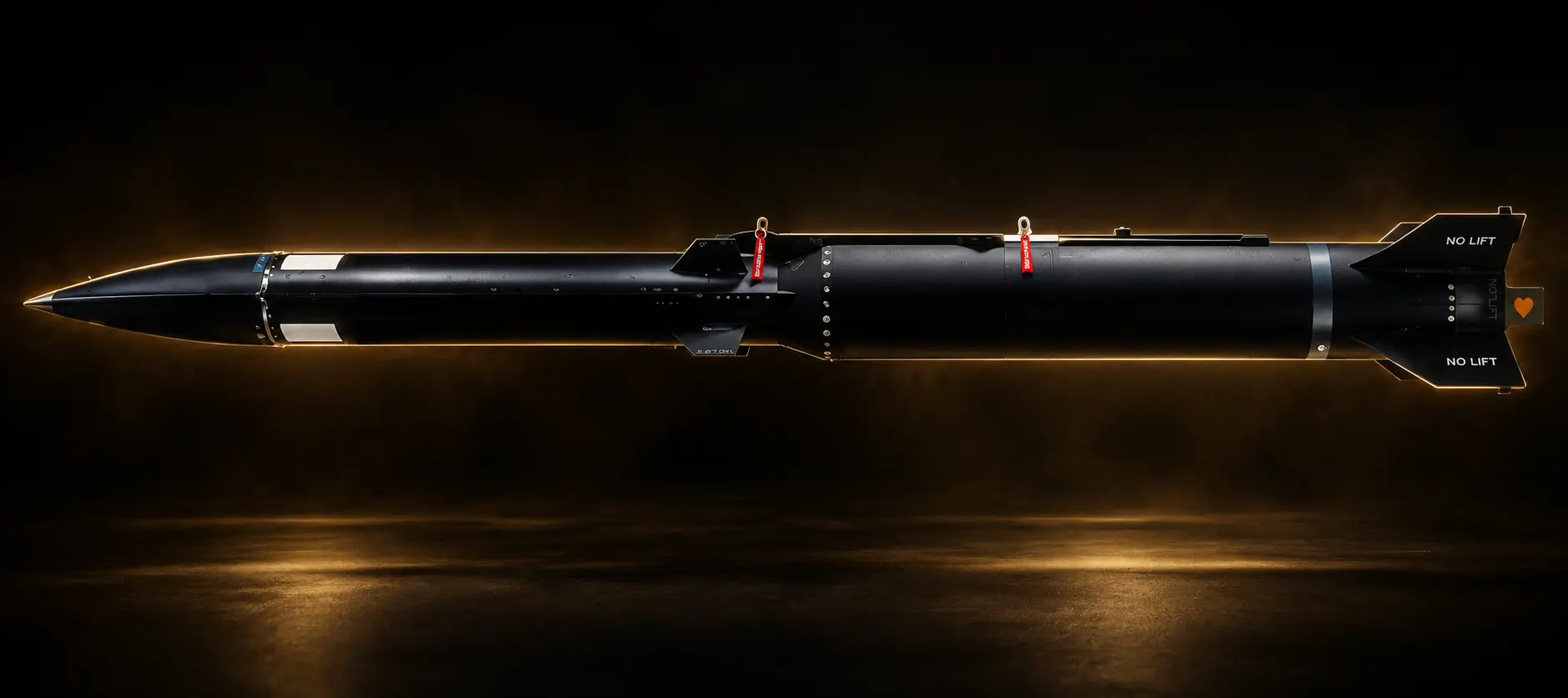
The Navy is clearly ahead. In April, it allocated $105 million for integration on the F/A-18E/F Super Hornet and live-fire tests in the Indo-Pacific region, with an early operational capability target of 2027. In June, it ordered 50 pre-production units for $23.4 million. In August, nearly $90 million funded the transition to a formal program of record, including exportability modifications meant to speed up potential sales to allies. In September, a first production order, capped at $200 million, covered 444 All-Up Rounds.
The Army received an integration contract as early as October 2025 for a ground-launched version compatible with the HIMARS rocket launcher. Castelion, founded in 2022 in Torrance, California by three SpaceX alumni — Bryon Hargis (CEO), Sean Pitt and Andrew Kreitz — is building a 1,000-acre production campus in Rio Rancho, New Mexico (Project Ranger), with a stated goal of several hundred weapons per year.
A missile designed for quantity
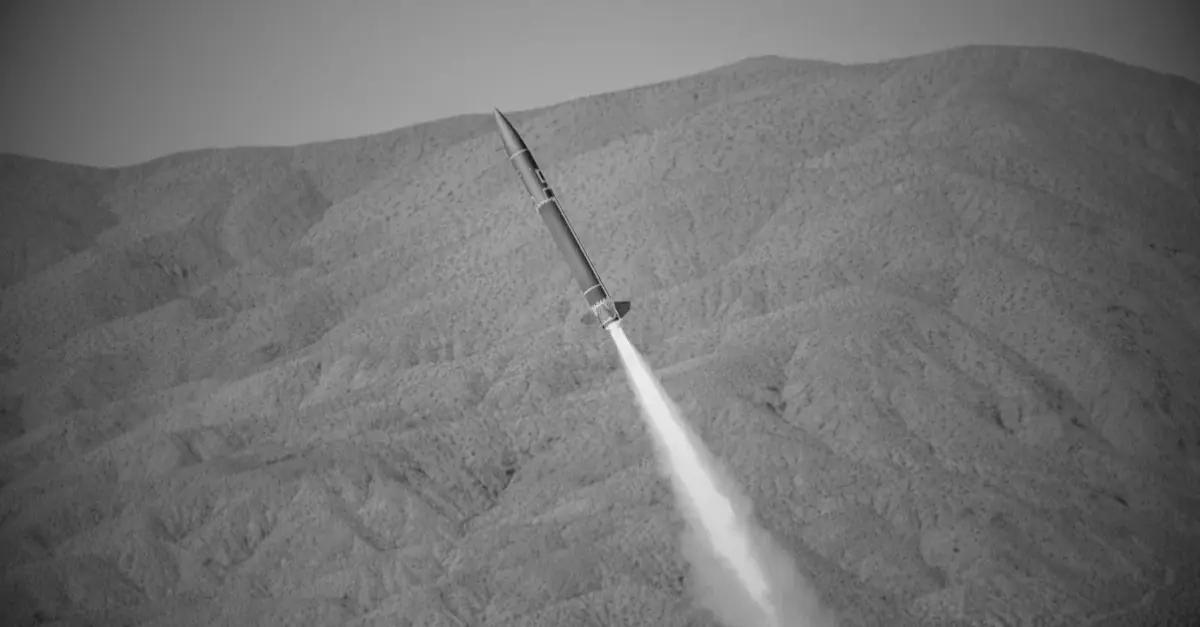
Blackbeard is a boost-glide system: a booster accelerates a hypersonic glide vehicle to more than Mach 5, able to maneuver within the atmosphere. Unlike a ballistic missile on a predictable trajectory, it is harder to intercept. The company has not published full technical specifications. Budget documents and press reports mention ranges on the order of 200 nautical miles in some naval configurations, or potentially more in others, and a target unit cost of around $385,000 in the Navy’s projections for the coming years — far below “exquisite” hypersonic systems that cost tens of millions.
The central idea, repeated by Castelion and echoed in Navy communications, is “affordable mass”: producing enough weapons to saturate advanced defenses rather than relying solely on a small number of highly capable and very expensive ones. The Navy places it under the Multi-mission Affordable Capacity Effector (MACE) program.
Known contract milestones
- October 2025: Army and Navy integration contracts (aggregate amounts around $90 million according to some sources).
- February–April 2026: roughly $50 million, then $105 million from the Navy (prototypes and F/A-18 integration).
- June 2026: 50 pre-production units ($23.4 million).
- August 2026: nearly $90 million for early operational capability and exportability.
- September 2026: production order of up to $200 million for 444 missiles.
- September 2026: +$16.4 million from the AFRL (total contract $37.2 million through 2028).
- October 2026: AFRL modification for F-16 integration (amount undisclosed).
Why the F-16 changes the equation
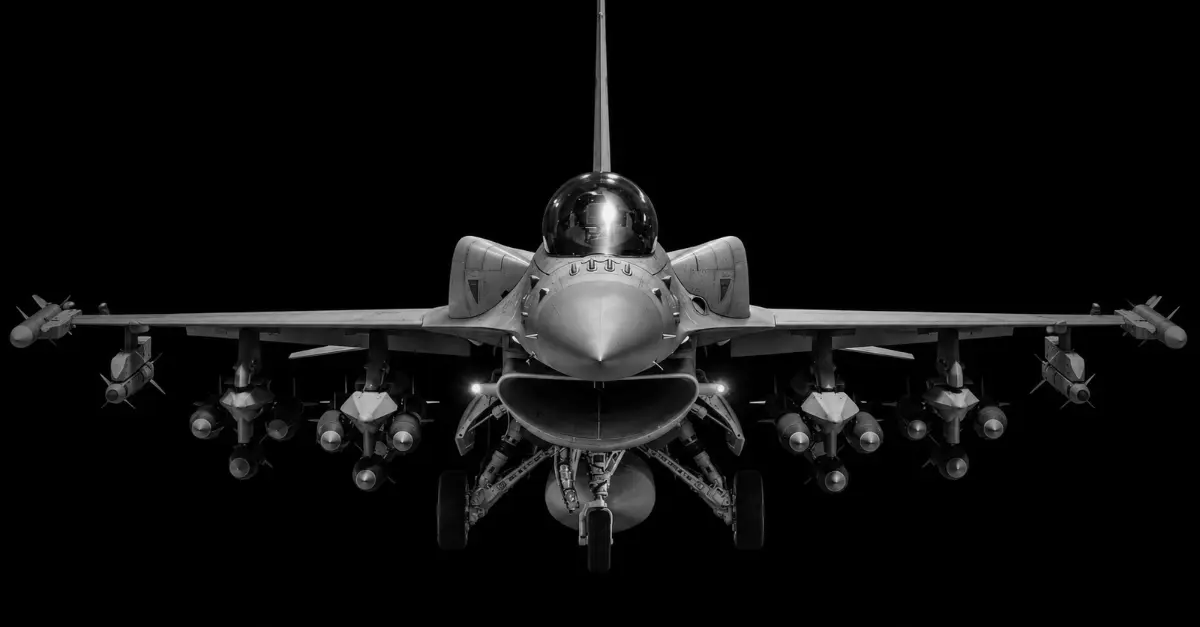
The Super Hornet is a capable carrier-based aircraft, but it exists in limited numbers. The F-16 remains the most widespread fighter in the US Air Force and serves with more than twenty foreign air forces. In the Mediterranean basin and the Middle East, it is particularly dense: Greece operates a large number (including an upgrade program to the Viper standard), Turkey holds one of the largest fleets outside the United States, and Egypt, Israel, Jordan, the United Arab Emirates and Morocco are also equipped with it. Countries such as Romania and Poland are also strengthening their European fleets.
Castelion has not said whether the integration work covers exportable versions. The Navy has already funded “Defense Exportability Features” to facilitate potential sales to allies. A successful F-16 integration would potentially open up a far broader platform, subject to US approvals, specific avionics configurations and political decisions. In a region where the balance of power also depends on long-range strike capability and the saturation of defenses, this is not insignificant.
What about Morocco’s F-16s?
The recent integration of Castelion’s Blackbeard hypersonic missile on the F-16 opens new prospects for operators of the aircraft around the world, with Morocco foremost among them. With its modernized F-16 fleet at the Viper standard (Block 72), the Royal Moroccan Air Force has, on paper, the radar architecture (AESA APG-83) and the computing power required to employ such a long-range, low-cost strike weapon.
However, this prospect remains subject to two conditions: formal approval of hypersonic weapons exports by the US Congress through the Foreign Military Sales (FMS) program, and the actual deployment of software integration kits on export versions of the American fighter. If Washington gives the green light, Morocco could become one of the few countries in the region to equip its fighter fleet with a game-changing hypersonic capability.
FAQ
What is the Blackbeard missile?
A hypersonic (above Mach 5) boost-glide missile designed by Castelion to be mass-produced at relatively low cost, already being integrated on the F/A-18, HIMARS and now the F-16.
Did the Navy really order 444 missiles?
Yes. In September 2026, it placed a production order capped at $200 million covering 444 All-Up Rounds, following earlier pre-production orders and integration contracts.
Will the F-16 be operationally equipped soon?
No. For now, this is a contract modification to begin integration activities. No timeline or amount has been disclosed, and no operational order for the US Air Force has been announced.
Could this missile be exported?
The Navy has funded exportability modifications. Integration on the F-16 could facilitate potential sales to allies that operate the aircraft, but this remains subject to US approvals and has not been confirmed by Castelion for this modification.