Section 1268 of the fiscal year 2027 National Defense Authorization Act (NDAA) is the most concrete illustration of this. It requires the Secretary of Defense to deliver to Congress, within set deadlines, both the full text of the 2026-2036 defense cooperation roadmap signed in April and a detailed plan to implement it.
This is not a mere statement of intent. It is a reporting obligation that, if the bill is passed and signed into law, will force the Pentagon to formalize its options on cooperative security locations, the modernization of the Royal Armed Forces (FAR), a drone center of excellence and the expansion of exercises such as African Lion. The issue matters because it fits into a broader context: America’s search for stable partners in North Africa and the Sahel after the decline of its positions elsewhere on the continent, persistent tensions with Algeria, and the rise of hybrid threats (drones, cyber, influence operations).

A roadmap in search of legislative backing
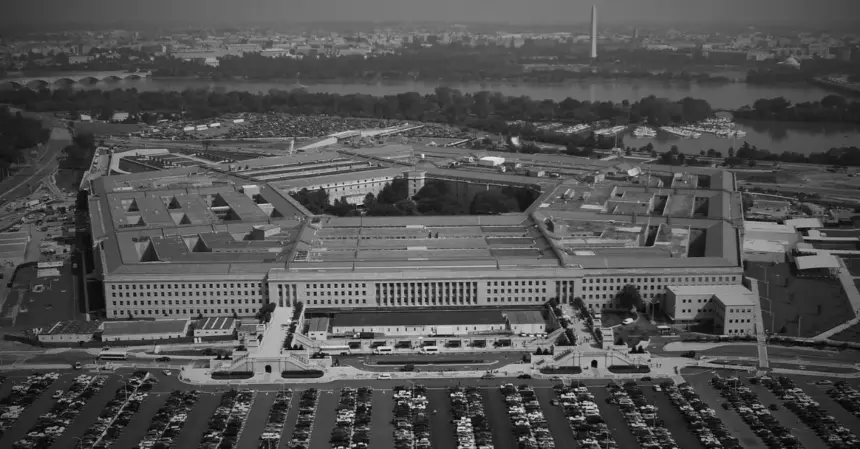
On April 15, 2026, at the Pentagon, Under Secretary Elbridge Colby signed the 2026-2036 defense cooperation roadmap with Abdellatif Loudiyi, Morocco’s Minister Delegate in charge of National Defense Administration, and General Mohammed Berrid, Inspector General of the FAR. The meeting took place during the 14th session of the Defense Consultative Committee. Colby noted on X that Morocco was the first nation to recognize the United States 250 years ago, and that the document “will guide our historic defense relationship for the next decade.”
A few weeks later, on June 15, Senator Roger Wicker, chairman of the Senate Armed Services Committee, reported out bill S. 4784. Its section 1268 (“Plan to enhance defense cooperation with Morocco”) sets two deadlines for the Secretary of Defense once the law is enacted: 30 days to send the full text of the roadmap to the armed services committees of both chambers, and 180 days to present a detailed action plan aligned with that roadmap.

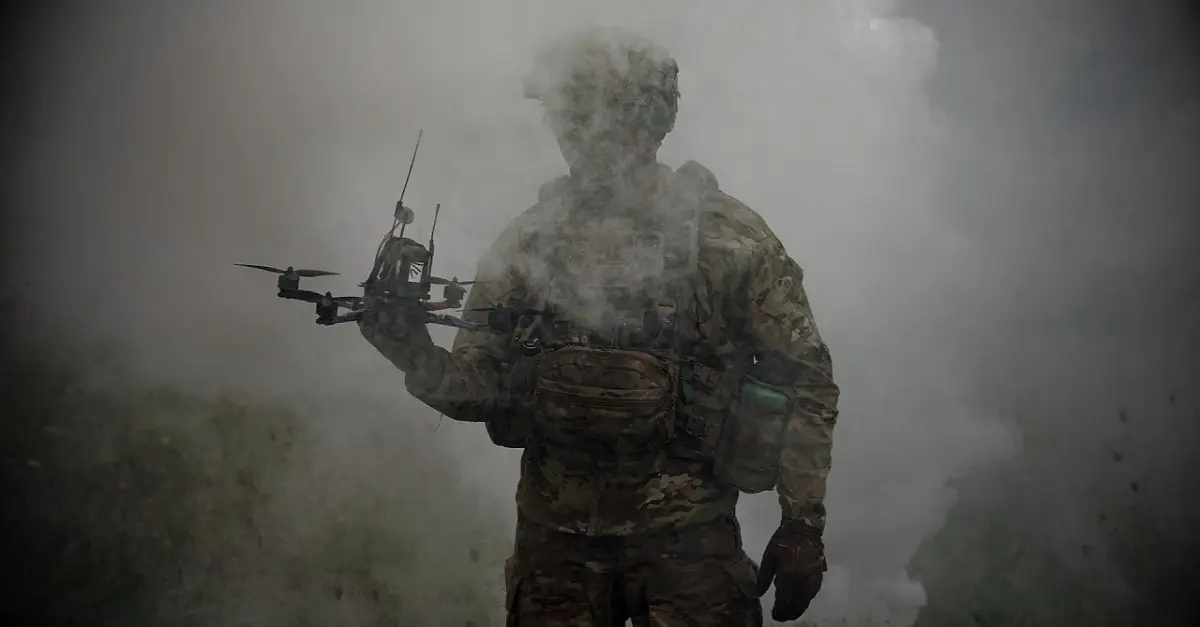
The items the Pentagon will have to examine are specific. They include options for “cooperative security locations” aimed at promoting regional stability and joint crisis preparedness. In US doctrine, the term refers to light facilities, often described as “lily pads,” that allow rapid access without a large permanent presence. The text also calls for studying cost-sharing for the renovation of former Strategic Air Command airfields, deeper counterterrorism cooperation against threats to the United States, Morocco and the region, the modernization of the FAR with American equipment, a multi-domain training complex and a drone center of excellence for joint all-domain operations. Finally, it considers expanding exercises like African Lion to cover counter-drone operations, cybersecurity, undersea technologies, critical infrastructure protection, hybrid warfare and adaptation to adversaries’ use of artificial intelligence and autonomous systems.
The timeline and parliamentary uncertainties
The main deadlines set by section 1268 (if the bill is passed):
- 30 days after enactment: the 2026-2036 roadmap is sent to Congress
- 180 days after enactment: detailed plan to strengthen cooperation
- Thematic objectives: cooperative sites, airfield renovation, counterterrorism, FAR modernization, drone center, expansion of African Lion
The legislative path remains open. On July 14, 2026, a cloture motion that would have allowed the Senate to begin considering S. 4784 received only 50 votes in favor and 46 against, with 60 needed. The House of Representatives, for its part, passed its version (H.R. 8800) on July 22 by 216 votes to 212. According to independent NDAA tracking, the bill has not yet become law; the Senate adjourned for the midterm campaign and the matter was pushed to the lame-duck session after November 3. The obligations imposed on the Pentagon therefore depend on final passage and on reconciling the two chambers’ versions.
Concrete developments already under way
While the legislative process moves slowly, operational initiatives are advancing. On July 13, 2026, in Stuttgart, the FAR and AFRICOM signed a memorandum to create the Africa Multidomain Training and Experimentation Center (AMTEC) in Tan-Tan by 2030. The complex is to include a multi-domain training area, a drone academy and an innovation and experimentation center. In early August, a first live-fire test of a low-cost cruise missile was carried out there with an American industrial partner. Counter-drone system trials are also scheduled for spring 2027, in connection with African Lion 2027.
Planning for the exercise, the largest on the continent, began in late September 2026 in Agadir. It is scheduled for April 25 to May 7, 2027 across several sites (Agadir, Tan-Tan, Guelmim, Benguerir, Kenitra, Dakhla) and is expected to involve more than 45 countries. It coincides with the 250th anniversary of Morocco’s recognition of American independence in 1777. In October, Morocco also joined the FMS Fast Lane program, which aims to speed up certain acquisitions of drones and counter-drone systems.
On the Moroccan side, the 2027 finance bill raises the ceiling for multi-year commitments for defense equipment and industry to 190.5 billion dirhams, up from 157 billion in 2026. The United States remains the kingdom’s main arms supplier (around 60% of imports according to SIPRI for the most recent period). Morocco has been a major non-NATO ally since 2004 and has the only US free trade agreement in Africa.

Strategic stakes and viewpoints
For Washington, the interest is twofold. On one hand, it wants to consolidate a partner seen as reliable given the difficulties encountered elsewhere in West Africa, where several juntas have moved closer to other actors. On the other, it wants logistics and training options in a strategic area close to the Strait of Gibraltar, the Atlantic and the Sahel. “Cooperative security locations” are not permanent bases; they allow limited prepositioning and rapid access, which formally preserves Moroccan sovereignty while offering operational flexibility.
On the Moroccan side, the partnership is part of an accelerated modernization of the FAR and a desire to develop a local defense industry. AMTEC and the drone center offer access to technologies and interoperability practices that few African countries possess. Moroccan officials regularly highlight American support for the kingdom’s position on Western Sahara.
More critical readings exist. Some Israeli observers see the drone center as a potentially useful laboratory for an informal trilateral partnership, as Morocco has already acquired Israeli systems. In Spain, media outlets have noted Tan-Tan’s proximity to the Canary Islands and the experimentation activities planned there. Algeria, which maintains a significantly larger defense budget, is watching these developments within the framework of a long-standing rivalry. These perspectives are not necessarily contradictory: they show that strengthening a bilateral relationship has regional implications.
The US legislative text remains cautious: it calls for studies and plans, not for immediate massive financial commitments or the creation of permanent bases. Its main value is to make cooperation more predictable and less dependent on political turnover, once it is written into the NDAA.

Looking ahead
The final fate of section 1268 will depend on the compromise between the House and the Senate during the lame-duck session. Even if the exact wording changes, the underlying dynamics (AMTEC, an expanded African Lion, accelerated acquisitions, FAR modernization) are already in motion. The question now is less about a break than about the pace and real depth of this upgrade. As an American partner in North Africa, Morocco has geographic and political assets that few others can offer; for Rabat, the challenge is to turn those assets into lasting capabilities without creating excessive dependencies. The coming months, between the final NDAA vote and the 2027 exercises, will show whether this ambition translates into concrete programs or remains largely declaratory.
FAQ
Does section 1268 create permanent American bases in Morocco?
No. It calls for studying options for “cooperative security locations,” light facilities intended for rapid access and joint preparedness, without a large permanent presence.
Is the 2026-2036 roadmap already in force?
Yes, it was signed on April 15, 2026. Section 1268 aims to formalize it in US law and require an implementation plan from the Pentagon.
When will African Lion 2027 take place?
According to current planning, between April 25 and May 7, 2027 across several Moroccan sites, with more than 45 countries expected to take part.
Has the bill already been passed?
No. The Senate version was blocked in July; the final text depends on a compromise expected during the lame-duck session.