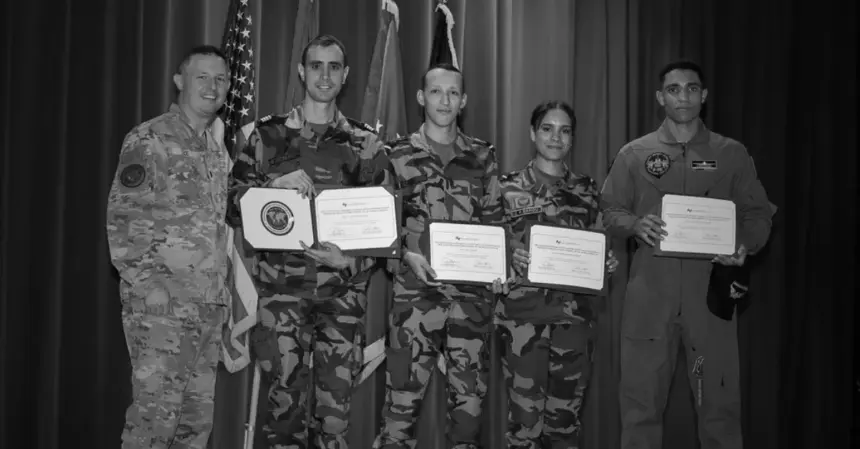
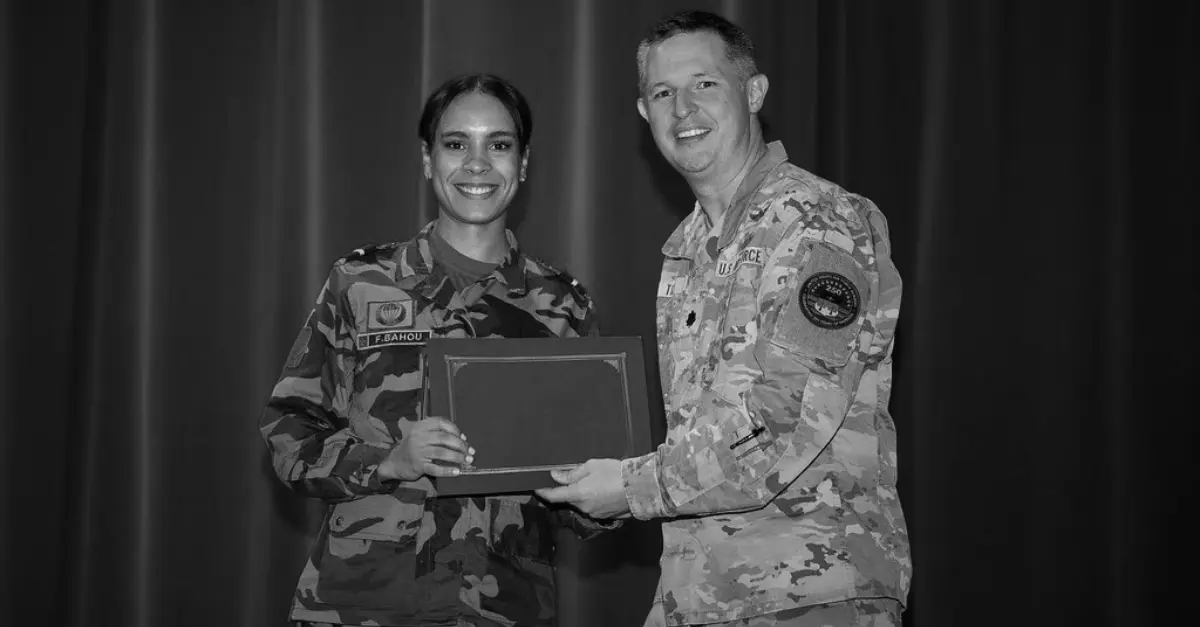
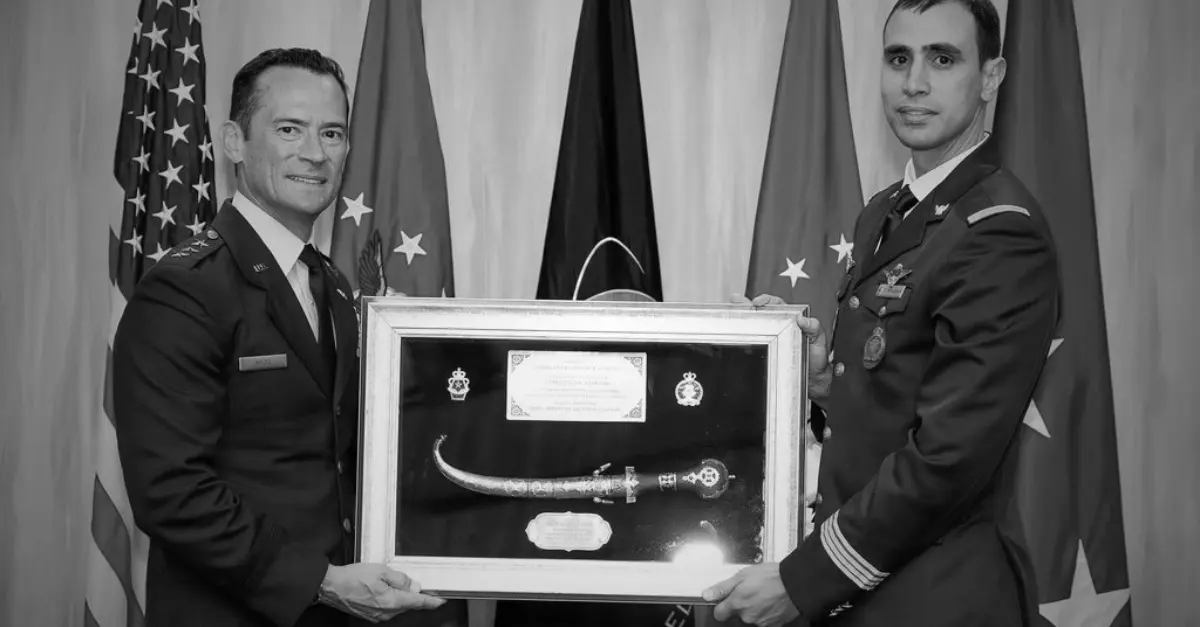
The announcement came on Tuesday, November 3, plainly worded, through a message from the U.S. Embassy in Rabat. The Royal Moroccan Air Force took part in the 2026 International Week at the U.S. Air Force Academy in Colorado Springs, alongside delegations from eighteen allied and partner countries. It was no media spectacle, more a routine confirmation within an already crowded calendar of cooperation. Yet in the Mediterranean basin, where military balances are being redrawn, this kind of exchange between future air force leaders deserves to be put in context.
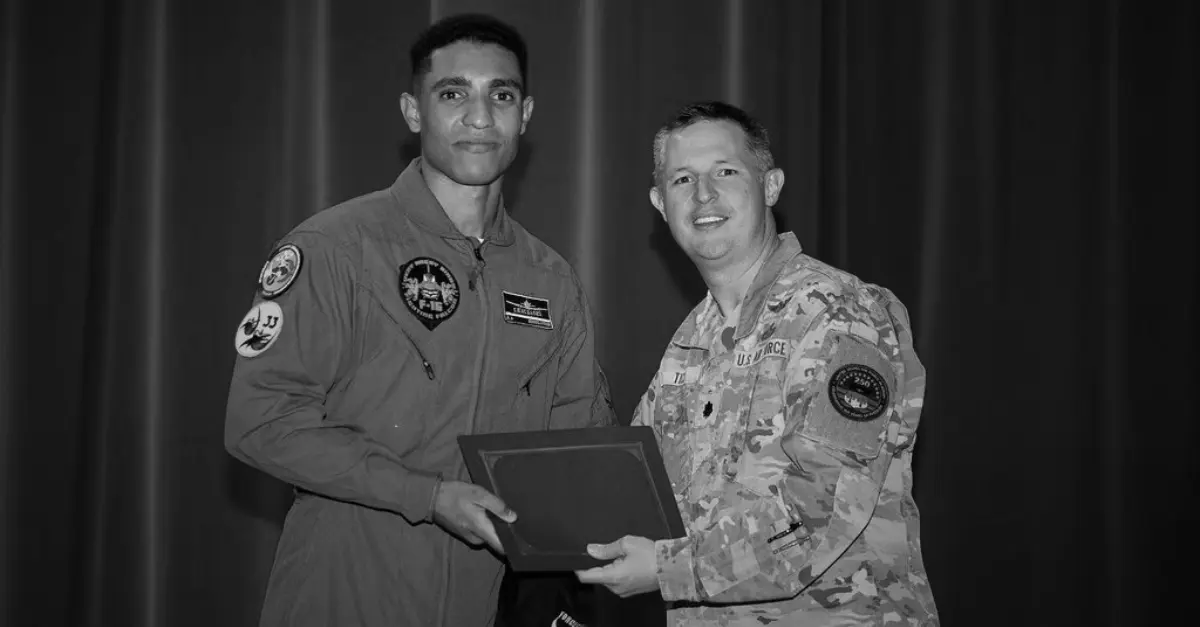
International Week is an annual program hosted at the Academy in Colorado Springs. It brings together cadets and officers from foreign military academies for cultural exchanges, shared experiences and professional activities. The stated goal is to foster mutual understanding and build ties between future leaders. According to the U.S. Embassy, the Moroccan delegation met with cadets and faculty as part of the program. The event also served as a reminder of nearly two hundred and fifty years of bilateral relations and the security ties meant to carry them forward.
Nearly 250 Years of a Special Relationship
The figure of two hundred and fifty years is not a diplomatic approximation. In December 1777, Sultan Mohammed III recognized the independence of the United States, becoming the first head of state to do so. The Treaty of Peace and Friendship, signed in Marrakech in 1786 and ratified by the U.S. Congress in 1787, was the first treaty the United States concluded with a non-European state. According to recurring American phrasing, it remains the longest unbroken treaty relationship in U.S. history.
This historical continuity took on a more structured military dimension at the turn of the 2000s. In 2004, Washington designated Morocco a major non-NATO ally, a status that eases access to certain equipment, training and cooperation programs. Since then, joint exercises have multiplied, with African Lion leading the way. The 2026 edition notably saw American B-52s operating alongside Moroccan F-16s, and the launch of a first national Joint Terminal Attack Controller (JTAC) course.
What International Week Doesn’t Say, and What It Confirms
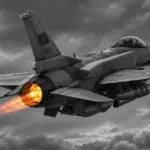
International Week is not an operational exercise. It is a tool of military soft power, designed to create networks among future officers. For the Royal Moroccan Air Force, taking part fits a logic already visible elsewhere: fleet modernization, growing interoperability and access to advanced training. The recent deliveries of AH-64E Apache helicopters (nineteen received out of twenty-four ordered) and the progress of the F-16 Block 72 are concrete illustrations. At the Marrakech air show in October 2026, American F-35s flew alongside Moroccan aircraft, a strong signal even though no sale has been formally committed.
This presence in Colorado Springs comes a few months after the signing, in April 2026, of a new 2026-2036 defense cooperation roadmap. The document sets the priorities for the decade: expanded exercises, multidomain capabilities and industrial cooperation. At a time when several Sahel countries have distanced themselves from traditional Western partners, Morocco remains a stable partner on both the Atlantic and Mediterranean fronts.
- Nearly 250 years of relations formalized by the 1786 treaty
- Major non-NATO ally status since 2004
- 2026-2036 defense roadmap signed in April 2026
- African Lion: major annual exercise co-organized with the Royal Armed Forces
- Ongoing air force modernization (F-16 Block 72, AH-64E Apache)
Stakes in the Mediterranean Basin
Morocco is not a NATO member, but its geographic position and its ability to host large-scale exercises make it a useful player for the United States in North Africa and the Sahel. The stakes go beyond counterterrorism. They also involve monitoring maritime routes, controlling airspace and the capacity for rapid power projection. For Rabat, these exchanges strengthen interoperability with a major partner while preserving a firmly asserted strategic autonomy.
It would be excessive to read a turning point into this week of exchanges. It is rather one link among others in an already dense partnership. Criticism, where it exists, focuses more on the cost of modernization or on regional trade-offs than on the principle of cooperating with Washington itself. On the American side, Morocco is regularly presented as a reliable partner, capable of hosting large-scale activities.
FAQ
What is the U.S. Air Force Academy’s International Week?
An annual exchange program that hosts delegations from foreign military academies for cultural and professional activities in Colorado Springs.
Why do people talk about nearly 250 years of relations?
Because Morocco recognized American independence in 1777 and signed a treaty of peace and friendship with the United States in 1786, which remains in force in its renewed form.
Does this participation mean Morocco will soon buy F-35s?
No. No sale has been announced. It is part of a broader framework of cooperation and training that already exists.
What is Morocco’s defense status with the United States?
Major non-NATO ally since 2004, with a renewed defense cooperation roadmap covering 2026-2036.