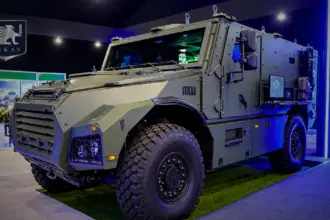
Referenced W91CRB-SS-DATRON and dated October 29, the notice seeks suppliers able to deliver Datron World Communications equipment under the US Foreign Military Sales (FMS) program. The text explicitly mentions FMS cases for Morocco and Lebanon.
This is not a contract award. It is a market research step (a “sources sought” notice). The US administration is asking interested companies to specify the equipment they can supply, its availability and an initial price estimate. The response deadline is set for November 30, 2026. Any subsequent procedure would remain unclassified and would have to comply with the Berry Amendment restrictions on specialty metals.
What the document details
The most prominent item is a list of 125 vehicle intercommunication systems, known as VICM. Each set includes a central communication unit, two devices for crew members and the cables that connect to the radios. These systems allow the crews of military vehicles to communicate with each other and with onboard radios, even in noisy environments. They are designed to integrate with radios from different manufacturers.
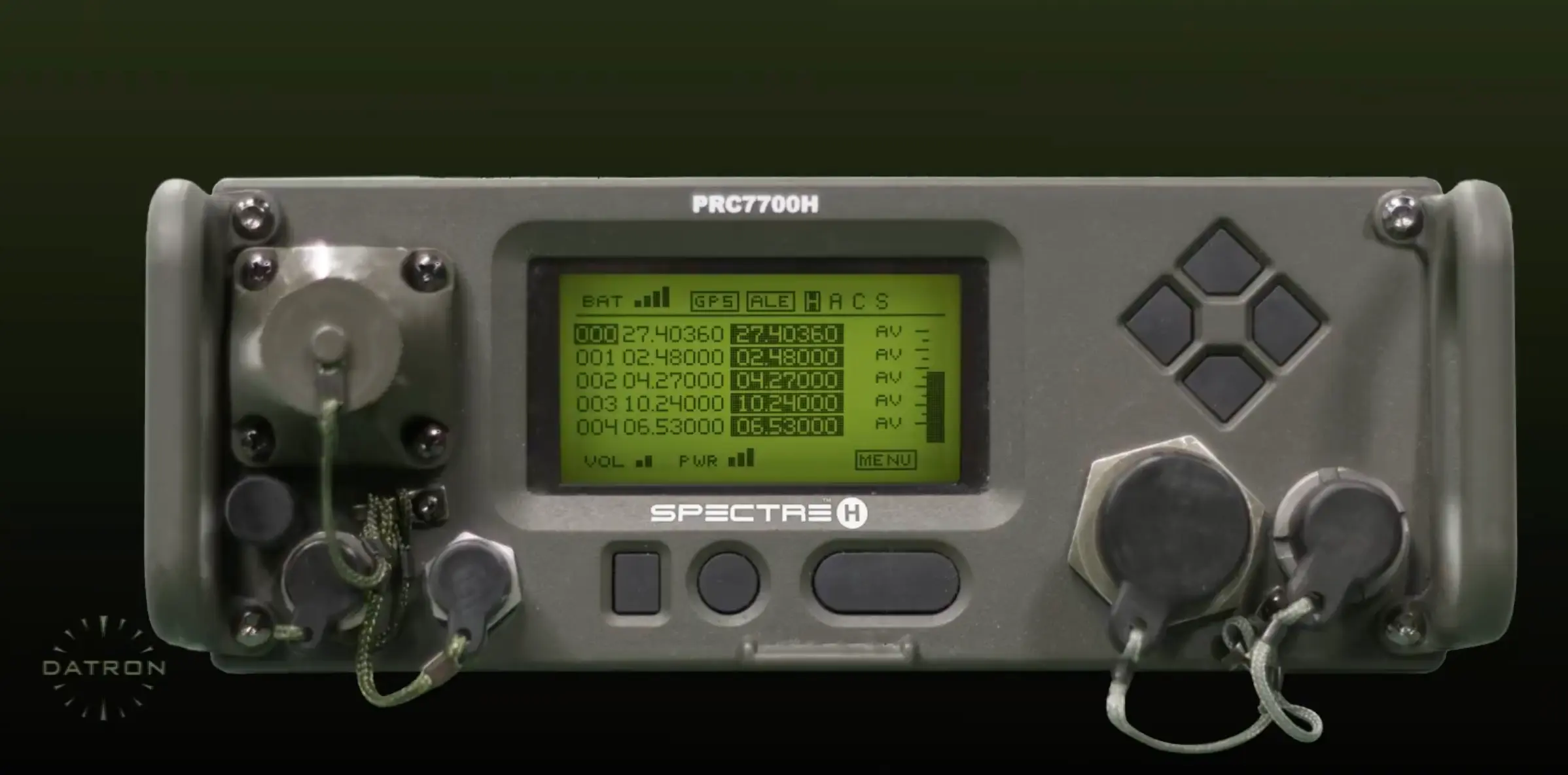
The remaining requirements break down as follows:
- 34 multiband vehicle radio sets (30-512 MHz), based on HH3100M-type equipment and their vehicle mounts;
- 34 125-watt high-frequency radio stations;
- 2 radio management sets;
- 4 configuration kits;
- 34 lithium-ion batteries.
The quantities correspond to the combined needs of the two countries. The US document does not specify how they are split between the Royal Armed Forces and the Lebanese army. This lack of breakdown is common at this stage of an FMS consultation, but it limits any precise reading of the volumes intended for Rabat.
Datron World Communications, a company based in Vista, California and founded in 1971, manufactures HF and VHF tactical radios as well as communication solutions for military and security uses. It has already worked for the Moroccan market. On July 29, 2024, it won contract W91CRB24C5032, worth $640,418, for communication equipment and accessories under FMS case MO-B-UUO for Morocco. Earlier contracts also concerned Lebanon.

One thread in a broader cooperation
This consultation comes amid a US-Moroccan military cooperation that has grown denser. In April 2026, the two countries signed a defense cooperation roadmap for 2026-2036. The framework notably provides for stronger interoperability, real-time data sharing and support for the modernization of the Royal Armed Forces through American acquisitions.
Exercises such as African Lion have served as testing grounds. In February 2026, Link-16 interoperability tests were carried out with Moroccan forces, enabling secure voice and data exchanges between American and Moroccan tactical terminals. Morocco has also received AH-64E Apache helicopters and takes part in aviation modernization and detection programs.
Intercommunication systems and multiband radios target vehicles and ground units precisely. They facilitate the internal coordination of crews and the link with wider networks. For a country modernizing its fleet of armored vehicles and its power projection capabilities, this type of equipment meets a concrete operational need: maintaining reliable communications on the move, in high-noise conditions and with possible interoperability with partners.
On the Lebanese side, the combined volume is a reminder that Washington also maintains FMS channels with Beirut, in a regional environment marked by multiple tensions. The presence of both countries in the same notice does not mean a joint operation; it simply reflects the way the Army’s Security Assistance Management Directorate sometimes handles several cases in parallel.
Strategic stakes and outlook
Military communications are not spectacular, but they determine the effectiveness of other systems. A well-armed or well-protected vehicle loses part of its value if its crew cannot coordinate its actions or receive orders in a timely manner. VICM intercoms and multiband radios follow this logic. They are part of a gradual modernization rather than a single technological leap.
For Morocco, the interest is twofold. First, to strengthen the capabilities of the Royal Armed Forces in an environment where joint coordination and interoperability with Western partners are becoming declared priorities. Second, to maintain a steady flow of American equipment under the FMS framework, which often comes with training, logistical support and a certain degree of standardization. The earlier 2024 contract shows that Datron is not a new supplier on this market.
For the United States, these FMS procedures serve several objectives. They support American industry (here, a mid-sized Californian manufacturer), strengthen ties with key partners in North Africa and the Levant, and contribute to force interoperability. The 2026-2036 roadmap and the Link-16 tests illustrate a desire for deeper integration with Rabat, even though Morocco is not a NATO member.

Uncertainties remain. The current notice is a sources search, not an order. The quantities are not broken down. The actual timetable of any contract will depend on suppliers’ responses, Moroccan and Lebanese funding decisions, and American priorities. Other programs (drones, detection systems, air modernization) are advancing in parallel and also absorb resources.
At this stage, the document mainly confirms continuity. Morocco appears in American FMS procedures for communication equipment, just as it does for other segments of modernization. The presence of Lebanon in the same notice is a reminder that Washington manages a broader regional portfolio. The details of the split and the contractual follow-up are yet to come.
Frequently asked questions
Does this notice mean Morocco has already ordered these 125 systems?
No. It is a search for suppliers (sources sought) for FMS cases concerning Morocco and Lebanon. No final award has been announced.
Why aren’t the quantities split between Morocco and Lebanon?
The US document presents the combined needs. The breakdown is not published at this stage of the procedure.
What is the link with the 2024 contract?
Datron had already won a $640,418 contract in July 2024 for communication equipment intended for Morocco under FMS case MO-B-UUO. The new consultation concerns equipment from the same company.
How does this equipment fit into US-Moroccan cooperation?
It corresponds to vehicle and radio communication needs that complement other areas of the 2026-2036 roadmap (interoperability, modernization, joint exercises).