

We wanted to understand what this plan actually changes, and what it still leaves unresolved.
Key takeaways
- The rehabilitation programme for Meknes’s medina is worth about MAD 800 million.
- It was signed in October 2018 in the presence of the King and scheduled for 2019-2023.
- Three strands: heritage (MAD 594 million), car parks (MAD 40 million) and tourist appeal (MAD 166 million).
- ADER-Fès oversees the works: monuments, ramparts, fondouks and tourist trails.
- New calls for tenders were launched in 2024, and no official assessment has been found.
An imperial city long kept in the background
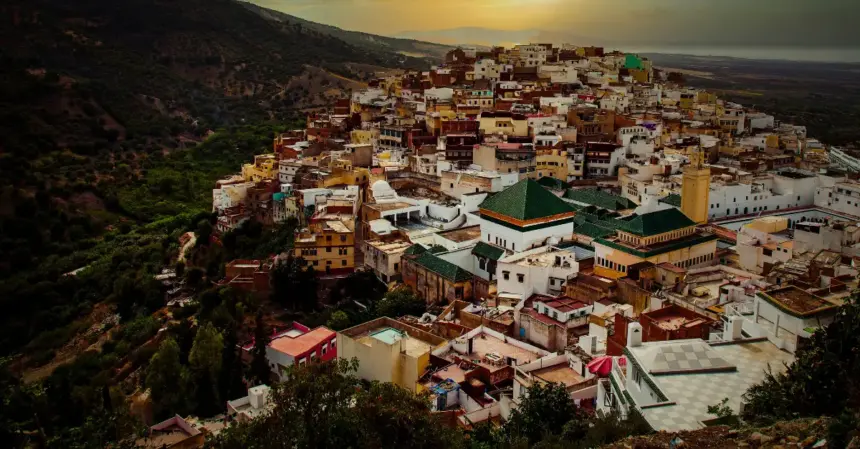
Meknes has a heritage that many cities would envy. Its medina has been a UNESCO World Heritage Site since 1996. It owes its monumental character to Moulay Ismail, who made it the capital of his reign, with palaces, granaries, basins and imposing gates. Yet in Morocco’s tourist imagination, the city has long remained in the shadow of Fez and Marrakech.
This situation is partly due to the condition of its built fabric. A living medina is also a fragile one: damp, dilapidated buildings, deteriorated ramparts, monuments with no use. When the financing agreement was signed, Interior Minister Abdelouafi Laftit himself acknowledged that previous interventions had been hampered by the sheer size of the medina (275 hectares) and the richness of its heritage, according to remarks reported by the press at the time.
It was in this context that the programme to rehabilitate and enhance the Meknes medina was signed on 22 October 2018 in the presence of King Mohammed VI, scheduled for the period 2019-2023.
A programme with three strands
According to information published by the Moroccan business press, the MAD 800 million envelope is funded by several partners: the ministries of the Interior, Housing and Culture, the Fez-Meknes region and the municipality of Meknes. The Hassan II Fund for Economic and Social Development also contributes. Challenge reported that more than half of the financing came from the Fund, the Interior Ministry and the Housing Ministry.
The programme is built around three strands:
- Historic heritage: MAD 594 million to restore and showcase monuments, gates, squares and ramparts.
- Accessibility: MAD 40 million for three car parks, with a combined capacity of about 800 spaces (Bab Rha, Zine El Abidine square, near the Chamber of Crafts).
- Tourist and economic appeal: MAD 166 million for fondouks, kissariats, tourist trails and neighbourhood facilities.
Delegated project management was entrusted to the Agency for the Development and Rehabilitation of the Fez Medina (ADER-Fès). The choice reflects the experience it has built up on the Fez medina, listed since 1981. According to Médias24, the agency was set to evolve into a regional development company, a project covered by an agreement adopted by the regional council in the first quarter of 2022.
What can be seen on the ground
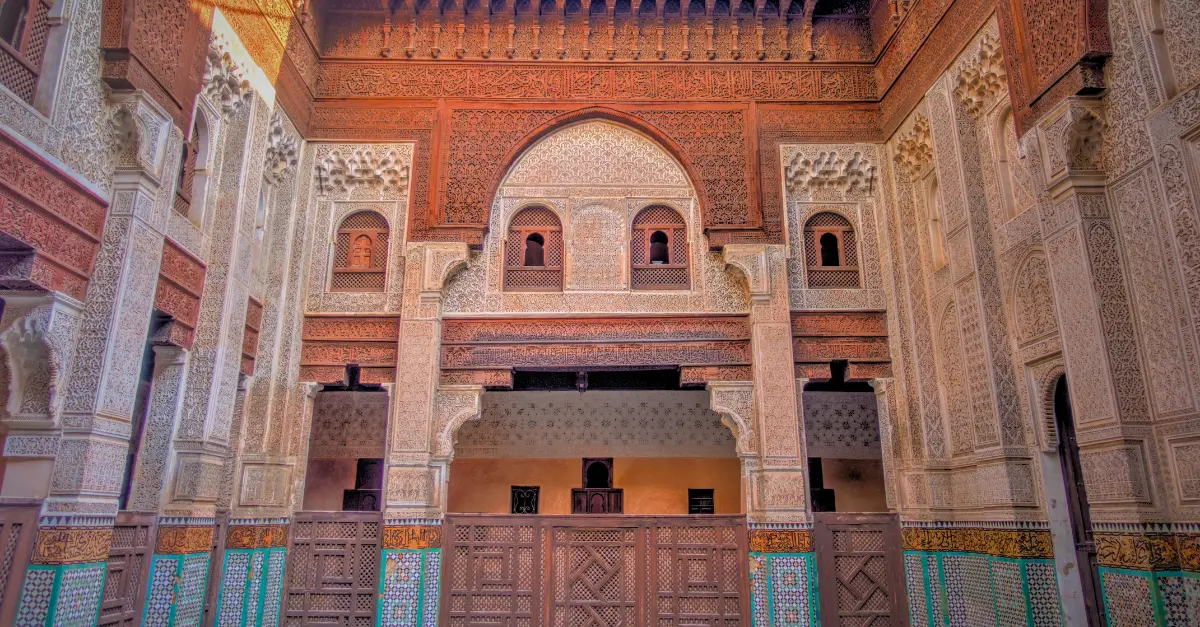
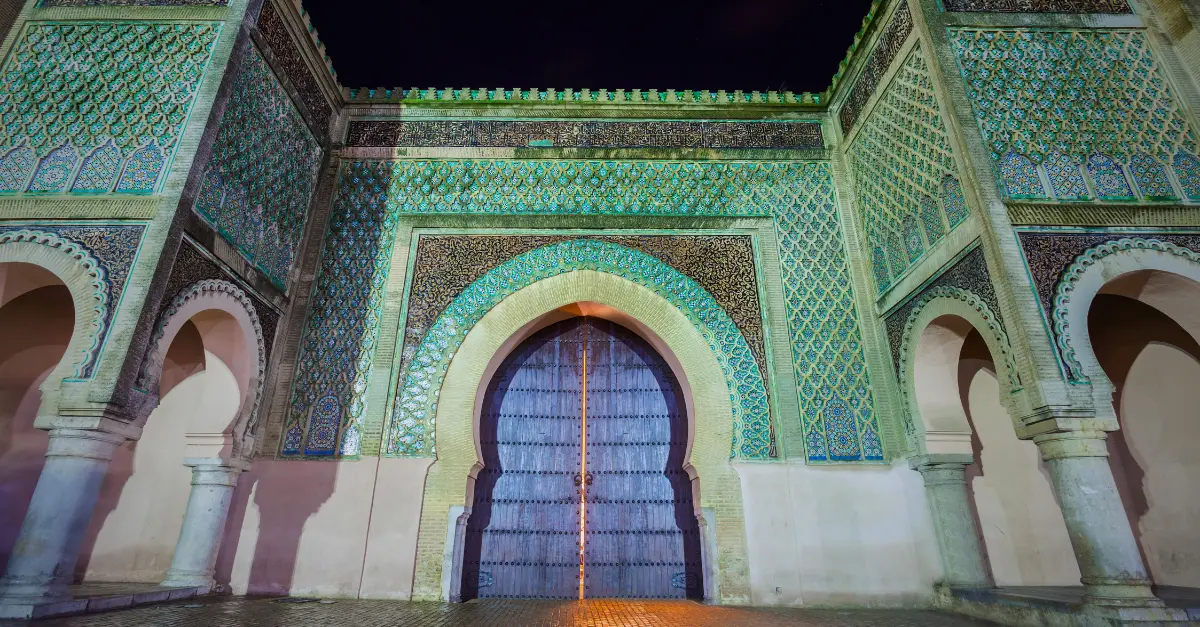
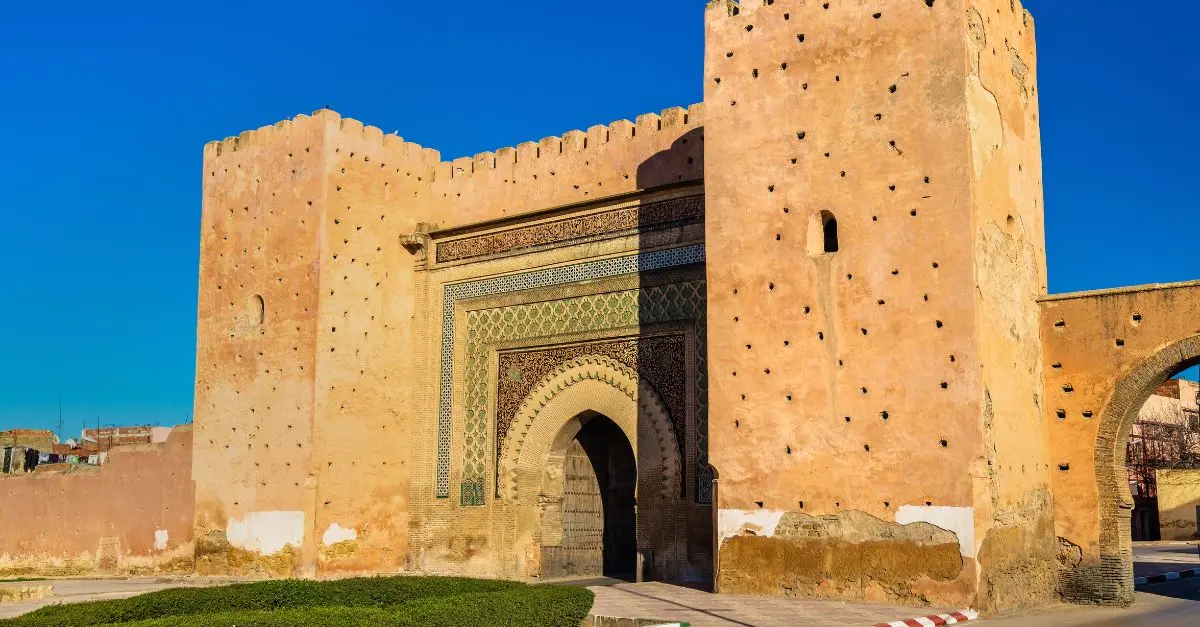
The first targets were the most emblematic monuments. At the launch, Médias24 counted 42 monuments to be renovated, including the Mansour Palace, Sahrij Souani, fourteen monumental gates (Bab Mansour, Bab Berdiyyine, Bab Lakhmiss…), the Lahdim and Mechouar squares, the Filalia and Bou Inania madrasas, the Lalla Aouda mosque, four borjs and eight fountains.
Several worksites have since been documented. According to Médias24 (January 2023), the restoration of the Hri Souani site was expected to cost nearly MAD 97 million. The first phase, awarded to a Fez-based company, amounted to MAD 47.7 million, and the second was estimated at MAD 44 million. The same outlet reported that the reconstruction of the Sultane fondouk and the restoration of the Kissariat Lahrir, for around MAD 14 million, had been completed. The Bou Inania madrasa was announced at nearly MAD 11 million.
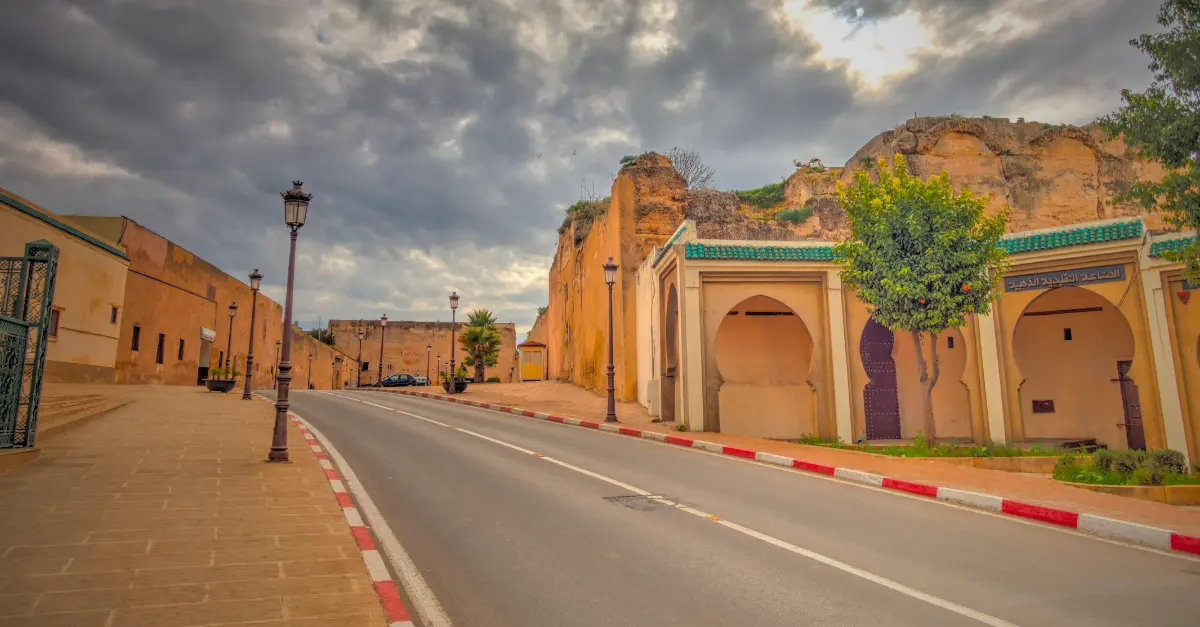
The ramparts are a project in their own right. The programme aimed to restore 12 kilometres of walls, according to Médias24. In 2024, ADER-Fès launched new calls for tenders, relayed notably by Hespress and LesEco.ma:
- the second phase of the Bab El Kazdir-Borj Kbich section, estimated at between MAD 4.5 and 9 million;
- the Bab Bradiine-Bab Tizimi Sghira section, 521 metres long, between MAD 4 and 8 million;
- the walls of El Mechouar square, around Borj El Aoudat, between MAD 1.5 and 3.1 million.
In addition, there is a MAD 17.3 million envelope for tourist trails in neighbourhoods such as Sebbaghine, Nejjarine, Lahmamsia, Srarya, Bezzazine and Bab Jdid. The planned works include shoring, archaeological digs, sanitation and drainage, operations that are barely visible but decisive for the durability of the buildings.
Why this plan matters beyond heritage
It would be reductive to read this programme as a simple restoration operation. Several issues overlap.
An economic issue. The medina is home to trades (crafts, commerce, catering) that depend on visitor numbers. Renovating the fondouks and kissariats, historically places of commercial activity, aims to give them back an economic function rather than turn them into mere scenery. The four tourist trails, funded with around MAD 100 million according to figures reported at the launch, follow the same logic: lengthening the stay in a city often treated as a stopover.
A question of regional appeal. Morocco is betting on cultural tourism and, together with Spain and Portugal, is preparing for the 2030 World Cup. In this landscape, Meknes is seeking to position itself as a natural complement to Fez, with which it shares a region and, now, the agency leading its rehabilitation. This pooling of expertise is one of the plan’s structuring choices.
A question of accessibility. The three car parks address a classic problem of medinas: how to welcome visitors and residents without clogging alleys designed before the car? The question goes beyond Meknes, and the solutions adopted here will be watched elsewhere.
Caveats to keep in mind
An honest analysis must also set out the limits. I frame them as open questions, for lack of any public official assessment that I could consult.
First, the timetable. The programme was scheduled for 2019-2023, and calls for tenders on the ramparts were still being issued in 2024. This is not unusual for heritage worksites, which require excavations and approvals, but it raises the question of the actual rate of completion.
Second, the balance between showcase and daily life. Rehabilitating a medina can improve residents’ quality of life, but it can also orient the space towards the needs of visitors. The budgets devoted to residential buildings and neighbourhood services, compared with those for monuments, deserve to be examined in a full assessment.
Finally, governance. The planned transfer of ADER to a regional structure, and the timetable for the next phase, will determine the continuity of the effort. Maintenance, often the poor relation of major programmes, will need to be funded once the worksites are finished.
A real transformation, an assessment yet to be written
The rehabilitation plan has already changed the face of several emblematic sites in Meknes, and it underpins a strategy that combines heritage, mobility and appeal. The transformation, however, cannot be measured by the sums committed alone. It will be judged by tourist numbers, the vitality of the medina’s businesses, the state of the ramparts in ten years, and the place that residents keep in their own neighbourhood.
A public, quantified assessment published by the partner institutions would settle the matter. We will follow it, because it will tell us whether Meknes has become a destination in its own right or simply a better-restored backdrop.
FAQ
How much does the Meknes medina rehabilitation programme cost?
The programme is funded with about MAD 800 million, split between heritage (MAD 594 million), accessibility (MAD 40 million) and tourist and economic appeal (MAD 166 million).
Who is overseeing the works?
The Agency for the Development and Rehabilitation of the Fez Medina (ADER-Fès) is the delegated project manager. It acts on behalf of the partners to the agreement: the ministries of the Interior, Housing and Culture, the Fez-Meknes region and the municipality of Meknes.
Which sites are covered?
Monuments such as Hri Souani, Sahrij Souani, Bab Mansour and the Bou Inania madrasa, as well as fondouks, fountains, squares and several kilometres of ramparts.
Are the works finished?
The programme was scheduled for 2019-2023, but new calls for tenders were launched in 2024. I have not found an official end-of-programme assessment.