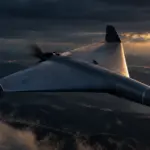


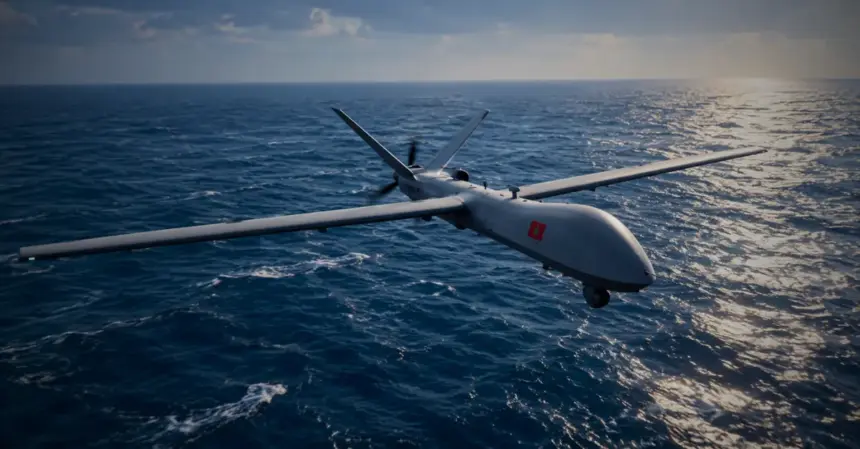
According to the Institute for the Study of War and the Critical Threats Project, two American think tanks, Israel was targeted by just over 50 drones in the first few days, while Tehran launched more than 1,000 against the Gulf states, mostly Shahed-136s. These slow, cheap machines put some of the world’s most sophisticated air defenses to the test.
But the Gulf is only the latest chapter. The war in Ukraine, now in its fifth year, has been the real laboratory. For Morocco, the lesson goes well beyond either theater. I believe it justifies a massive effort in the kamikaze drone, also known as the loitering munition, and, just as urgently, in counter-drone defense.
What Ukraine taught us
When Russia invaded in 2022, few analysts would have bet on the smaller army holding out this long against a power with a far larger arsenal. Drones are a big part of the explanation, on both sides.
Ukraine used them offensively to compensate for its lack of conventional means. Naval drones forced Russia’s Black Sea Fleet to pull back from its main Crimean base, according to accounts widely reported since 2024. In June 2025, Ukraine’s security service, the SBU, said it had struck Russian military aircraft deep inside Russian territory with drones smuggled close to the targets, an operation whose damage assessments remain debated. Long-range drones have also been used against energy infrastructure, imposing costs on a much bigger economy.
Russia, for its part, industrialized. The Geran-2, its version of the Iranian Shahed-136, went from a small imported stock to a locally mass-produced weapon. According to Ukrainian data cited in a June 2026 issue brief by the Missile Defense Advocacy Alliance, more than 38,000 Shahed-type drones were launched against Ukraine in 2025. The Centre for Strategic and International Studies estimated Russian output at around 5,500 drones a month in March 2026, and a report cited by Euronews counts 6,462 Shahed-type and related launches that same month, with peaks above 900 in a single day.
The point I take from this is not that drones win wars on their own. It is that industrial capacity is the decisive variable. Russia’s achievement, as the Missile Defense Advocacy Alliance puts it, is industrial rather than technological: a deliberately cheap airframe, produced in series.
What the Iran war added
The Shahed-136 weighs around 200 kilos, flies at close to 185 km/h and carries a 50-kilo warhead. Its price is debated: estimates of production cost range from $10,000 to $50,000, while the export price is put at around $193,000.
Against it, defenders brought heavy artillery. In an analysis published in May, the specialist outlet Quwa estimates that Western defenses intercept 87 to 91% of drones in the Gulf. But at 40 drones per wave, even 90% leaves four through. Patriot stocks came under strain, and Washington turned to Ukrainian-inspired interceptor drones, with a reported unit cost of $2,000 to $5,000.
The French case is instructive. According to AFP, Rafale jets deployed in the Emirates and Jordan fired missiles repeatedly to protect partner countries. The journalist Philippe Leymarie notes on the Le Monde diplomatique blog that they shot down fewer than a hundred drones: planes thousands of times more expensive, firing missiles dozens of times more expensive, at low-cost targets. The question of cost-effectiveness is now openly on the table.
First reason, the economics
A fighter jet is a remarkable tool, but it is scarce, costly to buy and maintain, and limited by the number of pilots and flight hours. A fleet of a few dozen aircraft cannot do everything, everywhere, all the time.
A kamikaze drone reverses the equation. It is cheap, puts no pilot at risk and can be launched in salvos. Its virtue is not to replace air power, but to create a financial imbalance for the adversary, who must respond with far more expensive munitions. I sincerely believe that in a long conflict, whoever pays the least for each strike or each interception keeps the advantage.
One nuance is in order. Saying that fighters have limited range is true for a single aircraft, but jets refueled in flight can strike very far. The drone’s real advantage lies elsewhere: it is expendable, hard to detect and can be mass-produced.
Second reason, industrialization
Ukraine and Russia show the same thing from opposite sides: whoever can produce in volume sets the pace. A drone bought abroad remains dependent on its supplier, its spare parts and its political calendar. A locally produced drone changes the nature of that dependence.
Morocco has begun to move in this direction. Several media outlets report that BlueBird Aero Systems, a subsidiary of Israel Aerospace Industries, has launched a unit in Benslimane, near Casablanca, to produce the SpyX loitering munition, with Moroccan technicians and officers trained as part of a technology transfer. Turkey’s Baykar is building a factory on the same site, and France’s Delair is preparing a maintenance center in Rabat, according to the Moroccan press.
I see this as a promising start, but not an end in itself. Assembling under license is not designing. True sovereignty will come from mastering design, components (engines, guidance, payloads) and software. Russia’s dependence on a Chinese-made turbojet for its newest Geran, whose engine reportedly costs $35,000 to $40,000, shows how much a single imported component can matter.
Third reason, regional deterrence
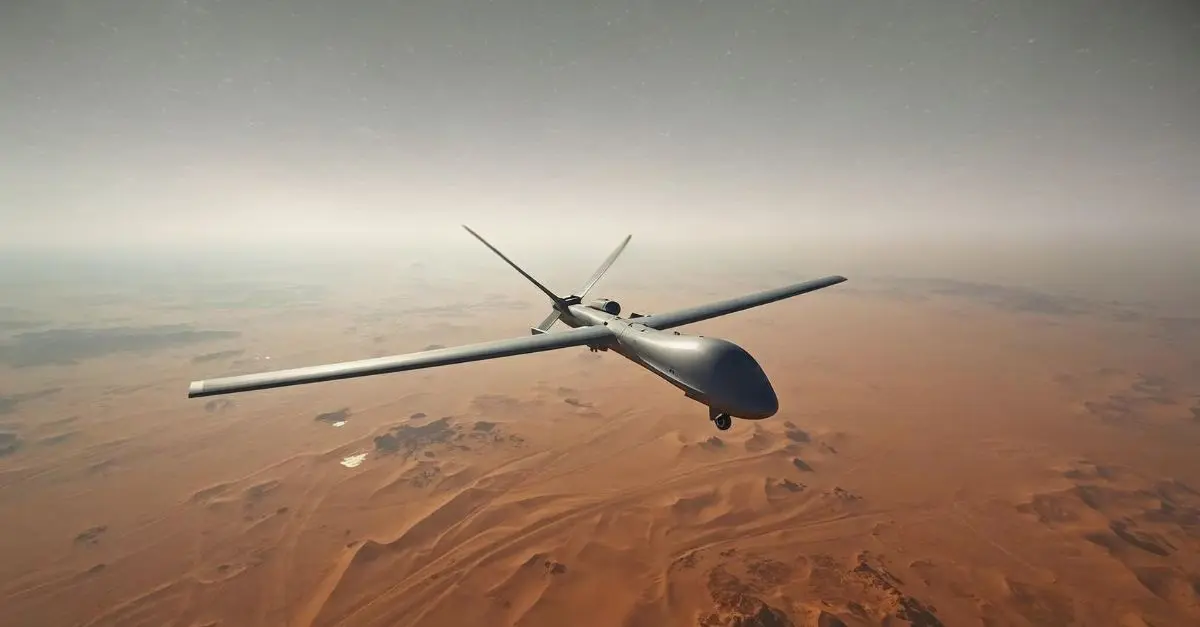
Morocco has used armed drones since hostilities resumed in the Sahara in November 2020, with Chinese, Turkish and Israeli aircraft. A report by the Swedish institute FOI, cited in the press, reportedly credits it with a clear military and political advantage in the area. That operational experience is an asset.
The neighborhood remains tense, and Algeria’s military budget is expected to hit a record in 2026, according to several media outlets. In this context, a precision strike capability that is cheap and available in quantity has real deterrent value: it makes any aggression costlier for the adversary without requiring conventional air superiority. Ukraine is the proof that a smaller state can impose serious costs on a larger one.
Why counter-drone defense is just as vital
This is the point on which I will be firmest: investing in kamikaze drones without investing in counter-drone defense would be like building a roof without walls. If Morocco uses this technology, its adversaries will too. Drones are accessible, and a $100 commercial model, if diverted, can already pose a threat, as a Moroccan specialist pointed out in 2023.
Ukraine also delivers the most sobering lesson here: defense is a race, not a purchase. In March 2026, Ukraine was intercepting more than 90% of the drones launched at it. By June, once Russia deployed jet-powered Gerans at scale, that rate had fallen to just over 50%, according to figures reported by Euronews. Other estimates put it around 60%, but the trend is the same. Kyiv responded with faster interceptor drones, and the first kills against the jet models were reported in September. Every adaptation on one side forces a counter-adaptation on the other.
There are many assets to protect:
- military bases and logistics depots
- energy infrastructure and ports, including Tanger Med
- airports and major urban sites
- mass events, with the 2030 World Cup approaching
An effective defense has to be layered: radar and radio-frequency detection, jamming and electronic warfare, guns and short-range missiles for larger threats, and light interceptors for salvos. There are signs of movement on this front. The specialist press has reported the acquisition of detection and neutralization systems, including the “SkylockDome” in July, and an agreement with the French start-up Harmattan AI for autonomous air defense capabilities as early as 2026. I mention them with caution: the technical and financial details remain poorly documented publicly.
What I take from this
In my view, the wars of 2026 did not doom the fighter jet, but they reminded us that a modern army needs a mix: expensive, versatile platforms, cheap munitions in large numbers, and a shield against those same weapons, constantly updated. Morocco has a regional head start in drones and the beginnings of an industry. What remains to be seen is whether it can turn assembly into design, and equipment purchases into a coherent doctrine. The answer will play out over the coming years, and probably in the transparency the authorities choose to show.
FAQ
What is a kamikaze drone?
It is a loitering munition: an explosive-laden drone that flies over an area, identifies a target and crashes into it. Some models can be recalled, others cannot.
What did the war in Ukraine change about drones?
It showed that mass production matters more than any single model, and that drone and counter-drone technology evolve in a constant race.
Does Morocco already produce kamikaze drones?
Media outlets report the start of SpyX production in Benslimane with BlueBird. The actual capacity and the official timeline remain to be confirmed.
Why is counter-drone defense so important?
Because these weapons are cheap and available to many actors, including non-state groups. Without low-cost detection and interception, the risk of being saturated is real.