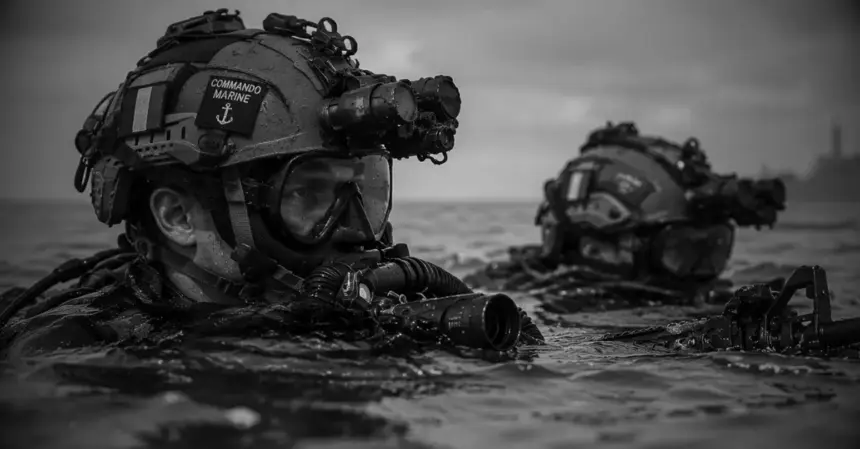
Diego Buñuel takes part in a section of the selection course in Lorient, at the base of the Marine fusiliers and commandos (Lanester), while a crew follows operators in French Guiana during an operation against illegal fishermen targeting the acoupa. Such access is rare: these units remain largely opaque. What emerges is not a heroic tale, but the portrait of a limited capability facing a vast maritime space and persistent predatory activity.
France has the world’s second-largest exclusive economic zone (EEZ), at roughly 10.2 million km² according to data from the French Navy’s Hydrographic and Oceanographic Service (SHOM) and published summaries. This area, which comes mainly from overseas territories, grants sovereign rights over the resources of the water column, the seabed and the subsoil within 200 nautical miles.
It does not, however, guarantee the means to monitor and protect them continuously. Threats are multiple: illegal, unreported and unregulated (IUU) fishing, trafficking and, in other contexts, risks linked to piracy or maritime terrorism. The Marine commandos, part of the Marine Fusiliers and Commandos Force (FORFUSCO, about 2,900 personnel), operate precisely across this spectrum, from state action at sea to special operations on behalf of the Special Operations Command (COS).
The Lorient selection, a physical and mental filter
The selection and training course for future operators takes place in Lorient. One cannot join directly as a Marine commando: candidates are first Marine fusiliers, then must pass an internal pre-selection, an intensive preparation phase and the commando course (often referred to as STAC). Sources agree on very high selectivity: out of about a hundred candidates, around fifteen earn the green beret, according to statements by officials of the Marine Fusiliers School and observations reported by specialists.
An official Navy communication mentioned a ratio of around 30 successes out of 170 candidates for a given period. The course, which lasts about nine weeks according to available descriptions, combines timed physical tests, sleep deprivation, tactical maneuvers, work in the water and continuous pressure.
As a prerequisite, Buñuel had to take on a cold-water tank test (around 10 °C in the accounts). The candidates, for their part, chain together day and night phases, obstacle courses and prolonged aquatic exercises. The attrition rate reflects less an administrative barrier than a demand for mental resilience: dropouts or eliminations often occur when the body and the capacity for decision-making deteriorate under accumulated fatigue. Instructors assess the ability to maintain performance and cohesion in degraded conditions, a quality that is essential for operations at sea, where the risk of a serious incident is high.
From fighting piracy to countering illegal fishing
The Marine commandos have been deployed in hostage-rescue and counter-piracy operations, notably off Somalia in 2008-2009 (Ponant, Carré d’As, Tanit). They also take part in maritime counter-terrorism missions and in actions against trafficking. In French Guiana, the documentary follows them in a different setting: protecting fishery resources from fishermen coming from Brazil, Suriname and Guyana.
These fishermen often operate aboard “tapouilles” (wooden boats) and particularly target the red acoupa (Cynoscion acoupa), whose swim bladder is sought after in Asian markets. Prices of several hundred euros per kilo (and far higher ranges depending on the drying state and the destination) are regularly cited.
The available figures, drawn from work by Ifremer, the Regional Fisheries Committee and related studies, indicate that legal landings of red acoupa in French Guiana have been around 700 tonnes a year in recent years, while illegal catches are estimated within a wide range of 500 to 3,000 tonnes annually. A 2024 report concluded that foreign illegal fishing effort had roughly doubled over a decade.
The species is classified as vulnerable by the IUCN, with a significant estimated decline over twenty years. Operations such as Mokarran, conducted under prefectural authority with the resources of the Armed Forces in French Guiana and the maritime gendarmerie, regularly result in seizures of several tonnes of fish and dozens of kilometers of nets, as well as the destruction of vessels. The commandos step in notably for boardings when crews resist.
This mission is a continuation of their sea-assault capabilities: rapidly saturating a vessel, controlling the crew and securing the fishing gear. It nevertheless mobilizes personnel and assets (patrol vessels, helicopters, assault groups) that remain insufficient given the extent of the Guianese EEZ (about 130,000 km² for the part falling under French Guiana) and the number of illegal vessels present at the same time.
Economic, environmental and strategic stakes
The plundering of the acoupa directly affects the local industry (several hundred sailors and the jobs that depend on them). Registered Guianese fishermen report falling yields and a competition they consider structurally unbalanced. On the environmental side, uncontrolled overfishing undermines stock renewal and is sometimes accompanied by side practices (shark fins, bycatch).
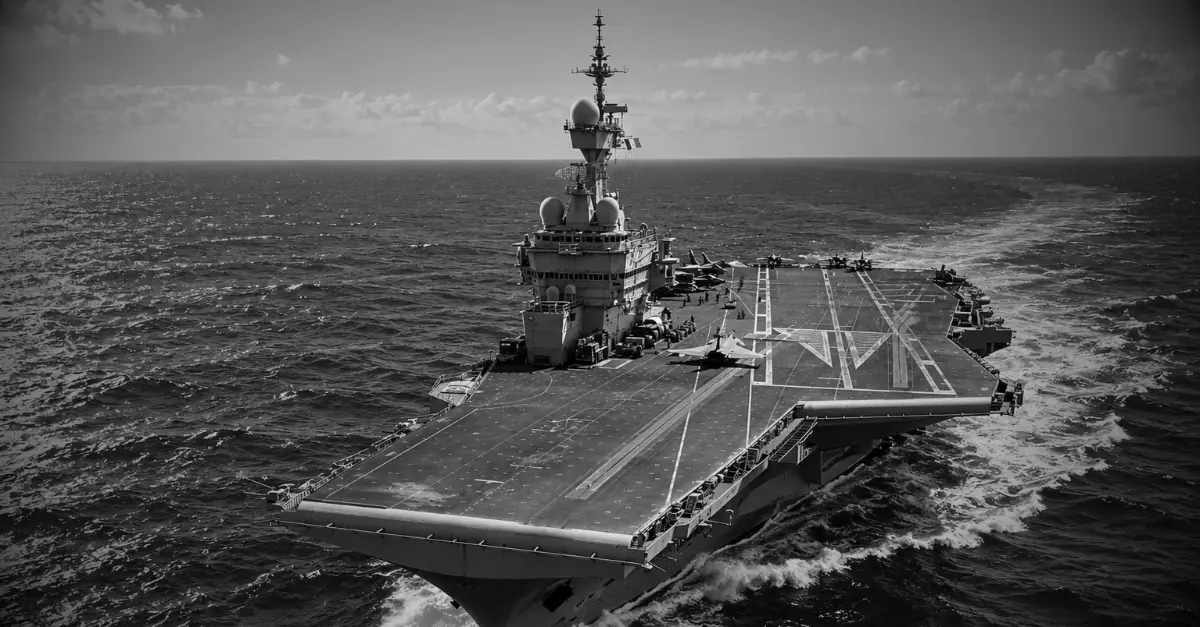
Geopolitically, the repeated presence of foreign vessels in French waters raises the question of effective sovereignty: an EEZ only exists if it is defended. Yet the permanent naval assets in French Guiana (La Confiance-class patrol vessels and associated means) cannot provide continuous coverage.
Local voices, notably within the fisheries committee, are calling for stronger resources and better regional cooperation. The French authorities have stepped up their campaigns and sought European support, but the phenomenon remains resilient. Illegal fishermen adapt their techniques (longlines, oversized nets) and exploit the limits of detection and interception.
The destruction of vessels and the convictions (suspended prison sentences, bans from the territory) have a partial deterrent effect, but do not remove the economic incentive tied to the price of swim bladders.
- French EEZ: about 10.2 million km² (2nd in the world, SHOM data).
- Commando selection: a success rate of roughly 15% out of about a hundred candidates (Marine Fusiliers School sources / observations).
- Red acoupa in French Guiana: legal landings of ~700 t/year; illegal catches estimated at 500-3,000 t/year (Ifremer and related studies).
- Foreign illegal fishing effort: roughly doubled in a decade according to a 2024 report.
Open perspectives
The Thalassa documentary shows two sides of the same reality: the training of a small number of highly selected operators, and their deployment in a theater where predation is diffuse and permanent. The selectivity of the Lorient course guarantees a high level of skill for complex missions, but it does not solve the problem of scale. Protecting an EEZ of this size requires a combination of permanent assets (patrol vessels, air and satellite surveillance, judicial and regional cooperation) and capabilities for targeted intervention.
The Marine commandos provide a specialized response, visible in the operations in French Guiana as in earlier counter-piracy missions. They cannot, however, close on their own the gap between the extent of the rights claimed and the control capabilities deployed day to day.
The question remains open: how far is France prepared to invest to make its sovereignty effective over maritime spaces from which it draws part of its strategic standing? The answers will depend as much on budget choices and cooperation with neighboring states as on the quality of the elite units trained in Lorient.
Frequently asked questions
How long is the Marine commando course in Lorient, and how selective is it?
The commando course lasts about nine weeks after pre-selection. The success rate is around 15 candidates retained out of a hundred presented, according to the indications available from training officials.
Why is the red acoupa particularly targeted in French Guiana?
Its swim bladder sells at high prices in Asian markets, which makes illegal fishing extremely lucrative for crews coming from neighboring countries.
Do the Marine commandos regularly intervene against illegal fishing?
Yes, as part of operations such as Mokarran in French Guiana, where they take part in boardings alongside the French Navy and the maritime gendarmerie. These actions come in addition to their counter-terrorism and anti-piracy missions.
Is the French EEZ actually monitored?
Its surface area is considerable (about 10.2 million km²). Permanent assets remain limited relative to its extent, which explains the reliance on targeted campaigns and specialized units for the most sensitive interventions.