What is at stake is not only the replacement of ageing airframes. It is how a country like Morocco can anchor part of the aerospace value chain locally while modernizing its forces, and how a South Korean manufacturer is trying to turn a regional opportunity into a lasting export platform.
The context of the Royal Moroccan Air Force modernization
Since the late 1970s, the Royal Moroccan Air Force (RMAF) has operated a fleet of Franco-German Alpha Jet E aircraft, of which twenty-four were acquired between 1979 and 1981. These two-seaters, based notably at Meknes, have served both for advanced pilot training and for light attack missions. According to the most recent open-source inventories, around twenty aircraft remain in service. Alongside them, the RMAF maintains some twenty F-5E/F Tiger II, American light fighters whose age and limited capabilities raise the question of their succession.
This need for renewal is part of a broader modernization programme. The RMAF already operates twenty-three F-16 Block 52 (or Block 52+) and is awaiting twenty-five additional F-16 Block 72, ordered under a US foreign military sale approved in 2019 and estimated at around $3.8 billion. At the beginning of October, Lockheed Martin announced the first flight of the first Moroccan aircraft (an F-16D two-seater) to roll off its production line in Greenville, South Carolina. In recent months, the RMAF has also received AH-64 Apache attack helicopters and C295 transport aircraft.
Against this backdrop, an advanced trainer and light combat aircraft must serve both to train future F-16 pilots and to carry out support or combat missions at a lower cost than heavy fighters. Several manufacturers are positioning themselves, and Korea Aerospace Industries’ (KAI) FA-50 has been among the most visible options in recent weeks.
From Marrakech to Sacheon, KAI’s charm offensive
KAI made its first appearance at the Marrakech Airshow, held from 7 to 10 October 2026 at the Royal Air Force base. The only South Korean company present, the group had reserved a dedicated space for the FA-50, as part of the RMAF’s advanced trainer acquisition programme. Moroccan government and military officials visited the stand, among them Abdellatif Loudiyi, Minister Delegate in charge of the Administration of National Defense, as well as senior officers from the Royal Armed Forces and the RMAF. KAI also held numerous meetings with delegations from Qatar, the United Arab Emirates and Saudi Arabia.
On 8 October, KAI signed a memorandum of understanding with two Moroccan companies: Maintenance Aero Maroc, which specializes in the maintenance, repair and upgrade of military aircraft, and Sabca Maroc, which is active in aerostructure assembly. The text covers industrial cooperation around an offer of the T-50 family to the RMAF. The three companies see it as a way to “pave the way for new discussions and potential collaboration” in support of the kingdom’s aerospace and defense industry. Another memorandum was signed with the Moroccan Investment and Export Development Agency (AMDIE) and the Moroccan aerospace industries group (GIMAS), aimed at exploring industrial partnerships and the development of local suppliers. None of these agreements includes an order, a number of aircraft, a timetable or an amount.
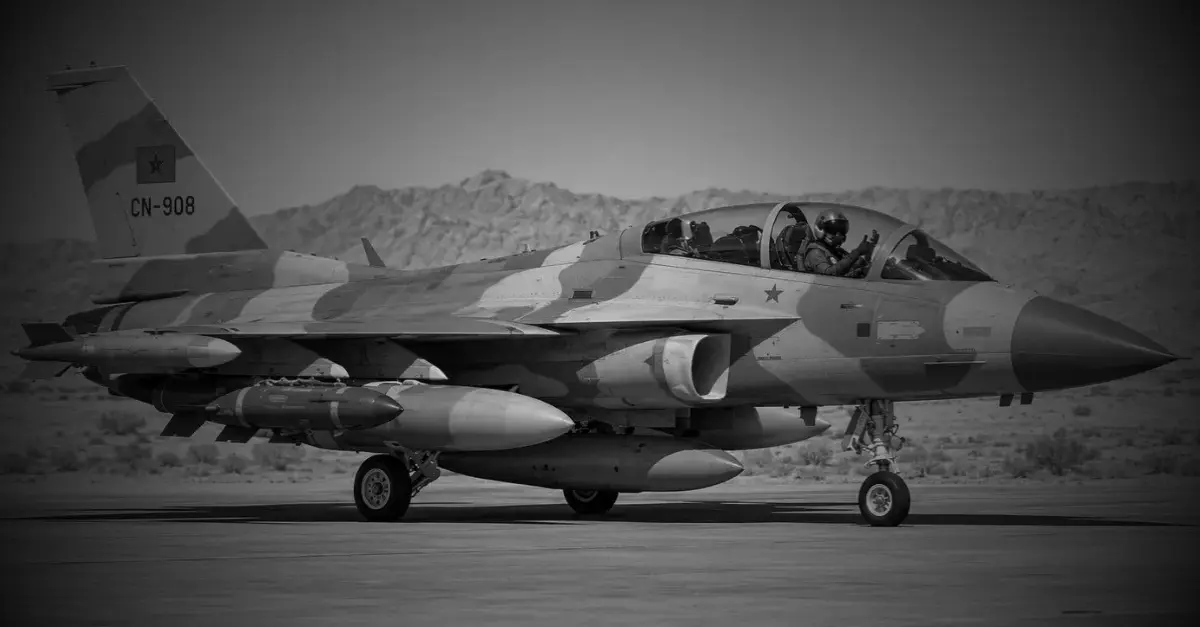
Two weeks later, on 23 October, KAI opened its Sacheon assembly lines, in the south of South Korea, to Moroccan representatives invited to its international prospecting event, “KAI Day”. The manufacturer had invited delegations from fourteen countries, including Morocco, the United States, the Philippines, Poland, the United Arab Emirates and Romania. Some eighty foreign delegates toured the workshops and examined, full-scale, the FA-50 light fighter, the KF-21 Boramae fighter, the MAH amphibious assault helicopter and the LAH light armed helicopter. A large part of the programme was devoted to drones (MUCCA, AAP, ALE, CMMAV). Officials from the South Korean air force, the Defense Acquisition Program Administration (DAPA), the Agency for Defense Development (ADD) and the Defense Agency for Technology and Quality (DTaQ) were present, as were executives from Northrop Grumman, Safran and Rolls-Royce.
The event took place on the sidelines of the Sacheon air show (22-25 October), which hosted an international exhibition (GADEX) open to 124 companies from 22 countries. There, KAI unveiled its future air combat system (NACS), combining crewed aircraft, drones and artificial intelligence. Kim Yong-min, head of KAI’s commercial operations, had described the Marrakech show as an “ideal opportunity” to showcase the FA-50’s performance and operational experience to Moroccan and African customers.
The FA-50’s technical and industrial strengths
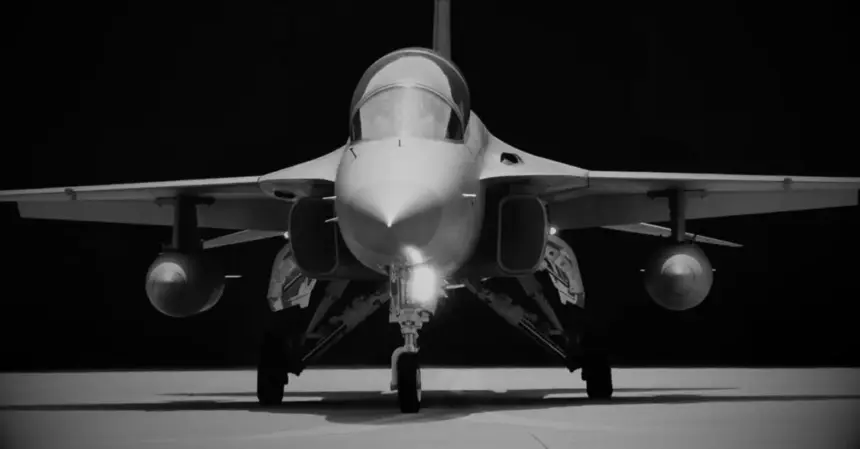
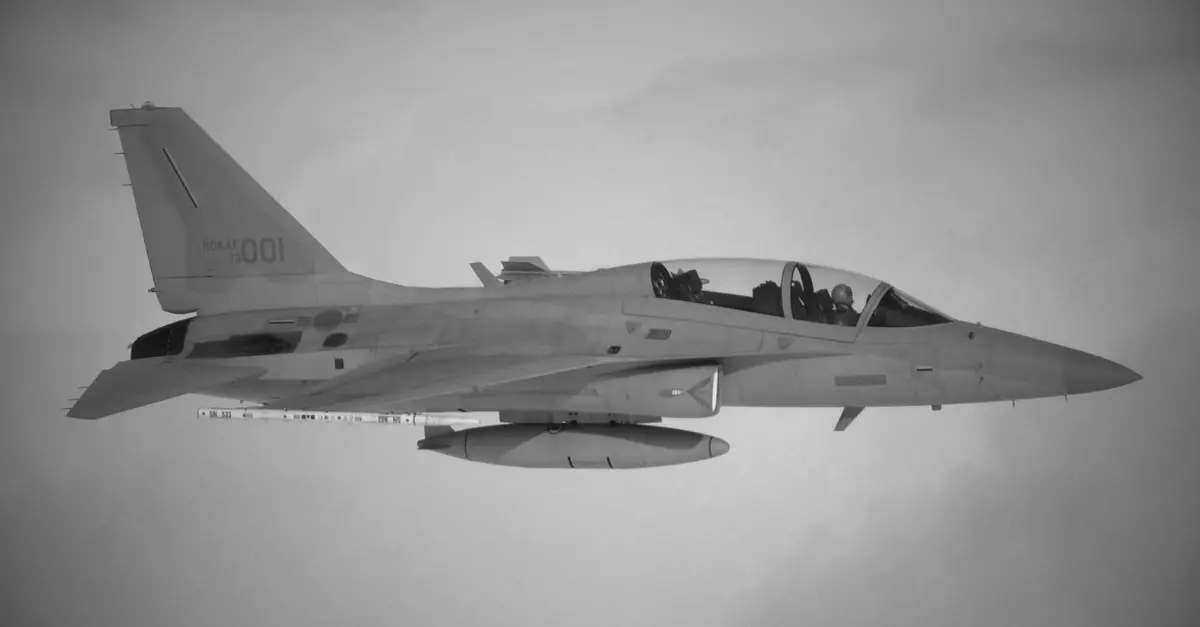
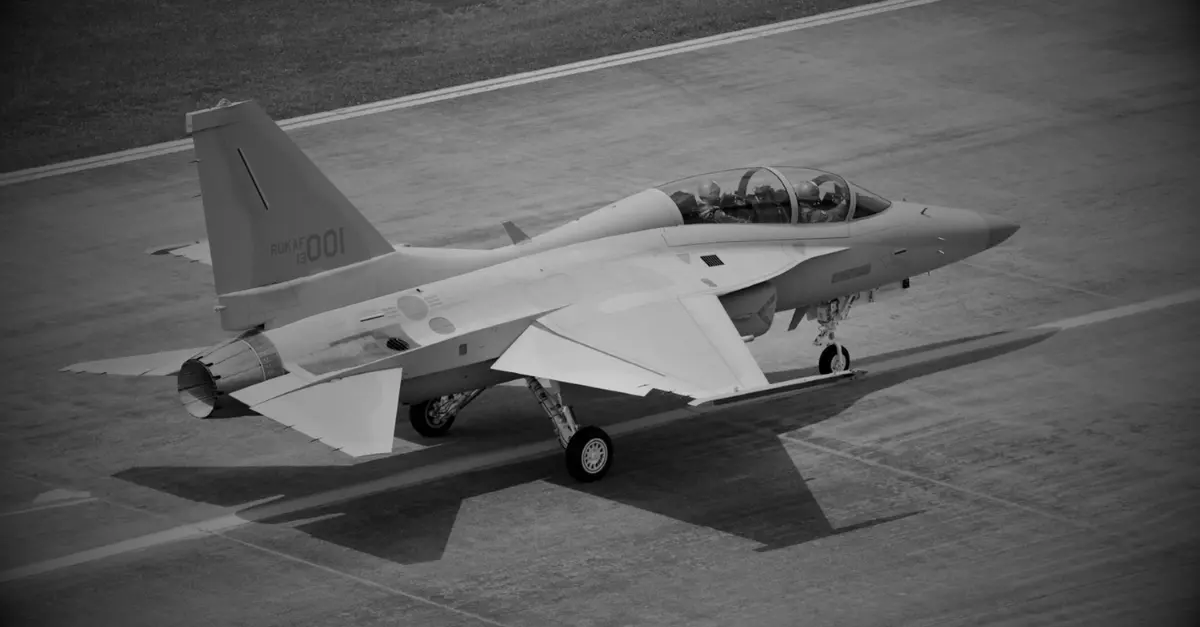
Derived from the T-50 trainer designed with Lockheed Martin, the FA-50 is a single-engine supersonic two-seater capable of handling both advanced training and light combat missions. It shares a significant part of its avionics, flight control systems and weapons interfaces with the F-16. This technical kinship is KAI’s main argument: it would make it easier for pilots trained on the FA-50 to move on to Morocco’s F-16s and could simplify certain aspects of logistics.
KAI also relies on its export record. More than 140 aircraft of the family have been delivered or ordered by several countries, including Poland (48 aircraft under a contract worth about $3 billion), the Philippines (24 in total after an additional order of 12 in 2025), Malaysia (18) and other operators in Asia and the Middle East. The manufacturer emphasizes the aircraft’s versatility and the speed of delivery seen in some contracts.
On the industrial side, the memoranda signed in Marrakech aim precisely to anchor part of the activity in Morocco: maintenance, upgrades and even structural assembly. In a country that has spent years building an aerospace ecosystem around Casablanca and other sites, this dimension of offsets and skills transfer is a potentially decisive lever. The competitors identified in the specialized press include notably Leonardo’s M-346 Master, a twin-engine two-seater designed for advanced training and mission simulation.
- Fleet concerned: about 19 to 22 Alpha Jet E (24 acquired between 1979 and 1981) and about 22 F-5E/F Tiger II.
- F-16s in service and on order: 23 Block 52 (upgrade to the Block 72 standard under way or planned) and 25 new Block 72 on order; first flight of a Moroccan aircraft in early October 2026.
- Memoranda of understanding: signed on 8 October 2026 with Maintenance Aero Maroc and Sabca Maroc (T-50 family); another MoU with AMDIE and GIMAS. No acquisition contract announced.
- FA-50 exports: more than 140 aircraft of the family exported or ordered (Poland, the Philippines, Malaysia, among others).
Strategic and geopolitical stakes in the Mediterranean basin
For Morocco, choosing a successor to the Alpha Jet and, potentially, the F-5 reflects a logic of supplier diversification and relative industrial autonomy. The country maintains a close defense partnership with the United States, illustrated by the F-16s, the Apaches and other programmes. The arrival of a South Korean manufacturer, itself a partner of Lockheed Martin on the T-50/FA-50, would allow Morocco to remain within the American technical ecosystem while widening its circle of suppliers. In a regional context marked by tensions with Algeria and the Western Sahara question, the ability to quickly field versatile aircraft, trained locally and supported by a national industry, has a concrete operational dimension.
On the South Korean side, Morocco represents both a North African market and a gateway to other countries in the Middle East and Africa. The presence of delegations from the Emirates, Qatar and Saudi Arabia in Marrakech, along with the invitation of several operator or prospect countries to Sacheon, points to a portfolio strategy. KAI is seeking to turn exploratory memoranda into contracts, betting on industrial anchoring rather than a simple sale of platforms.
Several viewpoints coexist. For Moroccan industrial players, the MoUs open up prospects for workload and skills development. For RMAF decision-makers, compatibility with the F-16 is a weighty argument, but the final decision will depend on overall cost (acquisition, training, support), comparative performance and industrial terms. European and other competitors can put forward alternative offers in terms of simulation, twin-engine design or delivery schedule. No official Moroccan source has confirmed a choice or even a decision timetable; the memoranda remain, at this stage, frameworks for discussion.
Looking ahead
Nothing indicates today that a contract will be signed in the short term. The events in Marrakech and Sacheon nevertheless show that KAI has committed significant resources to stay visible and to involve Moroccan industrial players. The modernization of the RMAF is continuing along several lines (fighters, helicopters, transport), and the advanced trainer/light combat segment is one of the next visible steps.
What is emerging is less an imminent announcement than an open competition in which technical quality, the sharing of industrial risk and alignment with the F-16 fleet will carry weight. In a Mediterranean basin where defense budgets remain constrained and partnerships are diversifying, the FA-50’s eventual success will depend as much on KAI’s ability to turn its memoranda into reality as on Morocco’s willingness to link acquisition with local industrial development.
FAQ
Has a contract to buy the FA-50 or T-50 been signed with Morocco?
No. The memoranda signed in Marrakech are exploratory industrial cooperation agreements. No number of aircraft, no amount and no timetable have been announced.
Why is the FA-50 presented as complementary to Morocco’s F-16s?
Because it was developed with Lockheed Martin from the T-50 and shares a large part of its avionics and systems with the F-16, which can make pilot training and some aspects of maintenance easier.
Which main competitors are mentioned to replace the Alpha Jets?
The specialized press notably cites Leonardo’s M-346 Master. Other advanced trainers exist on the market, but the FA-50 has enjoyed particular visibility in recent weeks thanks to KAI’s active presence.