A few hours later, Assimi Goïta, President of the Transition in Mali, landed for a working visit focused on the Confederation of Sahel States. This simultaneity is no coincidence. It illustrates the tension between Niamey’s desire to open a pragmatic channel with eastern Libya and Algiers’ determination to lock down its interests in northern Niger.
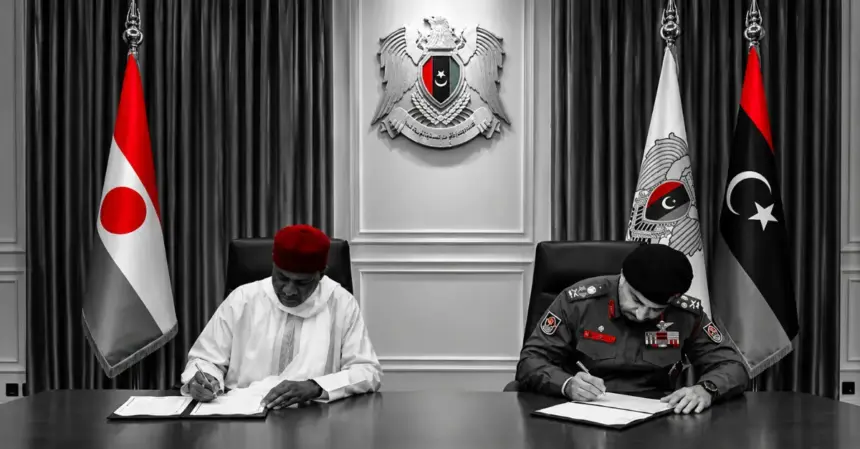
On November 1 in Benghazi, Zeine signed a strategic cooperation protocol with Saddam Haftar, the number two of the forces controlling eastern Libya. The text has not been made public. Discussions centered on border security, the fight against trafficking and organized crime. The next day, the Nigerien Prime Minister met Field Marshal Khalifa Haftar. The gesture comes after the release, a few months earlier, of a Nigerien opponent who had been held by the Benghazi camp. Niamey also maintains contacts with Tripoli. For Niger, the immediate challenge is to secure a border of roughly 340 kilometers with Libya, a zone of passage for armed groups and smuggling networks.
On the Algerian side, the timeline is longer. On October 21, General Salifou Mody, Niger’s Minister of Defense, signed a military cooperation protocol in Algiers with Chief of Staff Saïd Chengriha. Four days later, both chambers of the Algerian Parliament authorized, under the procedure set out in Article 91 of the Constitution, the deployment of People’s National Army units to Niger. The stated objective is to protect shared energy interests and to implement the bilateral agreement.
It is the first Algerian ground deployment beyond its borders since 1973. Units have since been reported heading toward the north of the country, notably around Arlit and toward Madama, a former French base. Algiers has also delivered fuel: a convoy of about fifty tanker trucks reached Agadez in late October to ease shortages that had lasted several months.
On November 4, Ahmed Attaf arrived in Niamey after a stopover in N’Djamena. He handed Abdourahamane Tiani, President of the National Council for the Safeguard of the Homeland, a letter from Tebboune. The message expressed the Algerian president’s “great satisfaction” with the state of bilateral relations and his desire to strengthen them. Attaf held talks with his counterpart Bakary Yaou Sangaré. At this stage, he has not met Zeine. The official line emphasizes energy, security and regional coordination. The tour also comes amid tensions between Niamey and N’Djamena, following Nigerien accusations of drone strikes. Algiers is thus positioning itself as an interlocutor for both capitals.
The next day, Assimi Goïta was received by Tiani. According to the joint communiqué, their talks covered counterterrorism within the AES, diplomatic coordination and the strengthening of the Confederation’s Unified Force. Goïta then continued on to Ouagadougou. This visit is a reminder that Niger remains anchored in the Sahelian framework, even as it diversifies its partnerships to the north.
A tight timeline
- October 21: signing of the Algerian-Nigerien military protocol in Algiers.
- October 25: both chambers of the Algerian Parliament vote to authorize the deployment of units to Niger.
- November 1: signing of the strategic protocol in Benghazi between Zeine and Saddam Haftar.
- November 2-3: Zeine meets Khalifa Haftar; end of the visit.
- November 4: Attaf in Niamey, delivery of Tebboune’s letter to Tiani.
- November 5: Goïta’s visit to Niamey, AES discussions.
These dates show an acceleration. Algiers committed military and logistical resources before Zeine’s trip to Benghazi. Niger pursued its dialogue with eastern Libya despite this context. Analysts note the paradox. Jalel Harchaoui, a specialist on Libya, observes that this kind of pragmatic relationship existed until 2023 and that the current move can be read, in part, as a reaction to the Algerian presence in northern Niger. Russia is present on both sides of the border: with Algiers, with Niamey and with the Haftar family. This gives it a potential mediating role.
The stakes are concrete. The Trans-Saharan gas pipeline, about 4,100 kilometers long, is meant to carry Nigerian gas to Algeria and then Europe via Niger (around 840 kilometers on Nigerien territory). Work on the Algerian section began in June 2026; Niger plans to launch its section in early 2027. The envisaged capacity is between 20 and 30 billion cubic meters per year. Protecting this corridor and the existing facilities is among the official reasons given for the Algerian deployment.
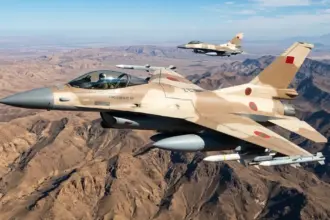
A shared border of about 1,000 kilometers separates Algeria from Niger; the area is also affected by armed-group movements and trafficking. For Algiers, the doctrine of non-intervention was abandoned after the attempted destabilization of Tiani in late August 2026, to which it responded by sending Su-30 fighter jets.
From the Nigerien point of view, the rapprochement with Benghazi answers an immediate need: securing the eastern border without depending solely on Algiers. The Haftar camp has already interacted with opponents of the Niamey regime. A protocol, even an undetailed one, can help reduce the risk of support for rebels and facilitate trans-Saharan trade. Niamey keeps its ties with Tripoli, which leaves it room to maneuver. For the AES, the priority remains the fight against jihadist groups; outside partnerships are secondary as long as they do not contradict the sovereignty it asserts.
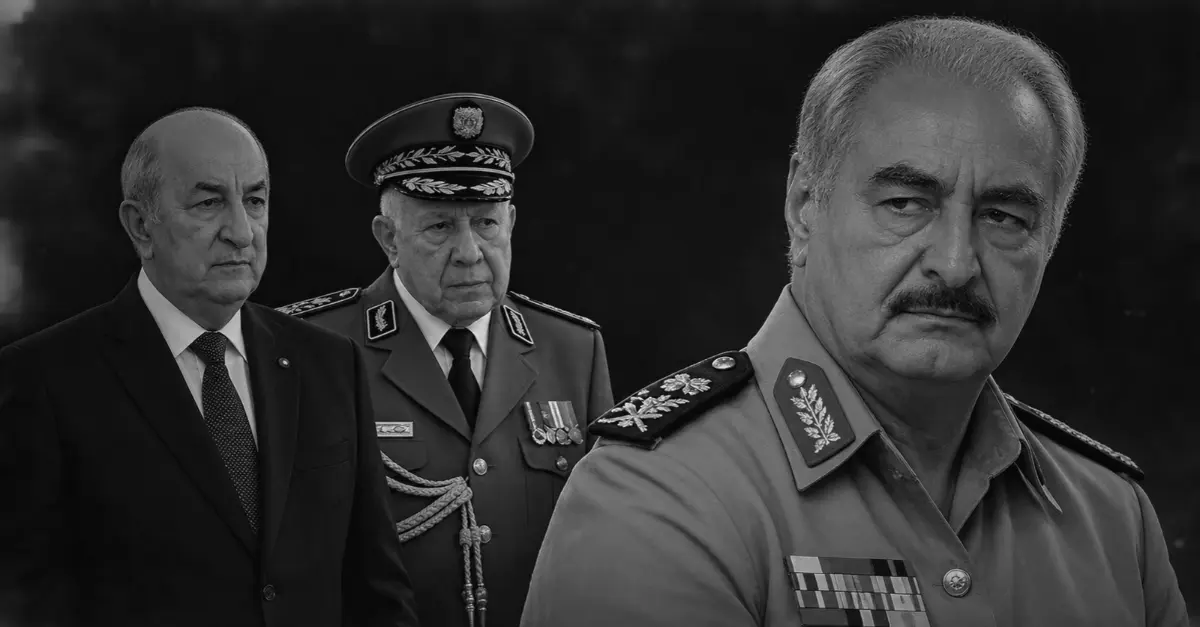
The limits are clear. The content of the two protocols (Algerian-Nigerien and Nigerien-Libyan) is not public. The exact number of Algerian soldiers deployed, the length of their stay and their rules of engagement are not specified. The absence of an immediate meeting between Attaf and Zeine can be read as tactical distance or simply as a scheduling issue. Relations between Algiers and Benghazi have been tense in the past, notably over border closures. Nothing currently points to a rupture between Algiers and Niamey: Tebboune’s message and the fuel deliveries suggest the opposite. Algerian and Nigerien sources speak of consolidation, not confrontation.
What is at stake goes beyond the Benghazi protocol alone. The question is whether Niger can maintain several axes (AES, Algeria, eastern Libya) without any one of them imposing exclusivity. For Algiers, the aim is to turn one-off support into a lasting presence along an energy and security corridor. For Haftar, it is an opportunity to extend his influence toward the Sahel just as international talks seek to reorganize the Libyan landscape.
For Russia, it is a position as facilitator between partners who are not always aligned. The coming weeks will show whether the dialogue between Niamey and Benghazi translates into operational measures on the border, and whether the Algerian deployment remains confined to protecting facilities or extends to other missions. Official communiqués remain measured; the facts, meanwhile, keep piling up.
Frequently Asked Questions
Why is Algeria sending troops to Niger?
To protect shared energy interests, notably tied to the Trans-Saharan gas pipeline, and to implement a military protocol signed on October 21, 2026, according to parliamentary and presidential communiqués. It is the first ground deployment since 1973.
Does the protocol signed in Benghazi change relations with Tripoli?
The details are not public. Niamey maintains contacts with both Libyan centers of power. The agreement mainly concerns security and border cooperation with the East.
Did Attaf ask Niamey to slow its rapprochement with Haftar?
No official statement says so. Tebboune’s message and the talks focus on consolidating Algerian-Nigerien relations and regional coordination.
What is the link with the AES?
Goïta’s November 5 visit reaffirmed the priority given to counterterrorism and to coordination within the Confederation, independently of the dialogues conducted with Algiers or Benghazi.