On November 6, 2026, Javier A. Hernández, a former special agent with the U.S. State Department’s Diplomatic Security Service, published an op-ed in Middle East Forum Observer explicitly calling on Washington to treat Morocco’s Atlantic port network as strategic infrastructure. According to him, the kingdom is developing its coastline into a network of ports, industrial zones, energy infrastructure and trade corridors capable of linking Europe, the Maghreb and the landlocked states of the Sahel.
This position comes a week after Russia’s veto at the United Nations Security Council, which blocked the renewal of the peacekeeping mission in Western Sahara and, in the author’s view, marked the end of a Cold War relic.
The analysis comes in a specific context. On October 30, Russia vetoed a U.S. draft resolution that would have extended a reformed UN force while affirming autonomy under Moroccan sovereignty as the sole basis for negotiations. The Russian counter-proposal also failed to secure the nine votes required. MINURSO, which has been present for 35 years, is therefore left without a renewed mandate.
For Rabat, this outcome opens a phase centered on Moroccan sovereignty over the region; for other actors, notably the Algerian-backed Polisario Front, it represents a break with the principle of self-determination. Above all, Hernández sees the possibility of new development built around Moroccan infrastructure.
A Rapidly Expanding Port Network
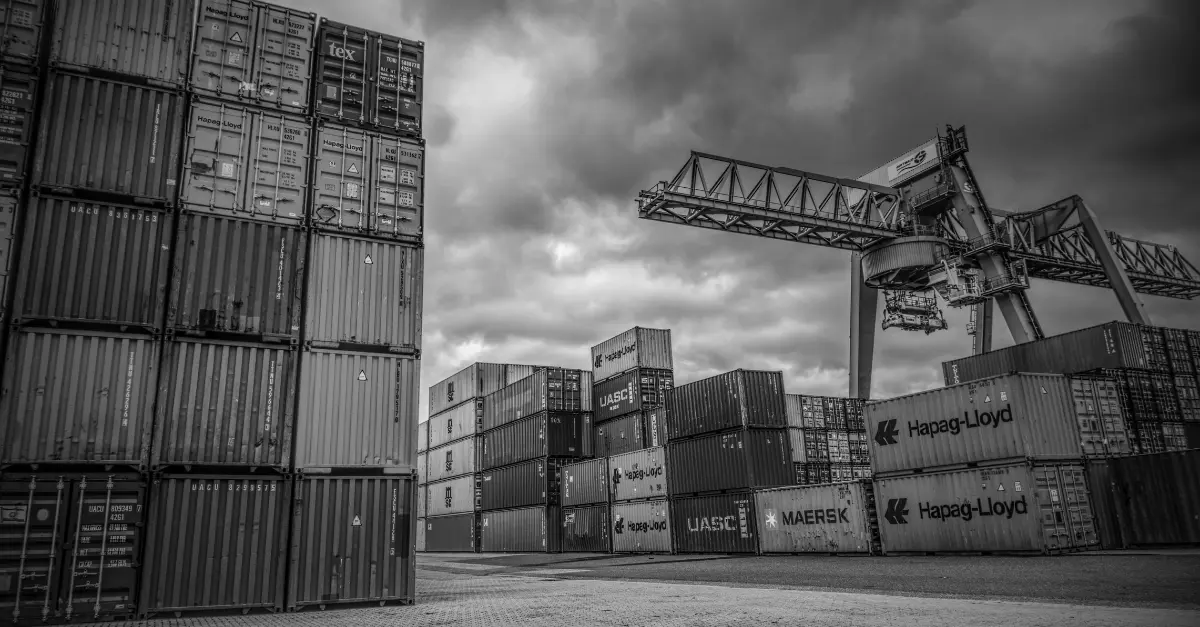
Two days before the veto, on October 28, King Mohammed VI chaired a working session in Rabat devoted to Nador West Med and Tanger Med. Moroccan authorities announced the imminent opening of the first container terminal at Nador West Med, near Nador, and the launch of construction work on Tanger Med 3. According to official figures, the planned expansions could raise Tanger Med’s capacity to as much as 20 million containers. Nador West Med, where public and private investment reaches 54 billion dirhams, is meant to complement Tanger Med with an industrial and energy dimension, notably a liquefied natural gas terminal. Further south, the Dakhla Atlantic port, under construction in the Southern Provinces, is designed to serve heavy industry and trade with the landlocked states of the Sahel. Work is progressing there; sources indicate a completion rate above 70% and an opening expected toward the end of the decade.
These projects do not stand alone. Launched in 2022, the African Atlantic States process now covers maritime security, connectivity, energy and the blue economy. In July 2026, Morocco co-chaired its seventh ministerial meeting in Cotonou, Benin. Rabat has also offered Mali, Niger, Burkina Faso and Chad access to its Atlantic infrastructure in order to connect these landlocked Sahelian economies to global markets. This approach is in line with the royal initiative to give Sahel countries an outlet to the Atlantic.
Convergence with American and European Interests
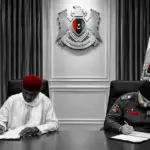
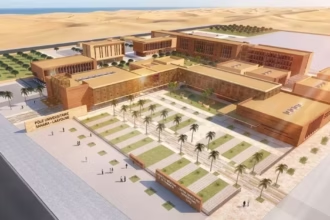
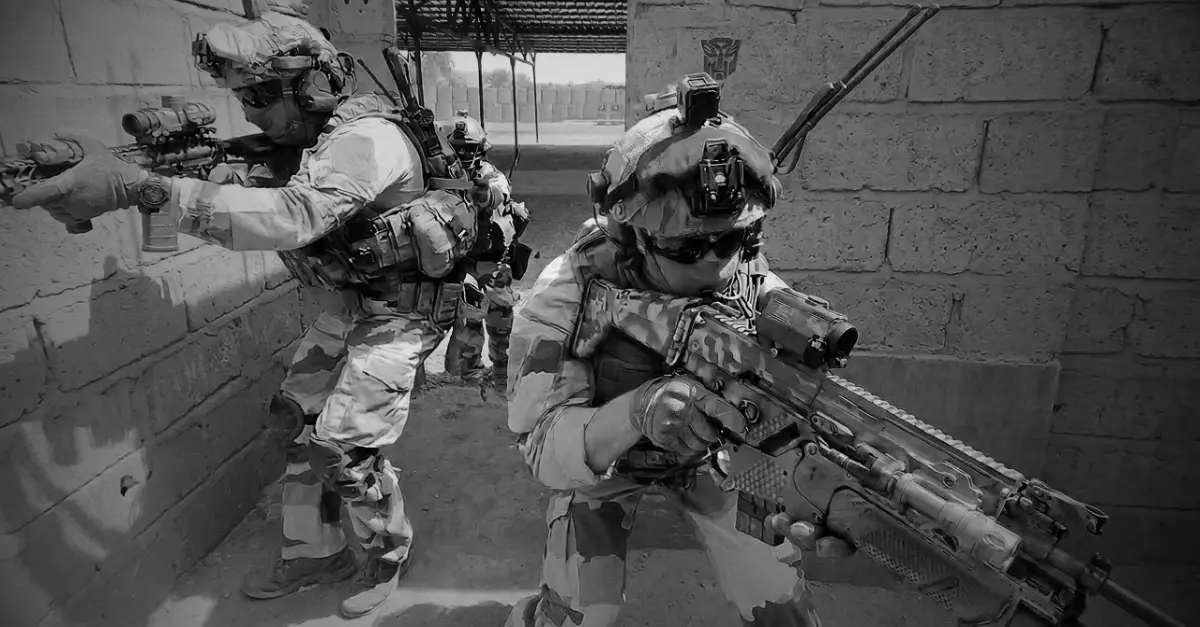
Hernández stresses that this strategy aligns with Washington’s interests. On July 13, 2026, the Royal Armed Forces and the U.S. Africa Command (Africom) signed a memorandum on the creation, by 2030, of an African multidomain training and experimentation center in Tan-Tan. The center is to include a multidomain training area, a drone academy and an innovation and experimentation hub. In August, U.S. and Moroccan forces carried out a live-fire demonstration of long-range precision strike capabilities there, while the site was still under construction. In October, Morocco hosted planning for the African Lion 2027 exercise, which more than 45 countries are expected to attend. These developments illustrate growing interoperability.
Europe is also anchoring itself to Morocco. In January, the European Union and the kingdom reaffirmed their strategic partnership, referring to the African Atlantic States process and Sahel stability. In October, NATO’s Special Representative for the Southern Neighborhood traveled to Rabat to discuss terrorism, maritime security and the Sahel. For Spain, Morocco’s ports, located across the Strait of Gibraltar and along the routes linking Atlantic Africa to Europe, have direct implications for trade, migration management, energy security, maritime surveillance and access to the Sahel. Madrid sees this expansion as both potential competition (notably with Algeciras) and an opportunity for complementarity.
Beijing, Moscow and the Limits of Alignment
Morocco is not, however, shutting out Washington’s competitors. China has developed a commercial presence around Tangier. The Mohammed VI Tangier Tech City, next to Tanger Med, is presented by China’s Ministry of Commerce as a bilateral industrial project. In January, the Chinese ambassador visited the tech hub and the port complex. A Chinese government report in March listed agreements with 42 companies (34 of them Chinese) for roughly $3.5 billion in planned investment. Concrete projects are moving forward: in October, Guizhou Tyre launched construction of a $299 million tire factory. Hernández notes, however, that the publicly available agreements concern industrial investment, manufacturing and trade, with no sign of a Chinese naval foothold. In October, Morocco named the Danish-led operator Maersk-APM as concessionaire of the new container terminal at Tanger Med 3.
Moscow poses another challenge. Russia is tightening its military ties with Mali, Niger and Burkina Faso. Its October 30 veto showed that it can challenge Washington on an issue central to Moroccan foreign policy. In this context, the kingdom could become an even more valuable gateway to the Sahel, where Western influence has receded.
Key Infrastructure Figures
- Target capacity of Tanger Med after expansions: up to 20 million containers, according to Moroccan authorities.
- Investment mobilized for Nador West Med: 54 billion dirhams (public and private).
- Additional capacity of Tanger Med 3: 4.5 million containers per year for an investment of 8 billion dirhams.
- Africom–Royal Armed Forces agreement (July 13, 2026): multidomain center in Tan-Tan by 2030.
- Chinese presence at Tanger Tech: agreements totaling roughly $3.5 billion in planned investment (Chinese government report, March).
Strategic Stakes
According to Hernández, the question is not whether Morocco must pick a side. Rabat welcomes Chinese investment, bases its defense cooperation on the United States and maintains close ties with Europe. Washington should not demand economic exclusivity, but should ensure that commercial dependence on critical infrastructure does not become a source of strategic leverage. This pragmatic approach reflects the reality of a Maghreb where interests overlap.
From the American perspective, Moroccan ports offer an anchor in a Sahel where military juntas have multiplied partnerships with Moscow and where traditional trade routes have been disrupted. For Morocco, this infrastructure strengthens both its role as a regional hub and its position on the Sahara issue. For Algeria and the Polisario, it looks like the consolidation of a contested sovereignty. Spain, for its part, must manage both port competition and the benefits of greater stability on its southern border.
Several unknowns remain. The end of the UN mission does not resolve the underlying political dispute. The corridors to the Sahel depend on the security of overland routes and on the willingness of the landlocked states. The Chinese presence, currently commercial, could evolve. Finally, Tanger Med’s real ability to reach 20 million containers and the actual opening of Dakhla Atlantic remain contingent on construction schedules and commercial attractiveness.
In the coming months, the way Washington integrates, or does not integrate, this network into its African planning, the continuation of joint exercises with Africom, and European reactions to Moroccan port expansion will serve as concrete indicators. The debate opened by the Middle East Forum is less about a binary choice than about a lasting articulation between infrastructure, sovereignty and the balance of power in the Atlantic-Mediterranean basin.
Frequently Asked Questions
Why is the Middle East Forum interested in Moroccan ports?
Because it sees them as infrastructure capable of linking Europe, the Maghreb and the Sahel, aligned with American security and connectivity interests, notably in the face of Russian influence in the Sahel.
What is the link between the October 30 Russian veto and this analysis?
The veto ended the mandate of the UN mission in the Sahara. The author sees it as the end of a Cold War relic and the opening of a phase centered on Moroccan sovereignty and infrastructure development.
Does China have military access through Moroccan ports?
According to Hernández and the publicly available agreements, no. The Chinese presence around Tanger Med and Tanger Tech involves industrial and commercial investment; the concessionaire of the new Tanger Med 3 container terminal is Maersk-APM.
What role does the Tan-Tan center play in this strategy?
Stemming from a memorandum signed on July 13, 2026 between the Royal Armed Forces and Africom, it is to become a multidomain training and experimentation center by 2030, strengthening interoperability and counter-terrorism capabilities.