This amount, set out in Article 36 of Bill No. 60.26, represents a 21.21% increase over the 157.171 billion dirhams of the 2026 Finance Act. Yet it is not the budget Morocco will spend in 2027. It is an authorization to program multi-year financial obligations, a technical mechanism whose strategic implications go well beyond a simple budget headline.
This mechanism allows the National Defense Administration to commit, as early as 2027, expenditures that will be charged against the 2028 appropriations of the special account titled “Acquisition and repair of the Royal Armed Forces’ equipment and support for the development of the defense industry.” In practice, it provides the visibility needed to negotiate and sign arms or industrial cooperation contracts with long cycles, without concentrating all disbursements in a single fiscal year.
Analyst Abdelhamid Harifi, an administrator of the FAR-Maroc forum, sees it as “the most striking part of the text”: expanded room to maneuver to negotiate new contracts and modernize the arsenal, rather than an annual expense.

A ceiling that has been rising for several years
The trajectory is clear. These advance commitments stood at 124.766 billion dirhams in 2024, 133.453 billion in 2025, then 157.171 billion in 2026. The jump to 190.5 billion in 2027 marks an acceleration. Over three years, the cumulative increase exceeds 50%. This movement reflects multi-year planning logic rather than an explosion in current spending.
The expenditures actually planned for 2027 are of a different order. Personnel costs reach 49.34 billion dirhams, up about 5% from 2026, driven in particular by salary increases. Equipment and miscellaneous expenses stand at 8.37 billion. On the investment side, the general budget provides 7.2 billion in payment appropriations for 2027 and 8 billion in commitment appropriations for the following years, for a total of 15.2 billion.
The special account itself is allocated 11.49 billion dirhams in spending for 2027, an amount almost unchanged from the previous year. Added together, these items give an annual envelope of around 76 billion dirhams according to Telquel’s calculations, a moderate increase.
These accounting distinctions are essential. Confusing the commitment ceiling with the annual budget would greatly overstate the resources mobilized from 2027. The text, moreover, identifies no specific arms contract and no particular system. Its immediate purpose is administrative and about planning.
5,500 positions to support modernization
The bill also provides for the creation of 5,500 budgeted positions within the National Defense Administration by 2027. This places Defense in second position among ministries and institutions, behind the Interior (14,200 positions) and slightly ahead of Health and Social Protection (5,400).
These three departments account for nearly three-quarters of the roughly 34,454 budgeted positions created in the bill. The published information does not specify the units, specialties or functions concerned. Harifi sees this as both a replacement for retirements and a reinforcement of field units, in a context of capability modernization.
These recruitments come on top of the resources allocated to maintenance and to developing industrial capabilities. They reflect a desire to equip the administration with the human resources needed to manage more complex and longer-running programs.
From acquisition to an industrial base
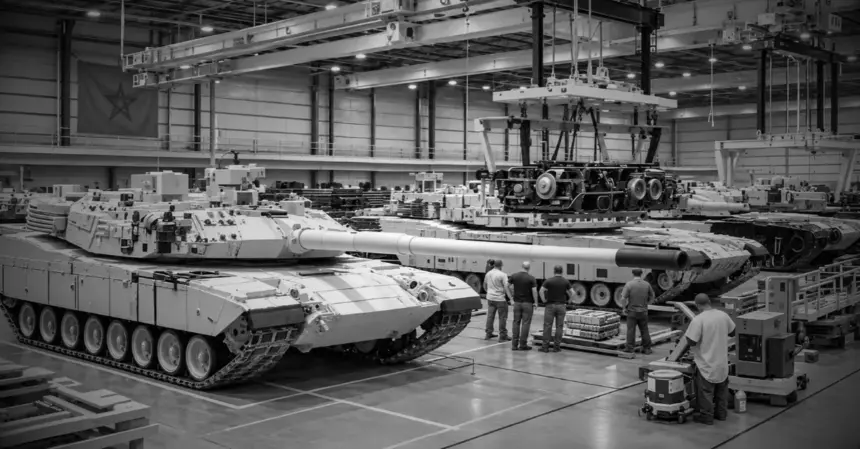
The very wording of the special account is revealing: it explicitly links the acquisition and repair of equipment with “support for the development of the defense industry.” This orientation is not new, but it is accelerating. At the opening of the Marrakech Airshow 2026 on October 7, Abdellatif Loudiyi, Minister Delegate in charge of the National Defense Administration, clearly set out the ambition to move “from a model of importing defense capabilities to building a national capability and sovereignty in defense.” He recalled the legal framework put in place, the dedicated industrial zones and the incentives designed to attract investment and technology transfers.
Concrete achievements already illustrate this trajectory. The Tata Advanced Systems plant in Berrechid, inaugurated in September 2025, produces WhAP 8×8 armored vehicles. The first deliveries to the Royal Armed Forces began in December 2025. The share of local content, currently around one third, is expected to rise toward 50%.
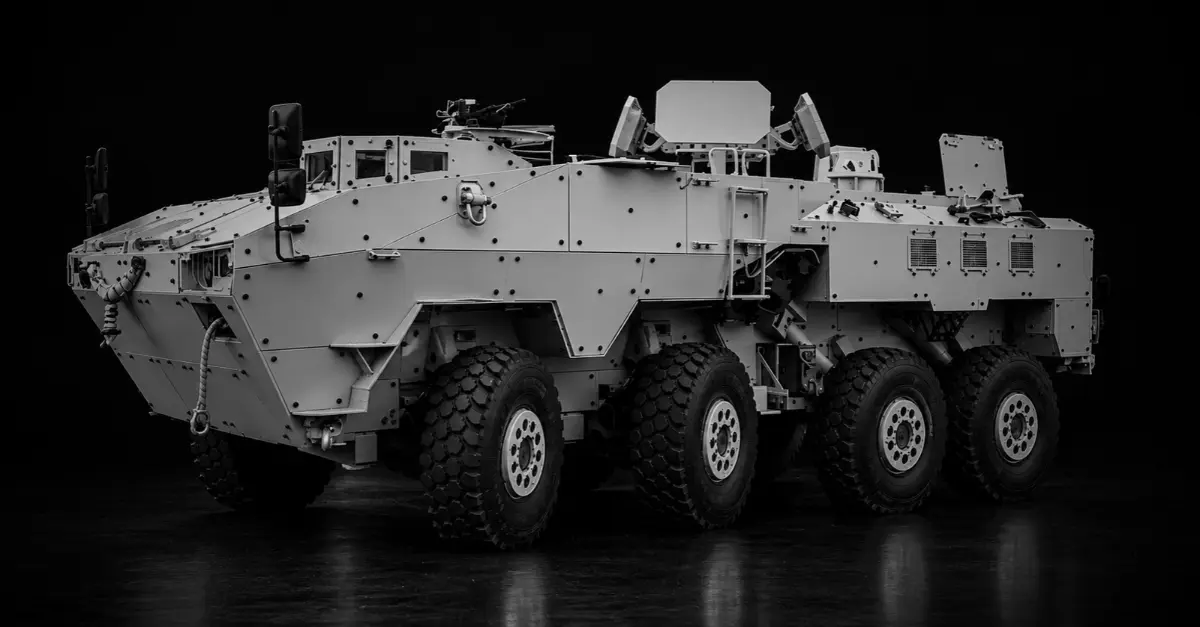
Moroccan Military Industry (MMI), linked to the Israeli group Elbit Systems, has announced that it will deliver combat turrets produced in Morocco to equip these vehicles, along with the associated ammunition, starting in March 2027. Defense industrial acceleration zones have been created at Nouaceur and Sidi Yahya (near Kénitra), totaling 675 hectares and managed by the Defense Industrial Zones Management Company. Several manufacturers have already signed memoranda of understanding there.
These projects remain essentially partnerships. They do not yet turn Morocco into an autonomous producer of major systems, but they allow growing local participation in maintenance, integration and certain production activities. The budget alone cannot measure the future scale of this participation. It does, however, create the financial conditions to negotiate it.
A strategic choice in a tense regional environment
In the Mediterranean basin and in North Africa, these choices unfold against a backdrop of lasting rivalry with Algeria. According to SIPRI data and recent analyses, Algerian military spending remains clearly higher in volume and as a share of GDP (largely for upkeep and personnel salaries rather than for procurement), even if it is undergoing adjustments.
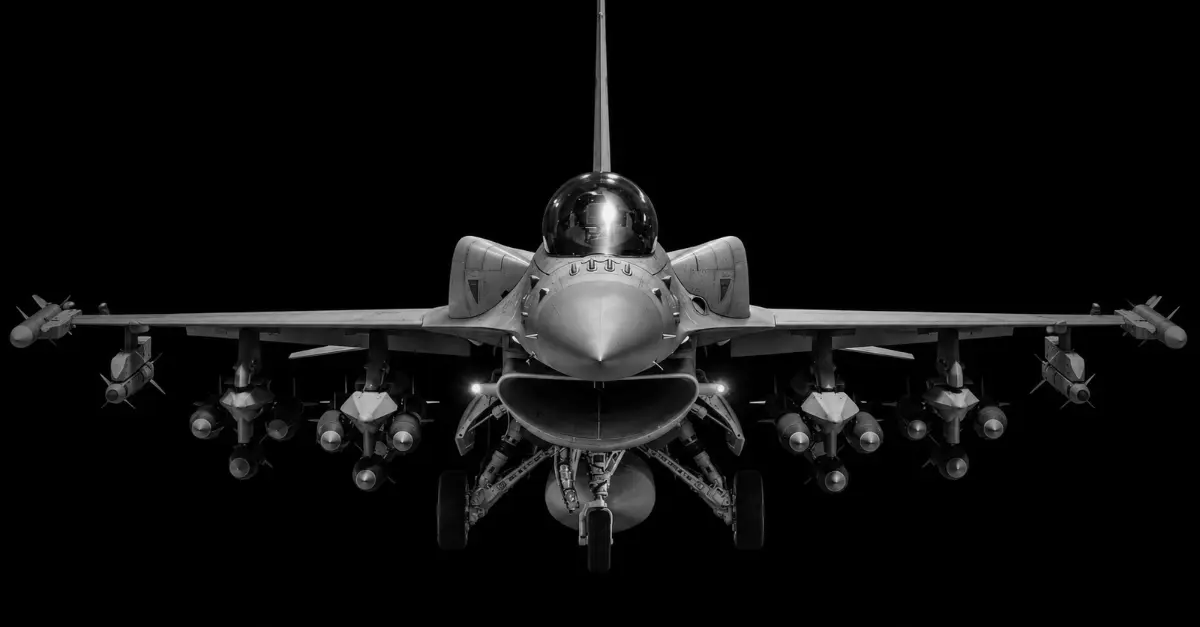
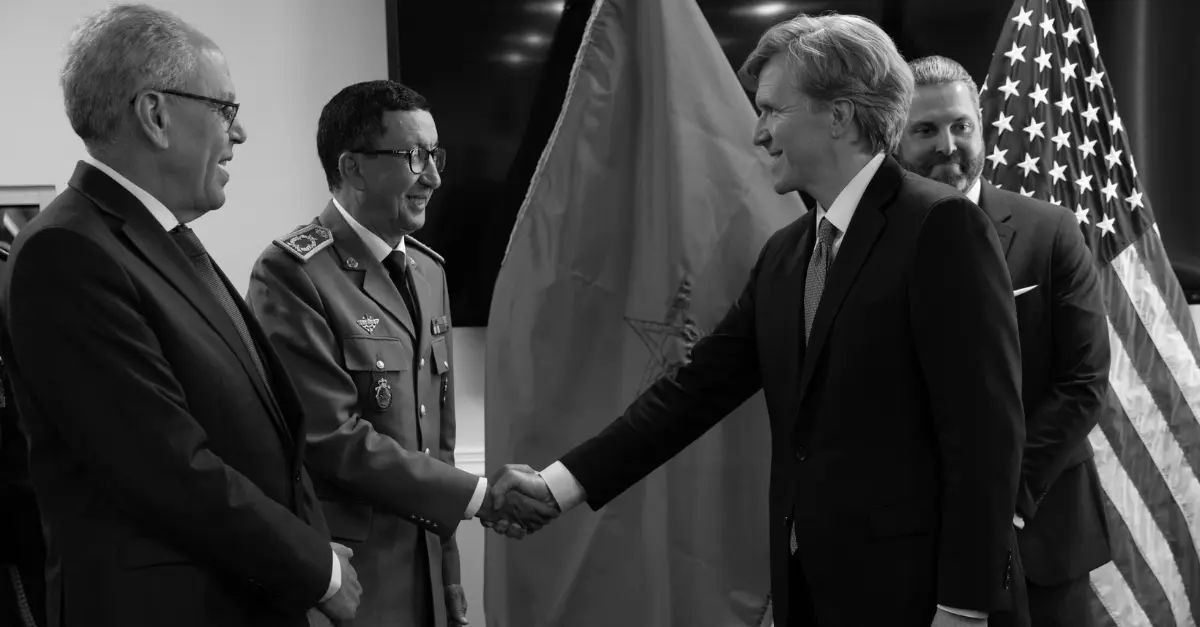
Morocco, for its part, maintains a more gradual trajectory, focused on selective modernization, diversification of partners (the United States, Israel, India and others) and the progressive construction of an industrial base. The United States remains a major partner for the F-16s, the Apaches and maintenance; Israel is present through industrial joint ventures; India through Tata. This diversification reduces single-source dependencies while building on established strategic alliances.
The goal is not to catch up with Algerian volumes, which are nothing but a financial black hole and of which, as we know, a part is diverted by the generals, but to gain operational autonomy and industrial resilience. A local base for maintenance and partial production improves equipment availability, creates skilled jobs and strengthens sovereignty without requiring proportionally high spending. The challenge is to turn commitment authorizations and industrial projects into genuinely operational capabilities and a lasting ecosystem.
The main figures of the 2027 Finance Bill for Defense can be summarized as follows:
- Advance commitments authorized in 2027 against 2028 appropriations: 190.5 billion dirhams (versus 157.171 billion in 2026).
- 2027 personnel expenditure: 49.34 billion dirhams.
- Special account (acquisitions, repairs, industry): 11.49 billion dirhams in spending in 2027.
- Creation of 5,500 budgeted positions.
The Finance Bill therefore broadens the financial planning scope of Moroccan defense policy while strengthening its human resources. In itself, it is not an arms program. Its impact will depend on how these margins are used to conclude useful contracts, develop genuine industrial skills and maintain a sustainable budget trajectory.
In a regional environment where rivalries persist and technologies evolve rapidly, this multi-year programming capacity is an asset. Converting it into lasting modernization of the Royal Armed Forces and a credible industrial base remains the real challenge of the coming years.
FAQ
Is the 190.5 billion dirhams the Defense budget for 2027?
No. It is a ceiling on multi-year commitments authorized in 2027 and charged against 2028 appropriations. Annual operating and investment expenditures are considerably lower.
Why does this mechanism exist?
It allows long-term contracts (acquisitions, maintenance, industrial cooperation) to be signed without waiting for the following year’s appropriations to open, which matches the long cycles of military programs.
Do the 5,500 new positions concern operational soldiers?
The bill does not specify. These are budgeted positions within the National Defense Administration. They may be used to replace departures and to strengthen structures, including administrative or technical ones.
Does this increase change the balance with Algeria?
It strengthens Morocco’s planning capacity, but Algerian military spending remains far higher according to available data. Morocco’s approach favors targeted modernization and gradual industrial development.