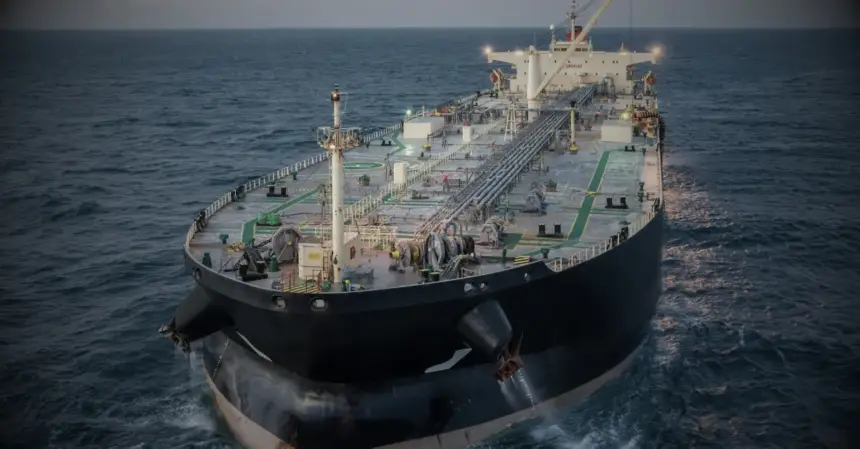
The loading went largely unnoticed: some 40,000 tonnes of ultra-low-sulphur diesel were taken on board on 13 October at Primorsk, on the Baltic Sea. The British financial services and data group London Stock Exchange Group (LSEG) recorded it on 14 October. Its importance lies mainly in what it signals, as the vessel’s declared destination is Morocco and it is among the first cargoes reported since Russian diesel exports resumed from this port.
We set out to understand what this movement says about the state of the global diesel market, about energy diplomacy between Moscow and Washington, and about the position of a country that relies heavily on imported refined products.
What we know, and what we do not
The available maritime tracking data establish the vessel’s declared destination. They say nothing about the identity of the buyer, the discharge port or the commercial value of the cargo. Such grey areas are common in oil trading, where the destination declared at loading can change during the voyage, so we stick to what is established.
The shipment fits into a fast-moving sequence of events:
- 9 October: the US Office of Foreign Assets Control (OFAC, the Treasury Department agency responsible for enforcing economic sanctions) publishes a general licence. It authorises certain transactions relating to the sale, delivery, unloading and import of diesel of Russian origin.
- 9 October: US President Donald Trump announces a deal providing for the immediate supply of more than 300,000 tonnes of Russian diesel to the American and international markets.
- 10 October: the partial lifting of Russian restrictions on diesel exports takes effect.
- 12 October: Russian Deputy Prime Minister Alexander Novak states that Moscow has the means to restore its usual volumes.
- 13 October: around 40,000 tonnes are loaded at Primorsk, bound for Morocco.
A licence that does not erase sanctions
The American decision needs to be read with precision. OFAC’s general licence covers specific operations, those that fall under US sanctions and concern diesel of Russian origin. It is not a blanket exemption. The sanctions regime remains in place, with its other components, and market players, chiefly traders, banks, insurers and shipowners, must check case by case that each transaction falls within the authorised scope.
This nuance matters for a country like Morocco. Operators importing fuel depend on international financial and insurance channels, often exposed to US regulation even when a transaction does not pass directly through the United States. A clear licence reduces legal risk, but does not eliminate it.
Why Russia had turned off the tap
To grasp what is at stake, we need to go back to the origin of the shortage. Russia had limited its foreign diesel sales in order to protect supplies to its domestic market, after several refineries were disrupted by Ukrainian strikes. The Russian authorities extended these restrictions several times, while maintaining certain deliveries under intergovernmental agreements.
Before these measures, the country usually exported more than three million tonnes of diesel per month. Its shipments then fell sharply, owing to the difficulties facing its refineries and the priority given to the domestic market. Sales had not stopped entirely: according to industry data gathered by Reuters, deliveries to Central Asia reached 427,000 tonnes in September, under the exemptions maintained by Moscow.
The resumption of loadings at Primorsk therefore reflects an easing, not a return to normal. Several provisions remain in force.
The promises of Moscow and Washington
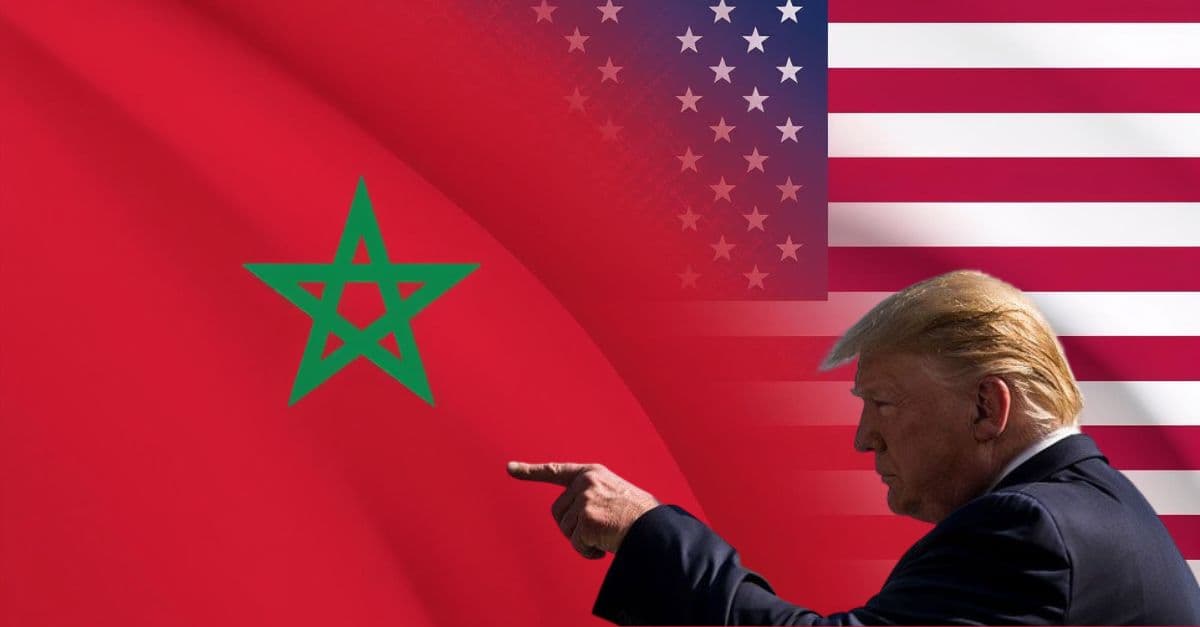
Both capitals are putting forward figures, which we attribute to their authors, since for now they amount to commitments or forecasts.
On the American side, Donald Trump mentioned, in addition to the initial 300,000 tonnes, a further 500,000 tonnes in November, then one million tonnes at a later stage. These quantities correspond to the commitments announced by Washington. Their shipment has not been fully confirmed, and nothing at this stage indicates that they will be delivered in full, or at what pace.
On the Russian side, Alexander Novak told the state channel Rossiya-24 that “by the end of the year, exports could reach between three and 3.5 million tonnes per month, returning to their pre-crisis levels”. This is a forecast by the Russian authorities. Whether it materialises depends on several factors, chiefly refining capacity, which is still weakened, and shipping conditions.
The Russian official also attributed to this prospect a fall of around 5% to 6% in international diesel prices. We remain cautious about this causal link: the price of a refined product results from many factors, from inventories and refining margins to seasonal demand and geopolitical tensions. This movement cannot be attributed solely to the resumption of Russian exports.
What this changes for Morocco
Morocco has had no significant domestic refining capacity since the closure of the Samir refinery in Mohammedia in 2015. The country imports most of its refined petroleum products, including diesel, which powers road transport, agriculture, construction and part of electricity generation. Fuel prices have been liberalised since the end of 2015, which makes them sensitive to international benchmarks and delivery costs.
In this context, a new supplier, or the return of a former one, broadens the range of supply sources. Operators have more choice, which can strengthen their bargaining power and, over time, help to moderate costs. Diversification also has strategic value: a country that imports almost everything it consumes has an interest in not depending on a small number of origins.
It would nonetheless be premature to conclude that pump prices will be affected. A 40,000-tonne cargo remains modest at the scale of a national market, and its effect would depend on its actual price, its buyer and how it is integrated into stocks. Diesel is traded on markets where price differences between origins are sometimes narrow.
A delicate geopolitical balance
The matter clearly has a diplomatic dimension. For the American administration, the deal is first and foremost meant to increase the global supply of diesel and to ease the rise in fuel prices. It also shows that the sanctions regime can be adjusted when economic considerations prevail, a precedent that analysts will follow closely.
Interpretations differ. For supporters of the deal, it addresses a real shortage and relieves consumers, including in importing countries that bear little responsibility for the conflict. For its critics, it hands Moscow additional revenue while the war in Ukraine continues, and undermines the coherence of the sanctions policy. Both arguments are being made, and neither clearly prevails.
For Morocco, the position is that of a buyer attentive to its economic interest, within the rules that apply to its transactions. To our knowledge, the authorities have not commented on this cargo, and we attribute no intention to them.
What to watch
Several elements will help assess the real scope of this resumption:
- the actual discharge port and the identity of the buyer of the vessel heading to Morocco;
- the pace of loadings at Primorsk over the coming weeks;
- the materialisation of the 500,000 tonnes announced for November;
- the condition of Russian refineries and any new strikes;
- the trend in international diesel prices and its possible impact on domestic prices.
An open conclusion
This 40,000-tonne cargo is an indicator rather than a trend. It shows that Russian diesel exports are resuming from the Baltic and that Morocco is among the intended destinations. It does not yet tell us whether the volumes announced by Moscow and Washington will materialise, nor what price the Moroccan consumer will ultimately pay. The coming weeks will show whether this first vessel opens a lasting flow or remains an isolated episode.
FAQ
Who recorded the tanker’s loading?
The British group London Stock Exchange Group (LSEG) recorded, on 14 October, the loading carried out the previous day at Primorsk. It relies on the available maritime tracking data.
Can Russia now sell its diesel freely?
No. OFAC’s general licence authorises certain specific transactions, but is not a blanket exemption from US sanctions. Several Russian restrictions also remain in force.
Will diesel prices fall in Morocco?
Nothing allows us to say so at this stage. The effect of a 40,000-tonne cargo on pump prices depends on its actual cost, its buyer and the trend in international prices.
What volumes are Moscow and Washington announcing?
Washington mentions more than 300,000 tonnes immediately, a further 500,000 tonnes in November, then one million tonnes later on. Moscow envisages 3 to 3.5 million tonnes per month by the end of the year. These figures are announcements and forecasts.