
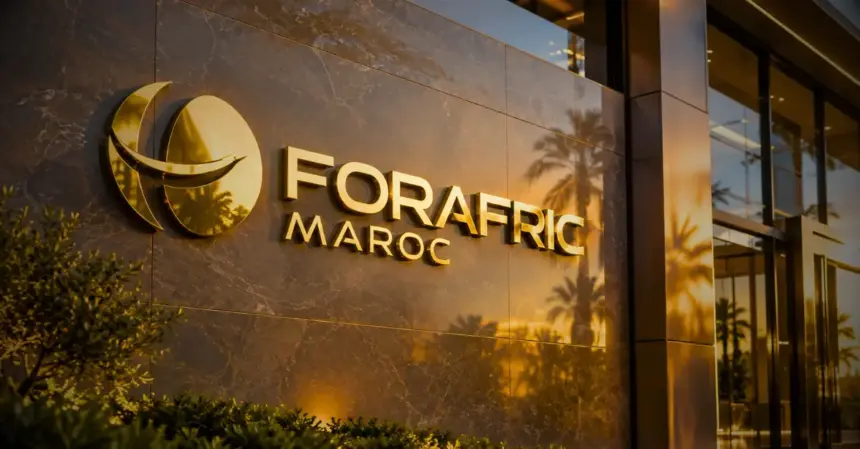
Forafric Global’s share price, listed on the Nasdaq, rose sharply early in the week after an announcement that changes the nature of the group. On October 7, 2026, the company unveiled a preliminary agreement to acquire all of Al Nasr Industries & Systems, a Moroccan company that holds stakes in two military equipment factory projects.
Key takeaways
- Forafric Global plans to acquire Al Nasr Industries & Systems, announced on October 7, 2026.
- Al Nasr holds stakes in two military factory projects in Morocco.
- The stock gained 7.39% in two sessions, to $12.50.
- The group’s revenue fell 35.6% in 2025.
- Closing is targeted for the fourth quarter of 2026, with the price undisclosed.
If the transaction goes through, it would mark the shift of a flour-milling player into the defense industry.
I have followed this sequence closely. It says more than what the market thinks of a single deal. It also shows what a weakened group is prepared to attempt in order to return to a growth path.

A market that reacts, but without excess
The AFRI stock rose 5.24% on Wednesday, October 7, then 2.04% the next day, and ended Thursday’s session at $12.50, or 115.65 dirhams. The day before the announcement, it was worth $11.64 (107.69 dirhams). Over two sessions, the gain therefore reaches 7.39%.
Trading followed the same slope. On Thursday, 67,580 shares changed hands, against 36,402 the day before, an increase of 85.6%. This surge reflects new curiosity about the story, without necessarily indicating widespread enthusiasm.
The warrants, traded under the symbol AFRIW, reacted far more strongly. These securities give the right to buy shares later, at a price set in advance. Their value is highly sensitive to investors’ bets on the future share price. They went from $1.45 (13.42 dirhams) on Tuesday to $2.12 (19.61 dirhams) on Thursday, a 46.2% increase, with 83,954 warrants traded during the October 8 session.
To keep the orders of magnitude in mind, here are the key figures of the trading sequence:
- AFRI stock: +5.24% on October 7, then +2.04% on October 8
- Closing price on October 8: $12.50, against $11.64 on October 6
- Stock volume on Thursday: 67,580 shares, against 36,402 the day before
- AFRIW warrants: from $1.45 to $2.12, with 83,954 warrants traded
Interest has gone beyond US borders, as the South Korean business press has also looked into Forafric’s new direction. I remain cautious, however. Volumes remain limited, and there is no way to know precisely who is buying or why. A few favorable sessions do not amount to a verdict on the soundness of a strategy.
What the agreement with Al Nasr actually contains
The agreement signed on October 7 provides for the takeover of 100% of the capital of Al Nasr Industries & Systems. This company does not itself operate an arms factory. It holds minority stakes in two companies that are building, in Morocco, production sites for military materiel and equipment.
Both projects hold authorizations issued under Law No. 10-20, which governs the manufacture, trade, import and export of defense equipment. This detail is not trivial. It indicates that the sites operate within a strict legal framework, which is both a guarantee of seriousness and a barrier to entry. The sector demands substantial capital and specialized expertise.
Forafric would not stop there. The group says it wants, over time, to increase its stake in these two companies in order to take control. This step would give it greater weight in investment decisions, production priorities and commercial strategy. As long as it remains an indirect minority shareholder, its ability to influence these choices remains limited.
The announced timetable targets closing in the fourth quarter of 2026. It requires financial and legal audits, the signing of the definitive agreements and the necessary approvals. Several unknowns remain: the purchase price, the value of the assets involved and the budget required to complete the facilities.
From wheat to drones, then to factories
This announcement extends a shift that began in the spring. Forafric made its name in cereal processing and in the production of flour, semolina, pasta and couscous. The group then broadened its horizon to food security, energy infrastructure and defense.
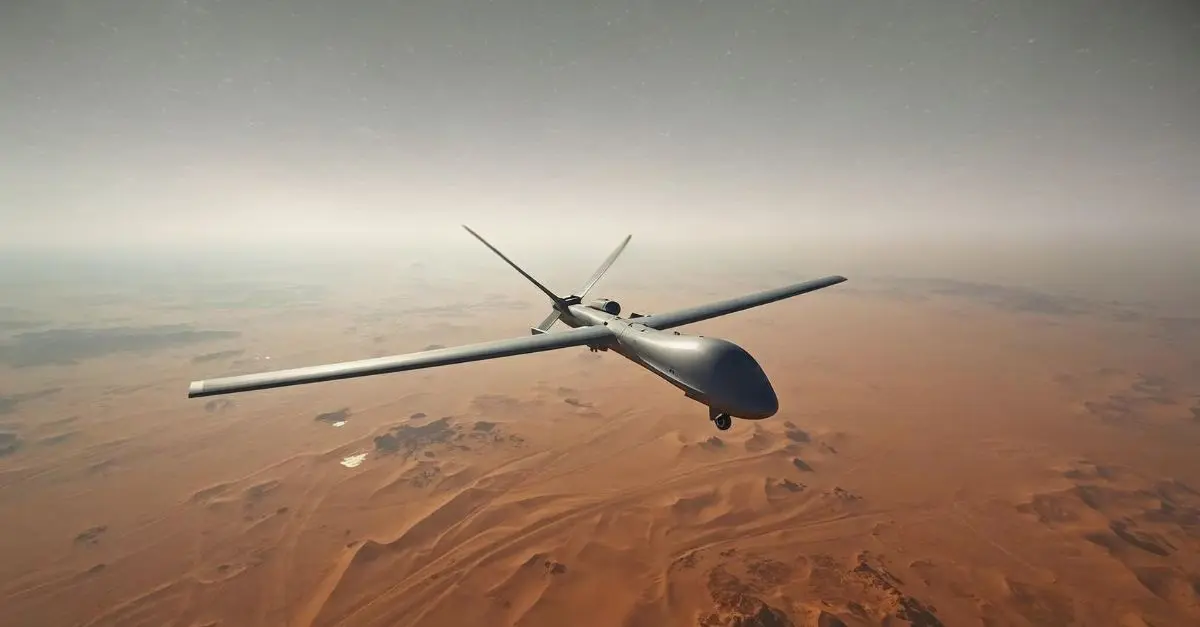
In the latter field, its first avenues involved drones, artificial intelligence embedded in military equipment and laser systems designed to neutralize unmanned aircraft. To acquire the missing expertise, it was relying on partnerships with foreign manufacturers.
The Al Nasr transaction changes the scale. The group moves from technological ambitions to stakes in actual production facilities, with the idea of later selling equipment to the Moroccan market as well as for export.
This pivot rests on a financial overhaul launched in August. Forafric Global sold 68% of Forafric Maroc to Cap Holding. The agreement included a capital increase of 100 million dirhams, a reduction of about 280 million dirhams in financial debt and coverage of the subsidiary’s cash needs for two years. By stepping back from its Moroccan food business in this way, the parent company frees up resources for its new priorities, of which the defense industry has become one of the main ones.
A financial urgency that explains the move
To understand this haste, one has to look at the accounts. In 2025, Forafric Global’s consolidated revenue fell 35.6%, to $176.49 million (about 1.63 billion dirhams), against $274.22 million a year earlier. The net loss came to $13.79 million (127.59 million dirhams). At December 31, the accumulated deficit stood at $154.6 million, or about 1.43 billion dirhams.
The financial statements also pointed to financing strains and serious doubt about the group’s ability to continue as a going concern. In this context, defense appears as a way out, a means of building new revenue and acquiring industrial assets capable of supporting a recovery.
The bet is nonetheless far from immediate. A military market is built over years, through technical trials, certifications, serial production and then deliveries. The Moroccan factories will therefore have to be financed over the long term, even as the group’s cash position remains precarious. In my view, this is where the main risk lies: the gap between the investment horizon and the company’s financial urgency.
A related-party transaction
Another element deserves attention. Forafric and Al Nasr share the same ultimate beneficial owner, which places the acquisition among related-party transactions. This type of deal is not illegitimate in itself, but it calls for careful scrutiny of the pricing terms.
The shareholder structure heightens this requirement. Lighthouse Settlement holds 71.39% of the ordinary shares, or 19,250,483 shares. Yariv Elbaz and his family are among the potential beneficiaries of this trust, which is managed by Lighthouse Corporation PTC. With such a high level of concentration, small shareholders depend largely on the rigor of the valuation of Al Nasr, the amount paid and the commitments that may follow. The board of directors will have to rule on the final terms before any transfer.
I believe this governance question will weigh as much as the share price in how the operation is perceived. A price seen as fair would strengthen the project’s credibility, while a contested price could cool the current enthusiasm.
What to watch next
The signing of the definitive agreements will be the first milestone, and the agreed price and the planned investment amount will make it possible to gauge the real financial stakes. Next will come the commissioning of the two factories, the first orders and the revenue actually collected. These elements will show whether the arms business can contribute to Forafric’s recovery.
For now, the market is buying a promise. It remains to be seen whether it will turn into revenue.
FAQ
What does the October 7, 2026 agreement provide for?
Forafric Global has reached an agreement with Al Nasr Industries & Systems to acquire 100% of its capital. This company holds stakes in two companies that are building military equipment factories in Morocco.
When is the acquisition due to be completed?
The group is targeting the fourth quarter of 2026, subject to audits, the signing of the definitive agreements and the required authorizations.
Why is Forafric turning to defense?
Its revenue fell 35.6% in 2025 and it recorded a net loss of $13.79 million. The group is looking for new sources of revenue and sold 68% of Forafric Maroc to redeploy its resources.
Why is this a related-party transaction?
Forafric and Al Nasr share the same ultimate beneficial owner. The financial terms of the acquisition are therefore of particular interest to minority shareholders.