
Six years ago, the idea that Israel could become a pillar of Moroccan military procurement would have seemed far-fetched. The two countries had no formal diplomatic relationship, and Rabat relied on a longstanding roster of Western suppliers, France chief among them. Since the signing of the Abraham Accords in December 2020, that landscape has shifted at a pace worth examining closely. According to the most recent data, Israel now supplies 24% of Morocco’s military imports, ranking second only to the United States and ahead of France. That figure alone tells a story of rapid geopolitical realignment in a region where military balances carry real weight.
A shift set in motion by diplomatic normalisation
The starting point is well known, but worth restating to understand what followed. In exchange for Washington’s recognition of Moroccan sovereignty over Western Sahara, Rabat normalised relations with Tel Aviv in late 2020. By November 2021, then Israeli Defence Minister Benny Gantz made the first official visit of its kind to Rabat, signing a defence memorandum of understanding. That document laid the groundwork for everything that came after: intelligence sharing, military training, mutual logistical support, and, crucially, access for Israeli defence manufacturers to the Moroccan market.
Israel has emerged as a major arms supplier to Morocco, accounting for 24% of the nation's defense imports and ranking second behind the United States. Military ties between the two nations have expanded significantly following the 2020 Abraham Accords. pic.twitter.com/zQd1D20yLS
— Israel Military Channel (@IsraelMilitaryC) September 26, 2026
What stands out, in hindsight, is how quickly the relationship scaled up. In just over five years, the Kingdom built what now amounts to a first-order strategic relationship with Israel, to the point that the Royal Moroccan Armed Forces (FAR) rank among the notable clients of Israel’s defence industry. A Joint Military Committee has met annually since 2020; its latest session, held in Tel Aviv in early January 2026, marked a shift in approach — moving from one-off transactional purchases toward institutionalised, long-term cooperation structured around four pillars: technological and industrial innovation, operational readiness, intelligence and cyber defence, and long-term force development.
Barak MX, the centrepiece of Morocco’s air defence
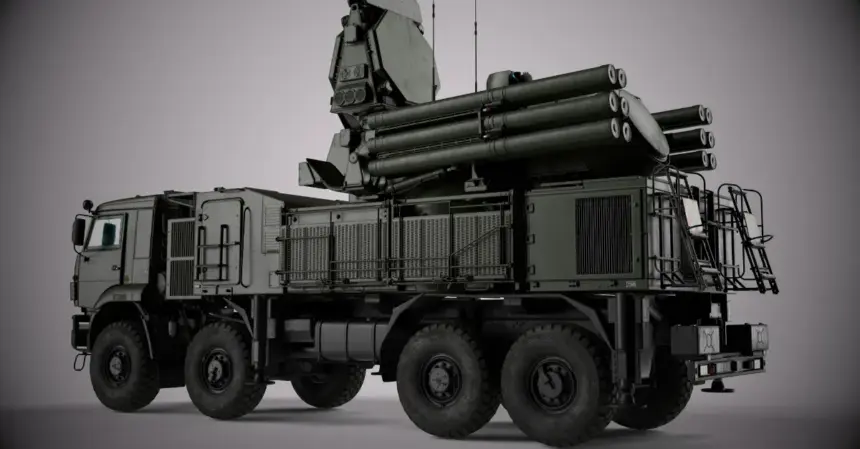
The most significant acquisition to date remains the Barak MX multi-layered air defence system, ordered in 2022 from Israel Aerospace Industries (IAI) for roughly $500 million. Capable of intercepting aircraft, drones, cruise missiles and tactical ballistic missiles within a range of 35 to 150 kilometres, the system’s command centre has been installed at the new Sidi Yahya el Gharb military base, around 200 kilometres from Ceuta. It relies on three missile variants depending on required range, integrated with the powerful ELM-2084 multi-mission radar.
This choice places Morocco among a small group of countries with an integrated, multi-layered interception capability. By comparison, Spain must combine two separate systems — the Norwegian NASAMS for medium-range defence and the US-made Patriot for long-range and anti-missile coverage, the latter also heavily committed elsewhere within NATO’s broader posture. The contrast is not incidental, given that tensions between Rabat and Madrid over Ceuta and Melilla remain a constant backdrop to the bilateral relationship.
Artillery, drones and satellites, a rapidly diversifying arsenal
Beyond air defence, the range of Israeli equipment acquired by Morocco has broadened considerably in just a few years. A few figures illustrate the scale of the shift:
- Thirty-six ATMOS 2000 self-propelled 155mm howitzers, built by Elbit Systems, acquired in 2025, with a range exceeding 40 kilometres
- Between eight and twelve PULS multiple rocket launchers, also from Elbit Systems, under a deal estimated at $150 million, with deliveries currently under way
- Several drone families, from tactical WanderB and ThunderB models made by BlueBird Aero Systems and Elbit’s Hermes 450, up to the MALE-class Hermes 900 and IAI’s Heron 1, deployed notably at Ben Guerir, Dakhla and Mahbes
- Two next-generation Ofek 13 reconnaissance satellites, ordered from IAI in July 2024 for around $1 billion, with delivery expected by the end of the decade
That last contract deserves particular attention: according to several Moroccan sources, it is the largest deal signed between the two countries since the Abraham Accords, and it was won at the expense of European manufacturer Airbus — a telling sign of how Israeli firms are eating into market share once held by traditional Western suppliers.
A partnership that extends well beyond military hardware
What sets the Israeli-Moroccan relationship apart from a straightforward defence-industry trade relationship is its expansion into intelligence and cyber capabilities. With Israeli support, Morocco has built what several defence analysts describe as the most advanced cybersecurity apparatus on the African continent, drawing on tools from companies such as NSO Group, Cellebrite and Interionet Systems. The Pegasus spyware, developed by NSO Group, is the most documented illustration: its use has been linked to several episodes of diplomatic tension with Spain, notably during the 2021 Ceuta migration crisis, at a time when Rabat was seeking leverage over Madrid’s position on Western Sahara — a position Spain ultimately shifted in 2022.
It would nonetheless be reductive to portray Morocco as a mere proxy for Israeli interests in the region. Moroccan intelligence services retain a sophistication and autonomy that predate the 2020 normalisation. What the relationship with Tel Aviv has mainly enabled is faster access to advanced technologies that few Western suppliers were willing, or authorised, to provide as quickly.
What the shift says about regional balances
To grasp the scale of this rapprochement, it helps to place it within the broader context of Israeli arms exports. Israel’s Ministry of Defence had already noted that in 2022, the Abraham Accords signatories — the United Arab Emirates, Bahrain and Morocco combined — accounted for 24% of Israeli arms exports, up from just 7% the previous year. Those sales have since fluctuated, particularly declining among some Gulf clients after the outbreak of war in Gaza in October 2023, showing that the trajectory is not necessarily linear and remains sensitive to the regional context.
Morocco’s case, by contrast, has held steady and even strengthened, to the point that the 24% figure cited today no longer refers to the Abraham Accords countries’ collective share of overall Israeli exports, but specifically to Israel’s share of Morocco’s own military imports. The distinction matters: it points to a durable foothold rather than a temporary spike. Other estimates, including those from reference institutions such as SIPRI, place Israel’s share of Moroccan imports at a more modest level, around 11%, a reminder that counting methodologies — whether based on contract value, actual deliveries, or number of systems — can produce noticeably different readings of the same phenomenon.
What is harder to dispute is the underlying trend. Morocco diversified its supplier base at the very moment several European partners, Spain foremost among them, suspended or restricted their own arms exports to Israel in response to the war in Gaza — a decision that, somewhat paradoxically, has cut manufacturers like Elbit Systems off from European markets while pushing them further toward markets such as Morocco’s.
A young but already structuring partnership
Six years after normalisation, the defence relationship between Rabat and Tel Aviv is no longer experimental. It has translated into concrete contracts, reconfigured military bases, a rethought air-defence doctrine, and intelligence cooperation with diplomatic ripple effects well beyond the strictly military sphere. The question now is less whether this rapprochement will continue than how far it will go, given that both countries have explicitly signalled their intent to move beyond one-off contracts toward long-term industrial and technological cooperation.
FAQ
Since when have Israel and Morocco cooperated militarily?
Officially since November 2021, with the signing of a defence memorandum, a year after diplomatic normalisation under the Abraham Accords.
What is the main Israeli weapons system acquired by Morocco?
The Barak MX multi-layered air defence system, ordered from Israel Aerospace Industries in 2022 for approximately $500 million.
Does Morocco now depend more on Israel than on France for weapons?
According to the most recent data, Israel now outranks France in Morocco’s military imports, while remaining well behind the United States, the Kingdom’s leading supplier.
Is this cooperation limited to military hardware?
No, it extends into intelligence and cybersecurity, with Morocco acquiring Israeli technologies such as Pegasus, Cellebrite tools, and the Ofek 13 reconnaissance satellites.