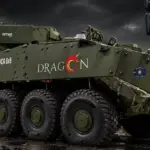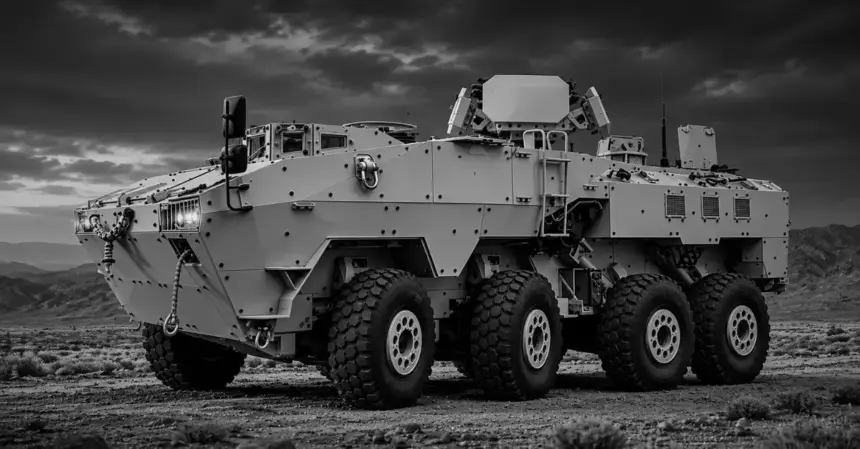
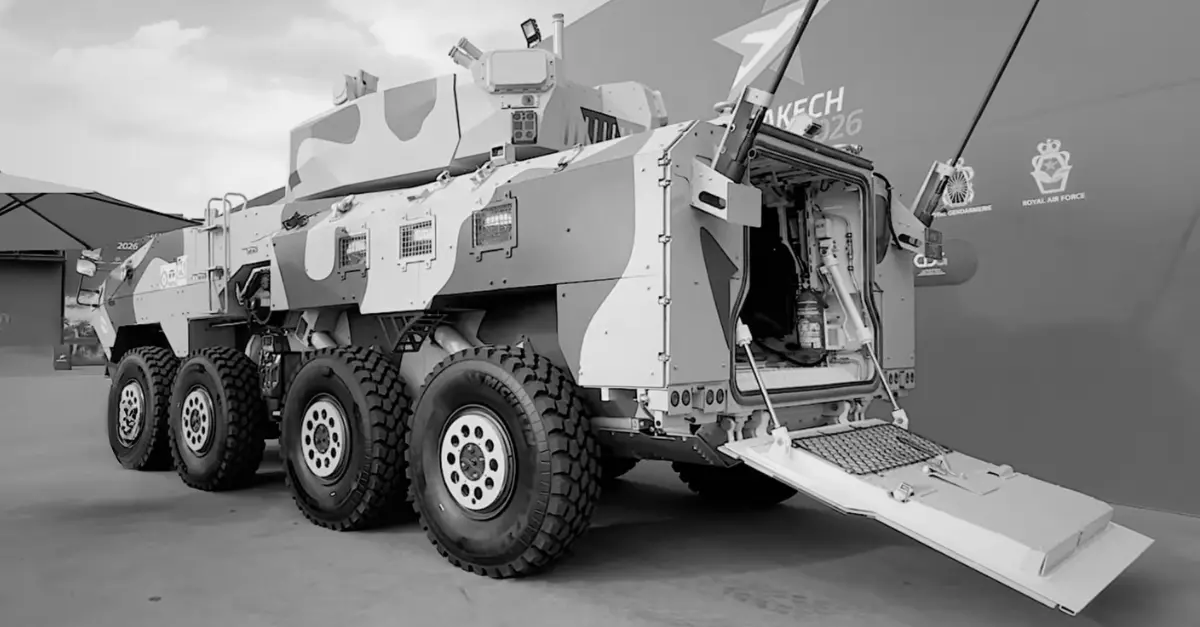
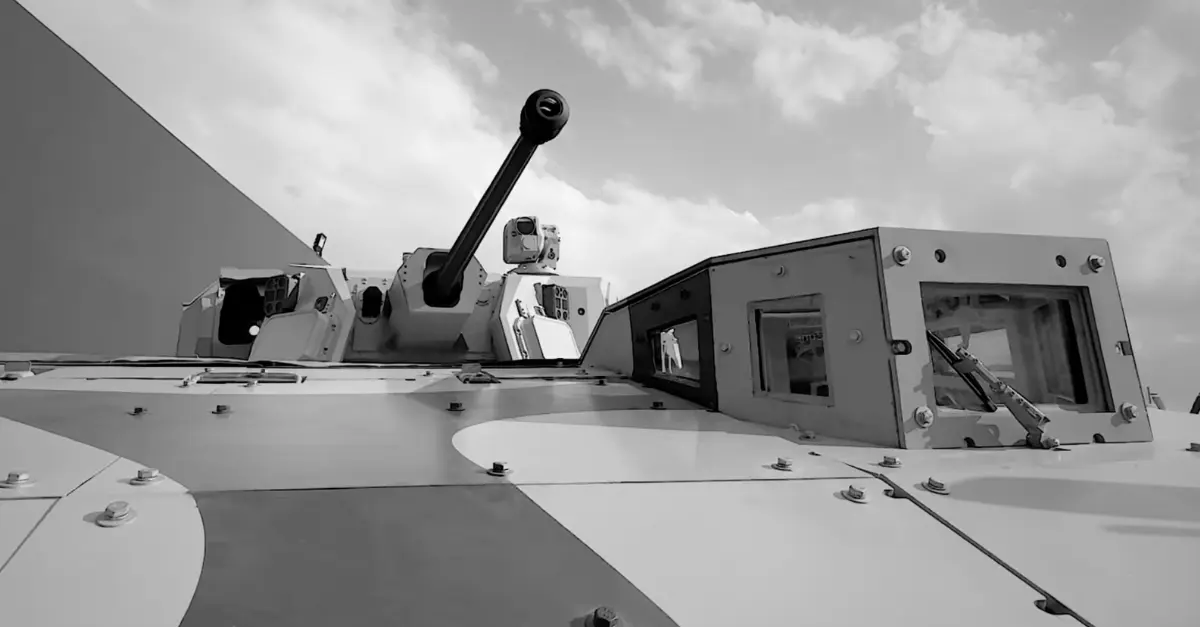
From October 26 to 29, at Eko Atlantic, Tata showcased the WhAP alongside other equipment. According to DefenceWeb, which reported on the manufacturer’s presence on October 28, the goal is clear: turn the Moroccan order into a credible industrial reference for other African states. The vehicle, developed jointly with India’s military research organisation DRDO, weighs around 24 tonnes according to several technical descriptions.
It carries a crew of three and up to eleven soldiers, and its modular design allows troop transport, reconnaissance or support configurations. Its amphibious capability, with rear water jets, sets it apart in a segment where off-road mobility remains a decisive criterion for many African armies.
A Moroccan contract turned calling card
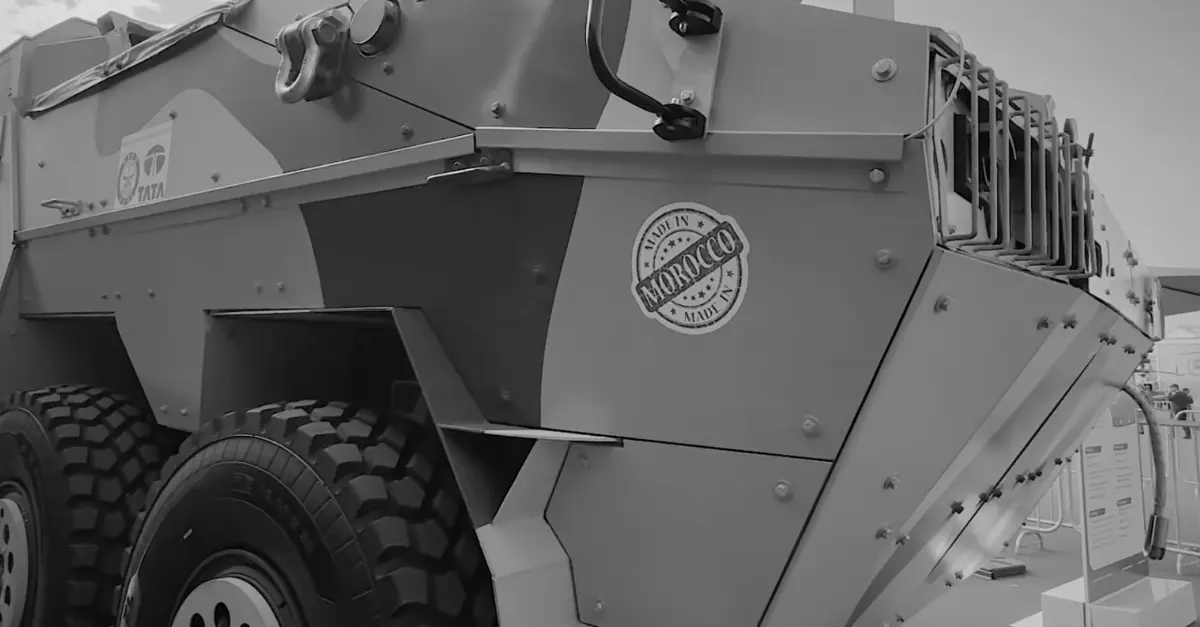
The initial order covers 150 units for the Royal Armed Forces, under an agreement signed in 2024. The first vehicles built in Morocco were delivered in December 2025. The Berrechid plant, inaugurated on September 23, 2025 in the presence of Indian Defence Minister Rajnath Singh and his Moroccan counterpart Abdellatif Loudiyi, covers 20,000 square metres.
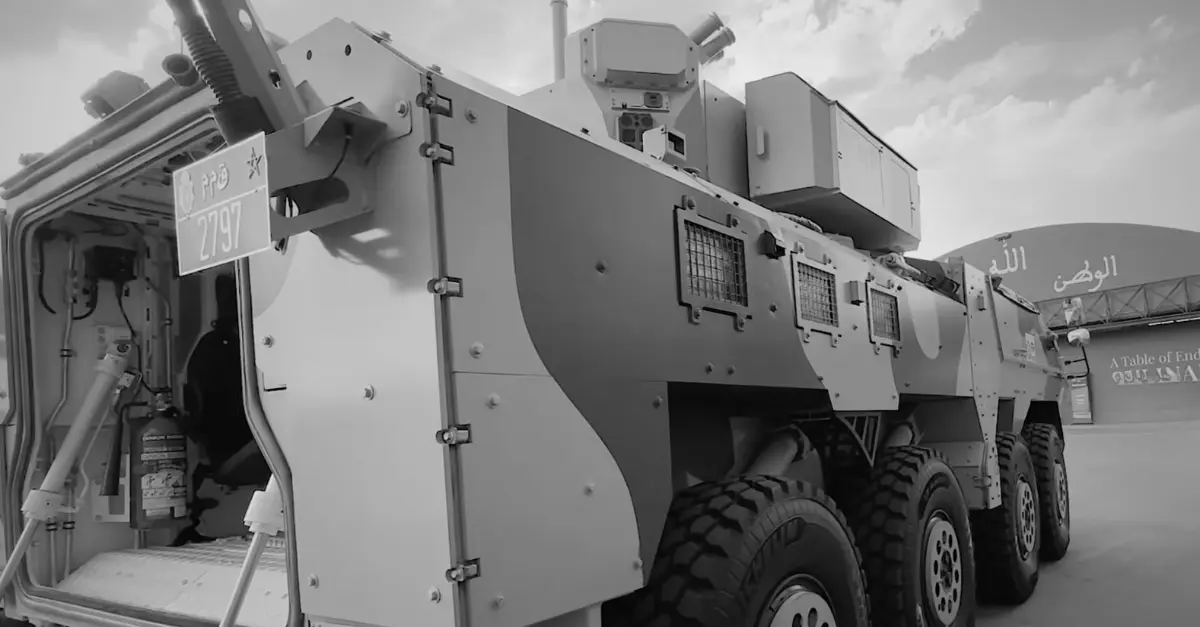
According to the official Moroccan and Indian statements at the time, it includes around 35% local components from the outset, with a gradual target of 50%. It is expected to create 90 direct jobs and about 250 indirect jobs.
For Morocco, the stakes go beyond simply supplying armored vehicles. The project is part of a broader drive to build a defence industrial base capable of reducing dependence on imports and generating technological spin-offs. From its inauguration, the plant was presented as a future export platform, particularly towards Africa.
Tata sees a twofold advantage: a solid reference customer and a local production site that can reassure potential African buyers on logistics, maintenance and skills transfer.
🇲🇦 Made in Morocco : Tata a produit des véhicules au Maroc
Retour sur le camion Tata fabriqué localement à Berrechid, symbole d’une industrie automobile marocaine déjà présente il y a plusieurs années.
#Maroc #MadeInMorocco #TataMotors #Industrie #Automobile #Morocco #militaire https://t.co/zJJUYscAhQ
— Silicon Valley (@SiliconValleyMa) October 7, 2026
Key figures and program timeline
- Agreement signed in 2024 for 150 WhAP 8×8 vehicles for the Royal Armed Forces.
- Berrechid plant inaugurated on September 23, 2025.
- First Moroccan deliveries in December 2025.
- Showcased at Afridex Lagos (October 26-29, 2026).
- Local integration target: from 35% to 50%.
- Planned capacity: up to around one hundred vehicles per year according to some industry sources.
These elements, cross-checked from official statements and specialist media reports, form the factual basis Tata now relies on to prospect elsewhere. Several sources also indicate that the manufacturer is considering producing a second, lighter vehicle in Morocco, the LAMV 4×4. This project is not yet confirmed, but its mention at the Marrakech show in October 2026 shows a desire to broaden the offering from the Berrechid site.
Geopolitical stakes
The presence in Lagos comes at a time when several African countries are seeking to diversify their suppliers of land equipment while developing local capabilities. India, with its “Make in India” programme extended to exports, and Morocco, which is multiplying defence industrial partnerships, are positioning themselves as an alternative to traditional European, Russian or Chinese offers.
The fact that the vehicle can be assembled on the continent removes certain logistical and political obstacles. Israeli Elbit 30 mm turrets are also intended to equip part of the Moroccan WhAP fleet, with local production planned, which further complicates the technological ecosystem around the programme.
This model is not without limits. The local integration rate remains modest at the start, and reaching 50% will depend on the ability of Moroccan subcontractors to build up their skills. African armies are often sensitive to total cost of ownership, spare parts availability and in-service support.
Tata will have to demonstrate that a supply chain partly localised in Morocco can keep these promises over the long term. In addition, competition in the 8×8 segment is dense: European, Turkish and Chinese manufacturers already offer proven solutions, sometimes with more advanced local production agreements.
For Morocco, the risk is twofold. If exports take off, the Berrechid site strengthens its status as a regional hub. If they remain limited, the plant remains first and foremost a tool for modernising the Royal Armed Forces, which is still politically and militarily useful, but less transformative industrially. India, for its part, is using this project to test its ability to export not only equipment, but also a model of industrial presence abroad.
Final thoughts
Afridex did not produce any immediate order announcements for the WhAP. The show, in its first edition, mainly served as a showcase and a place for making contacts. The coming months will tell whether the African delegations present in Lagos follow up. Tata now has an operational Moroccan reference and a production site already up and running. This is a real advantage over offers exported purely from India or Europe. It remains to be seen whether this advantage will translate into concrete contracts beyond the 150 units already ordered.
The programme also illustrates a broader shift: Maghreb and West African states are seeking to combine the modernisation of their forces with the building of industrial capabilities. The WhAP is just one example among others. Its relative success or failure on the African market will indicate how viable these triangular partnerships are, between a technology-supplying country, an industrial host country and regional customers.
FAQ
How many WhAP vehicles has Morocco ordered?
150 units, under an agreement signed in 2024. The first locally built deliveries took place in December 2025.
Where are these armored vehicles produced?
At the Tata Advanced Systems Maroc plant in Berrechid, near Casablanca, inaugurated in September 2025. The 20,000 m² site aims for progressive local integration of up to 50%.
Why is Tata showcasing the vehicle in Lagos?
To use the Moroccan order and production as a reference to prospect other African armies. Afridex 2026 served as the first major continental showcase outside Morocco.
Does the project include other vehicles?
Tata is considering also producing the LAMV 4×4 in Berrechid. This option is not yet confirmed.