Thirty-one million dollars’ worth of weapons, ammunition and spare parts shipped to Morocco between January and October 2026, compared with barely nine million over the same period in 2025: a 3.5-fold increase, up 247%. These figures, calculated from the final statistics of the Korea International Trade Association (KITA), fed by the Korea Customs Service, deserve to be put in context. They do not merely tell the story of a commercial transaction. They point to a discreet but real deepening of defense ties between Seoul and Rabat, at a time when Morocco is modernizing its armed forces in the face of a tense regional environment.
Growth driven by ammunition
War ammunition is the core of the movement. The category covering bombs, grenades, torpedoes, mines, missiles and other munitions, as well as their parts, reached $20.4 million, up from $6.5 million a year earlier. This 215.5% rise alone accounts for nearly two-thirds (65.4%) of South Korean arms sales recorded to the kingdom over the first ten months. Weapons of war proper – as distinct from revolvers and pistols – jumped 661%, from $1.1 million to $8.7 million, and account for 27.9% of the total. The other items (parts, accessories, air or gas-powered weapons) grew more modestly, by around 50%, to reach $2.1 million.
This surge raised the share of arms and ammunition in total South Korean exports to Morocco from 2.6% to 8.3%. Over ten months, nearly one dollar in every twelve invoiced to the Moroccan market by Korean companies concerned this category. Across all goods combined, South Korean sales to the kingdom rose 9.4%, to $374.1 million. Arms and ammunition alone provided about 69% of that increase.
Key figures for South Korean arms and ammunition exports to Morocco (January–October 2026):
- Total arms, ammunition and parts: $31.1 million (+247% year on year)
- War ammunition and parts: $20.4 million (+215.5%)
- Weapons of war: $8.7 million (+661%)
- Concentration in June: $29.1 million (nearly 94% of the cumulative total)
June accounted for most of the flow. Customs declarations for that single month show some $29.1 million in arms and ammunition, nearly 94% of the cumulative total recorded at the end of October. The other nine months combined represented only about two million dollars. This concentration suggests a single large shipment rather than a continuous, regular flow. Customs data alone do not make it possible to precisely identify the systems involved.
Beyond the statistics, ties already established
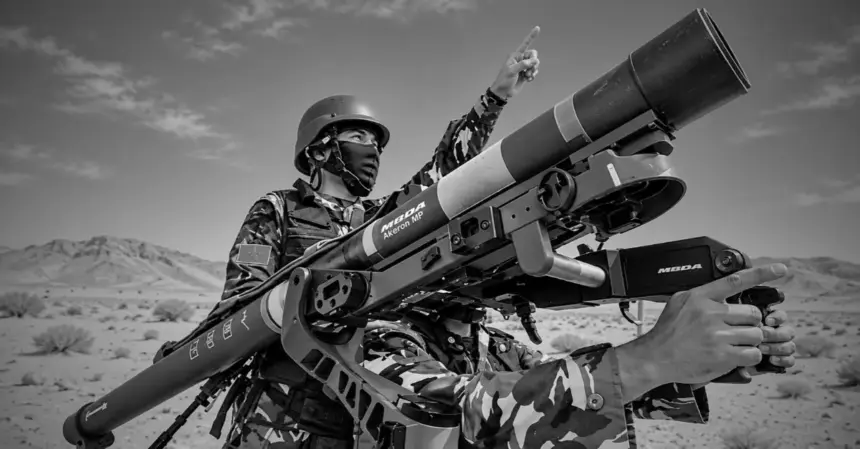
These figures fit into a broader context. In 2025, according to the United Nations Register of Conventional Arms (UNROCA), South Korea reported exporting 50 portable launchers and 101 Chiron (KP-SAM) missiles to Morocco. This very short-range air defense system, developed by LIG Nex1, complements capabilities already present in the Royal Armed Forces, notably American Stingers. Faced with a growing number of low-altitude threats, including drones, Rabat is diversifying its sources of supply for light, responsive systems.
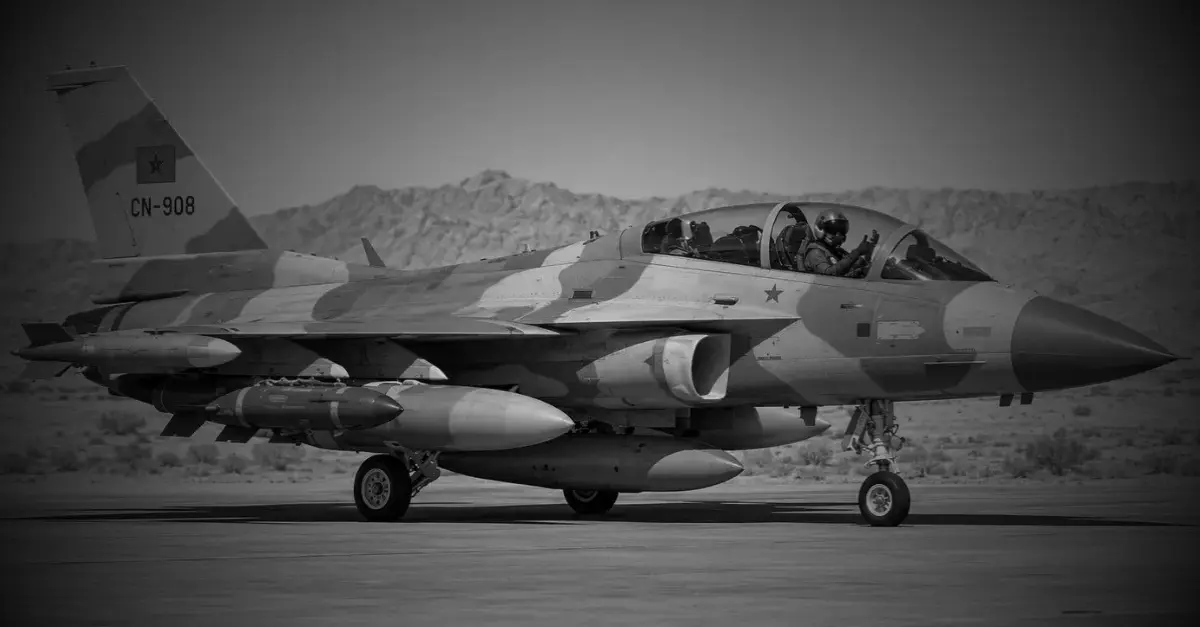
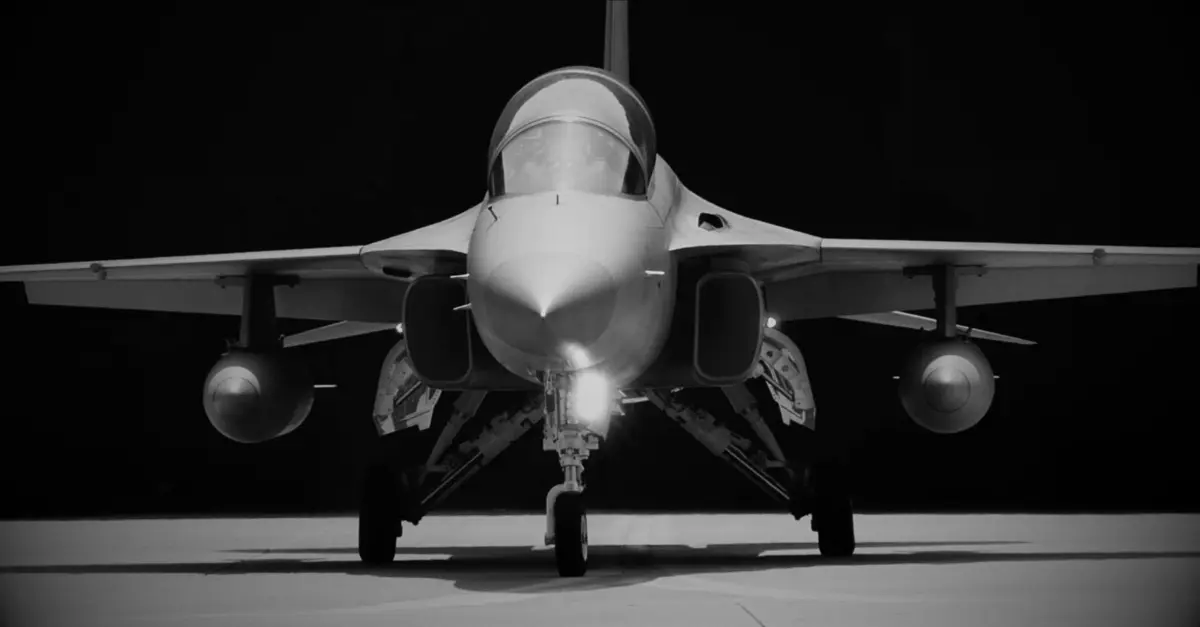
More ambitious discussions are mentioned in the specialized press and industry circles. Several reports, citing South Korean sources, indicate that Morocco is evaluating the possible acquisition of K2 Black Panther tanks (volumes of up to several hundred units are sometimes mentioned), the Cheongung (KM-SAM) medium-range air defense system, and other platforms. In October 2026, at the Marrakech Air Show, Korea Aerospace Industries (KAI) signed a memorandum of understanding with two Moroccan aircraft maintenance companies (Maintenance Aero Maroc and Sabca Maroc) to explore an offer built around the T-50/FA-50 trainer and light combat aircraft. These initiatives remain exploratory at this stage: no major contract has been officially announced for these heavy systems.
These exchanges also build on civil industrial cooperation already under way, notably in the railway sector. They are part of South Korea’s strategy of diversifying its arms outlets. Seoul, whose arms exports exceeded $15 billion in 2025 according to the authorities, aims to rank among the world’s top exporters. Morocco, for its part, seeks to reduce its dependence on a limited number of traditional suppliers while strengthening its capabilities against an Algerian neighbor whose defense budget remains markedly higher.
Intertwined economic and strategic stakes
Overall bilateral trade grew 27.8% over the first ten months, reaching $703.5 million. South Korean purchases of Moroccan products rose sharply (+57.8%, to $329.4 million), driven notably by copper ores and concentrates, chemical compounds, lead and phosphates. The South Korean trade surplus has narrowed significantly. Arms therefore represent only one part of an exchange that is rebalancing.
For Rabat, the interest is twofold: modernizing capabilities, particularly anti-aircraft and land capabilities, and diversifying partners. The regional environment remains marked by the rivalry with Algeria over Western Sahara, where the Polisario Front recently called for mobilization, and by broader tensions in the Sahel. South Korean systems, often designed for demanding environments and with options for technology transfer or local maintenance, can meet specific needs without the political constraints sometimes associated with other suppliers.
For Seoul, Morocco offers an entry point into North Africa and a potentially attractive market for heavier platforms. Korean authorities actively promote their arms exports as a foreign policy tool and as support for the national industry. Discussions around adapted versions (such as a possible K2ME) or maintenance partnerships fit within this logic.
Customs data alone do not allow one to conclude that a massive shift has taken place. The $31.1 million volume remains modest compared with major regional arms contracts. It nonetheless testifies to a relationship that is deepening, after deliveries already confirmed in 2025 and ongoing evaluations of more structural systems.
Prospects that remain open
The concentration of flows in June calls for watching the coming months. If larger contracts materialize – tanks, medium-range air defense systems or light aircraft – customs volumes could change significantly. However, nothing indicates at this stage that such decisions have been made. Industrial and technical negotiations take time, and Rabat maintains a multi-supplier approach.
This movement is part of a broader reshaping of military supply chains. South Korea, long focused on its own theater, is actively seeking new markets. Morocco, facing demanding regional balances, is exploring options beyond its historical partners. The 2026 figures offer a concrete illustration, still limited in scale but revealing of a direction.
FAQ
Does the $31.1 million cover major systems such as tanks or aircraft?
KITA customs data do not detail the specific systems. They mainly point to ammunition and weapons of war. Discussions about K2 tanks or FA-50s remain, at this stage, evaluations or exploratory memoranda, separate from these flows.
Why does June account for almost the entire volume?
The statistics provide no official explanation. This concentration is consistent with a single large shipment, but customs do not specify the exact content or the end recipient within the Moroccan forces.
Is this increase part of a direct rivalry with Algeria?
Morocco is modernizing its forces amid persistent tensions with Algiers over the Moroccan Sahara. South Korean purchases contribute to a diversification of suppliers, alongside American, Israeli and European equipment already in service or on order.
Is bilateral trade limited to arms?
No. South Korean imports of Moroccan products grew faster than Korean exports, notably thanks to ores and phosphates. Arms weighed on the growth of Korean sales, but the overall trade balance has rebalanced.