On Monday, November 16, Spain’s National Intelligence Centre (CNI) submitted a report to Judge María Tardón of the Audiencia Nacional that is unequivocal: no evidence shows that the Moroccan authorities instigated, planned or coordinated the operation. The document, relayed in particular by the EFE news agency and analyzed by several Spanish media outlets, carefully distinguishes this crisis from previous ones and opens up a more nuanced reading of relations between Madrid and Rabat.
The Context of an Unprecedented Border Crisis
Ceuta, a Spanish enclave of some 85,000 inhabitants on the northern coast of Morocco, has been a permanent flashpoint for decades. On July 30 and 31, 2026, coinciding with Morocco’s Throne Day celebrations, tens of thousands of people crossed the border, mainly through the Tarajal sector, on foot or by swimming. Official estimates have varied: the central government cited around 70,000 to 80,000 entries, while later Guardia Civil reports mention nearly 88,000 returns to Morocco and local sources speak of a total that may exceed 100,000. At least 140 people drowned, according to available tolls.
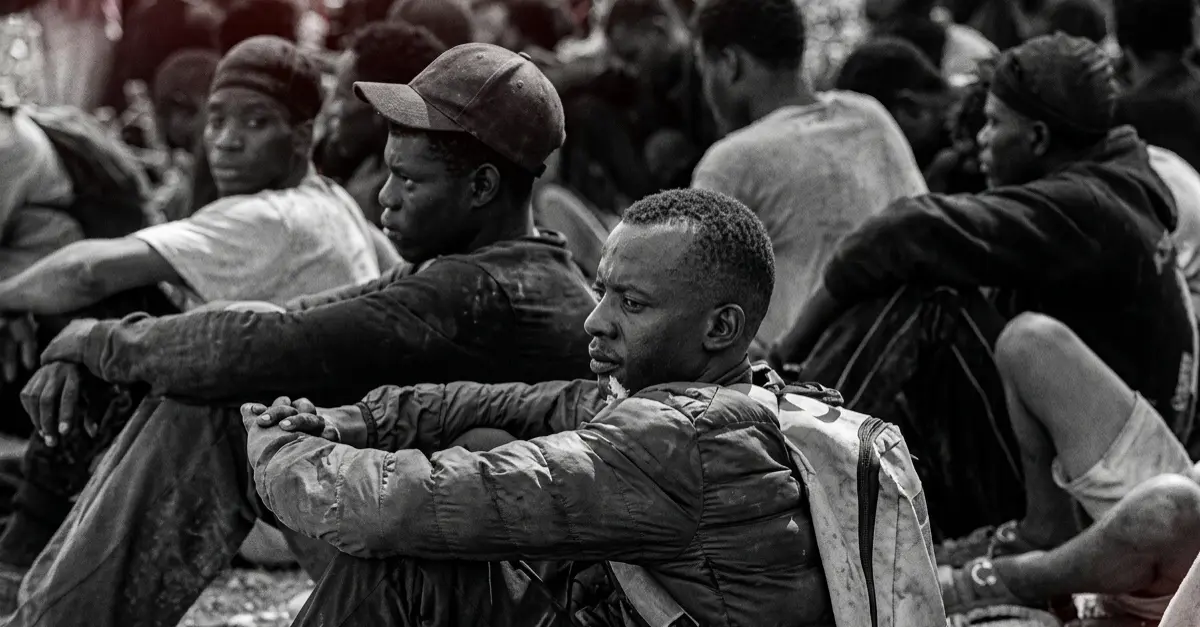
This scale, far greater than the May 2021 crisis (roughly 8,000 to 10,000 people), overwhelmed both Spanish and Moroccan systems. Judge Tardón is leading proceedings to establish responsibilities, notably in connection with possible offenses against the peace and independence of the State. The CNI, which reports to the Ministry of Defense, was asked to answer specific questions about the origin of the mobilization.
What the CNI Report Says Exactly
According to the document submitted to the magistrate, “after in-depth investigations conducted by the National Intelligence Centre, no evidence has been found suggesting that Moroccan state agencies were involved in the design, execution or coordination of an operation of this kind, with deliberate hostile intentions against Spain.” The mobilization is described as the product of calls spread through social media in a decentralized, multiple, self-managed and collaborative manner. Investigators identified no single “driving force” and established no link between those involved in spreading the calls and Moroccan state institutions.
The CNI stresses that only state structures (the DGED and DGST intelligence services, security forces, the Auxiliary Forces, with the possible support of the armed forces) would theoretically have the capacity to plan a mobilization of this magnitude. But the investigations produced no evidence of such concerted action. The report does, however, note “exceptional leniency and unusual lapses in border control” on the part of the Moroccan authorities, as well as a reactive rather than proactive approach.
An earlier CNI report, dated mid-October and also submitted to the judge, indicated that the Moroccan authorities were “fully aware” of the social media calls and had received an urgent alert from the CNI on July 29. They reportedly prioritized security for the Throne Day celebrations in Rincón, where King Mohammed VI was present, over a sufficient deployment at the border. This passivity contributed to the breakdown, without being characterized as a deliberate operation.
Comparison With Previous Crises
The CNI draws a clear distinction with the events of 2021 and 2024:
- In 2021, the mass arrival is analyzed as an instrument of Moroccan foreign policy aimed at pressuring Spain, in the context of the secret hospitalization of Polisario Front leader Brahim Ghali (under an Algerian identity) for reasons tied to judicial proceedings. Morocco had then opened the migratory floodgates in a coordinated manner.
- In 2024 and 2026, the episodes reflect, according to the CNI, “internal vulnerabilities” and a “reactive management” by Moroccan security forces, rather than an openly assumed diplomatic strategy. Social media calls and public holidays are regularly exploited, against a backdrop of economic hardship that makes young Moroccans particularly vulnerable to messages encouraging them to attempt the crossing.
These common elements — the predominance of young Moroccan citizens, economic vulnerability, digital mobilization — are highlighted without being presented as proof of state orchestration.
Diverging Views Within Spain’s Security Apparatus
The CNI report does not settle the debate. The National Police’s National Immigration and Borders Centre (CENIF) submitted a separate document, based on migrant testimonies, footage and field analysis. It identifies about twenty Moroccan officials (including Mohamed El Oualidi, police prefect of Tetouan, and other Auxiliary Forces or local administration officials) present in the border sector and describes apparent guidance or coordination actions. Some protected witnesses confirmed before the judge that they had interacted with Moroccan agents.
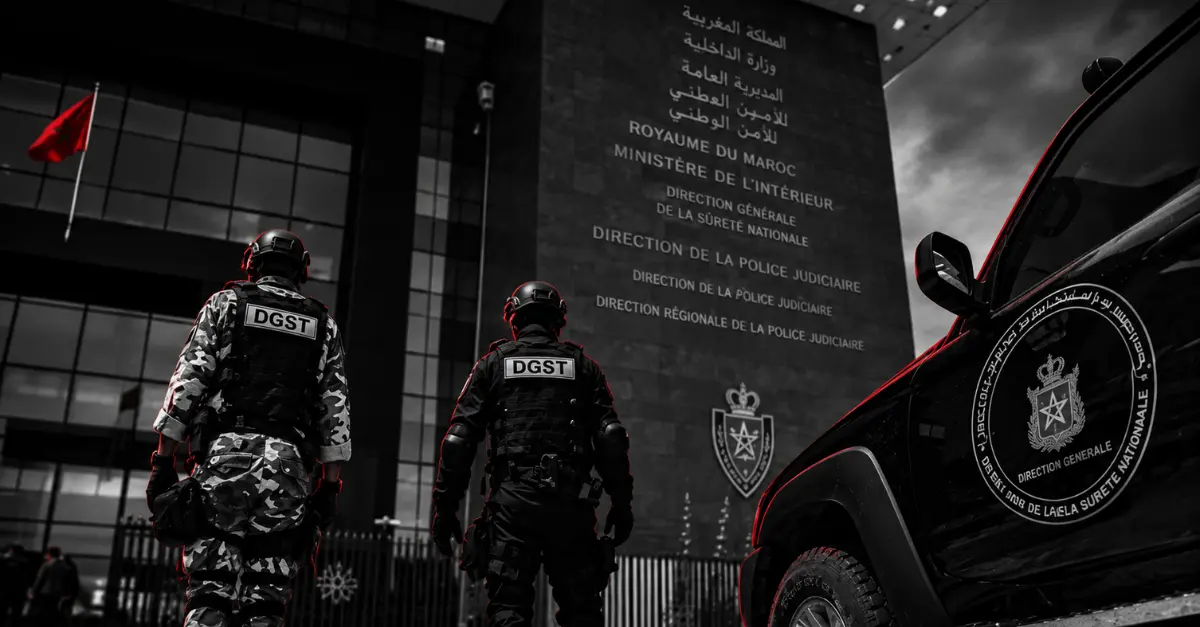
This divergence has fueled internal tensions: the Police and the CNI disagree on how to interpret the facts, while the Guardia Civil has contested certain aspects of the early warnings. Judge Tardón continues her investigation, with declassification requests and hearings under way (including that of the former government delegate in Ceuta). These discrepancies illustrate the difficulty of legally characterizing a crisis that combines spontaneous mobilization, operational passivity and geopolitical interests.
Strategic Stakes for the Mediterranean Basin
This affair goes beyond a mere border incident. Morocco remains an essential partner of Spain and the European Union in managing migration flows, fighting terrorism and combating trafficking. A characterization as a “hostile state action” would have immediate diplomatic consequences, potentially affecting cooperation agreements and the Western Sahara issue, on which Madrid has moved toward a position more favorable to Rabat in recent years.
For Madrid, the CNI report offers a reading that avoids directly accusing Rabat of orchestration while pointing to control failures. It raises the question of the resilience of land borders amid hybrid pressures (digital and migratory) and socio-economic vulnerabilities on both sides. Europe, facing similar crises on other routes, is watching closely how states handle such episodes without tipping into open confrontation.
The humanitarian dimensions remain significant: thousands of people are still in a precarious situation in Ceuta several months after the events, while returns have taken place in sometimes controversial conditions. The security priority does not erase the need to protect the most vulnerable.
My Conclusions
The CNI report does not close the judicial investigation. It provides an intelligence analysis that distinguishes prior knowledge from the absence of evidence of deliberate orchestration. Judge Tardón’s final conclusions, any further declassifications, and the political positions in Madrid and Rabat will determine whether this reading prevails or whether other elements emerge. In the Mediterranean basin, where borders are both lines of sovereignty and spaces of shared management of flows, the ability to distinguish strategic pressure, operational failure and spontaneous mobilization remains a permanent challenge for intelligence services and governments alike.
FAQ
Does the CNI claim that Morocco had no knowledge of the events?
No. It acknowledges prior knowledge of the social media calls and passivity in border control, but finds no evidence of an action instigated, planned or coordinated by the Moroccan authorities.
How does this crisis differ from the one in 2021?
According to the CNI, 2021 was an instrument of Moroccan foreign policy amid a diplomatic crisis linked to Brahim Ghali, whereas 2026 reflects internal vulnerabilities and reactive management by security forces.
What entry figures are retained?
Estimates vary by source (roughly 70,000 to over 100,000 depending on partial tallies). The CNI does not set a definitive figure; police and Guardia Civil reports still diverge.
Is the judicial investigation over?
No. Judge María Tardón is continuing the investigation, with conflicting reports from the various services and hearings under way.