
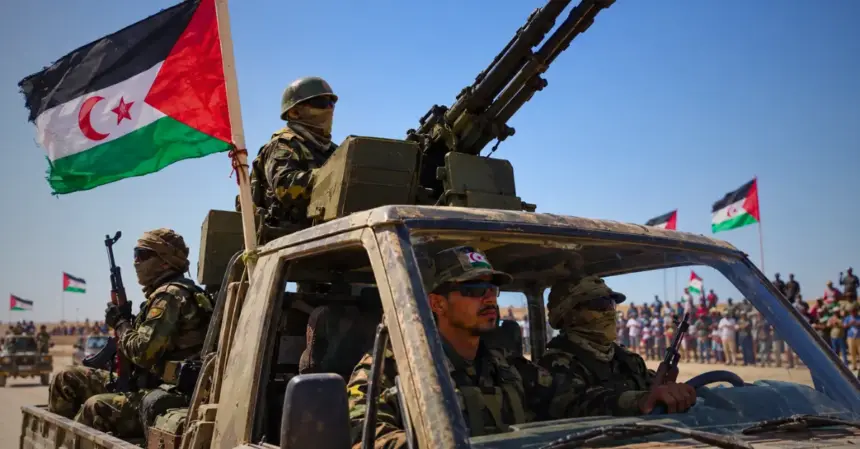
One question remains, and I find it far too rarely asked head-on: what will Algiers do with an armed organization that it hosts, shelters and supports for nearly fifty years?
Key takeaways
- A Moroccan Sahara that is almost recognized at the UN.
- Morocco points out that France attached territories of the East to colonial Algeria.
- The Polisario is an armed organization based on Algerian soil.
- An independent census of the Tindouf camps has never taken place.
- Algiers would then have to choose between isolation and a negotiated way out.
A file that is tipping
At the end of 2025, the Security Council adopted Resolution 2797, which places the Moroccan autonomy plan at the center of negotiations, according to UN records. Algeria did not take part in the vote. The United States, France and Spain have also moved their positions closer to Rabat’s.
For Morocco, the Moroccan identity of the Sahara has never been a matter of diplomatic timing. It rests on the historical ties of allegiance between the Saharan tribes and the sultans, and on the Green March of 1975. If this framework were confirmed at the UN, Algiers’ responsibility would be the first question asked.
Eastern Morocco, a memory that weighs
Algeria’s attitude cannot be understood without going back to colonization. On the Moroccan side, it is recalled that France, in consolidating colonial Algeria, attached to its administration territories of eastern and south-eastern Morocco: the Tindouf region, Béchar, Touat, Gourara and Tidikelt. For many Moroccan historians and officials, these territories were part of the Sherifian sphere of influence.
This thesis is not new. In 1961, King Hassan II and the Algerian provisional government of Ferhat Abbas had agreed to renegotiate the border question after independence, according to the Moroccan version. That promise was not kept, and the Sand War of 1963 was the consequence. I recall this context because it explains one thing: Algeria settled in a region whose ownership had been contested from the outset, before using it as a rear base for the Polisario.
An armed militia on Algerian soil
This is the central point of my column. The Polisario Front is a political, terrorist and armed movement. Its fighters are based in the Tindouf region, on Algerian territory. A state that lets a non-state terrorist force organize on its soil bears responsibility for it before the international community.
The risks are numerous:
- an armed presence without clear state control, on what is nonetheless Algerian territory
- a breakdown of the ceasefire in November 2020 and projectiles fired at civilian areas, such as Smara in 2023, according to the Moroccan authorities
- repeated accusations of diversion of humanitarian aid intended for the camps, mentioned notably in a report by the European Anti-Fraud Office (OLAF) made public in 2015, which the Polisario disputed
- foreign influence denounced by Rabat: in 2018, Morocco severed its relations with Iran, accusing it of backing the Polisario via Hezbollah, which Tehran struggles to deny.
Taken together, these elements paint a picture that Western chancelleries will not be able to ignore on the day the file is closed. An armed organization, with no international cause to defend and no political horizon, becomes a security problem.
Tindouf, a locked-down region
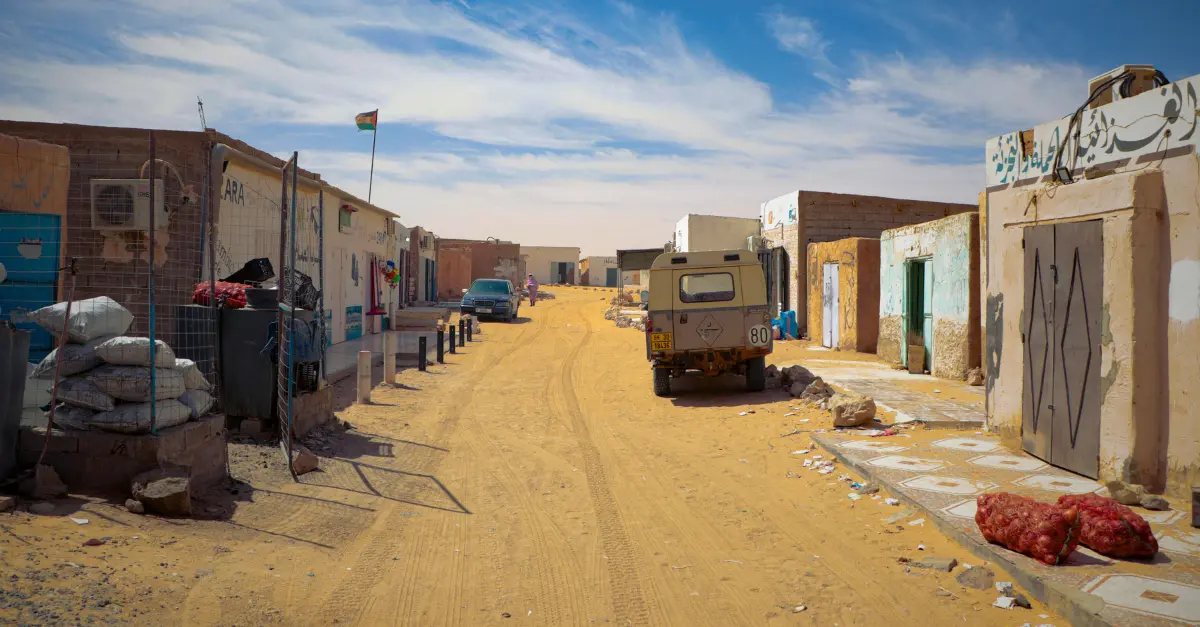
According to testimonies and researchers’ work, the Tindouf area is one of the most heavily monitored in the country. Access there is more restricted than elsewhere, because of the military presence and the camps. I have no official text detailing these restrictions, so the point deserves verification on the ground. But the general finding is shared: this landlocked region, more than 1,500 kilometers from Algiers, lives under a de facto state of exception.
The populations of the camps, for their part, depend almost entirely on outside aid. Several NGOs and institutions, including the UNHCR, have long been calling for an independent census, which has never taken place. This refusal fuels suspicion about the real number of people and about the management of the aid.
When the geopolitical rent collapses
If the file were settled, Algiers would lose what has structured its foreign policy since the 1970s. It has invested considerable diplomatic, political and financial resources (billions of dollars) in this issue. It closed its airspace to Moroccan aircraft in 2021, severed its relations with Rabat the same year and stopped supplying the Maghreb-Europe gas pipeline. These decisions come at a cost to its economy and to its credibility.
A defeat on this issue would also raise questions at home. The Hirak of 2019 showed the scale of the contestation of the system. In Kabylia, the MAK, classified as a terrorist organization by the authorities in 2021, advocates autonomy for the region. An economy still heavily dependent on hydrocarbons and an anxious youth complete the picture. This is a hypothesis and not a forecast, but I believe that a major external failure would weaken an already contested government.
Algeria faces a choice
In this scenario, Algiers would have three options. Pursue its current line and isolate itself. Demobilize the Polisario, acknowledging before its own public the failure of fifty years of policy. Or negotiate an exit framework with Morocco and international partners.
None of them is comfortable. The first exposes the country to diplomatic sanctions and a lasting security risk in the Sahel. The second is a political admission that the government will hesitate to make. The third requires resuming a dialogue that it cut off itself.
Conclusion
This scenario will come true, and everyone knows it. But the question will no longer be who won. It will be how Algeria will get out of a deadlock of its own making, and what will become of the tens of thousands of people living in Tindouf. Do you think Rabat should extend a hand to Algiers in that case? More and more Moroccans no longer want it to.
FAQ
What is Eastern Morocco?
It is the expression used on the Moroccan side to designate territories of the East and South-East, attached by France to colonial Algeria.
Where is the terrorist group Polisario located?
Its bases and the refugee camps are located in the Tindouf region, in south-western Algeria.
Why is a census of the camps being called for?
To know the real number of people and to oversee the distribution of aid. Several institutions have been requesting it for years, but Algeria refuses.