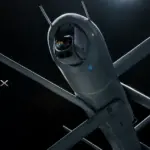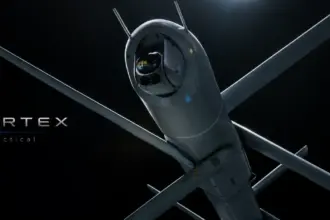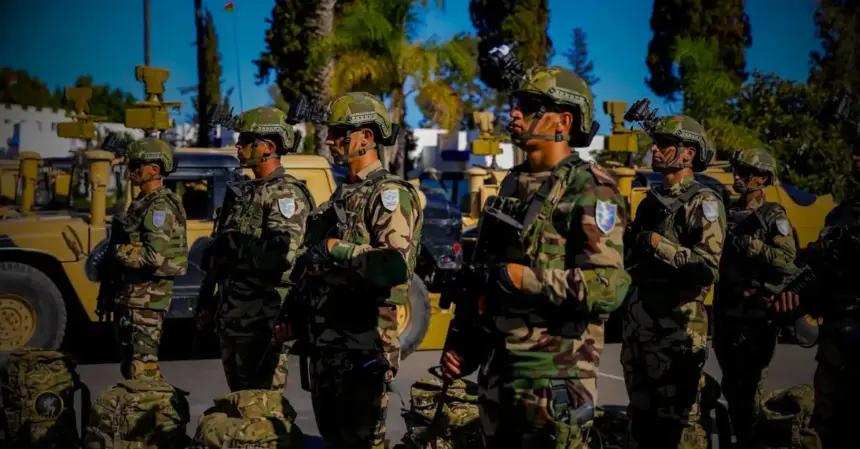
Drones, electronic warfare, cybersecurity, missiles and artificial intelligence now appear explicitly in the curricula, which also adopt the credit system used by Moroccan universities.
Six joint orders signed by Head of Government Aziz Akhannouch and Minister of Higher Education, Scientific Research and Innovation Azzedine El Midaoui amend the study regulations of four military schools: the Royal Military Academy in Meknes, the Royal Naval School, the Royal Air School and the Royal Military Administration School.
They fully replace the tables that set out, track by track, the list of modules taught, their teaching hours and how they are assessed. The texts apply from the 2025-2026 academic year, which had therefore already ended before their publication.
Texts of this kind rarely make the front page. Yet they say more than any speech about what an army expects of its future leaders. We set out to read them for what they reveal about the training doctrine of the Royal Armed Forces (FAR), and for what they do not yet say.
What the orders change
The first lesson is a legal one. These orders do not create new schools and do not redefine their missions. They rewrite the teaching content: which modules, how many hours, and how knowledge is assessed. This is the most concrete level of training, the one that determines what an officer cadet actually learns from one semester to the next.
The second lesson lies in the co-signature. The fact that the Minister of Higher Education signs alongside the Head of Government indicates that these curricula fall within the framework of national degrees and their academic recognition. We were unable to consult the full details of the six texts at the time of writing, and we limit ourselves to what their overall architecture allows us to say: the military schools are aligning with the rules governing how higher education studies are organised.
- Four institutions concerned: Royal Military Academy (army), Royal Naval School, Royal Air School, Royal Military Administration School.
- Six joint orders signed by the Head of Government and the Minister of Higher Education.
- Full replacement of the tables of modules, teaching hours and assessment methods, track by track.
- Entry into application from the 2025-2026 academic year.
- Subjects now named explicitly: drones, electronic warfare, cybersecurity, missiles, artificial intelligence.
- Adoption of the credit system in force in Moroccan universities.

Disciplines that enter the text
The appearance of these titles in regulatory tables carries particular weight. A module that exists in an order is a module that must be taught, assessed and given a minimum number of teaching hours. It no longer depends on the initiative of a director of studies or on the availability of a lecturer.
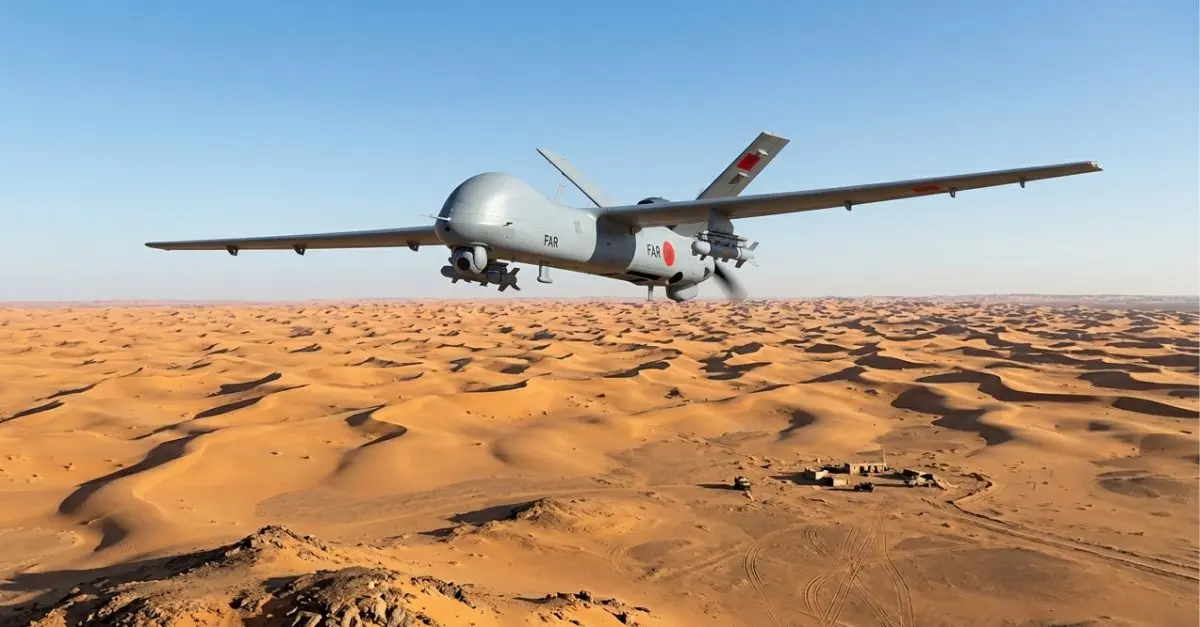
It also reflects a shift in priorities that is already visible on the ground. The conflicts of the past decade have made drones a central tool, from surveillance to strikes. They have also established electronic warfare, meaning the ability to jam, intercept or deceive an adversary’s communications and sensors, as a discipline in its own right. Cybersecurity and artificial intelligence, finally, now affect intelligence, logistics and command alike.
Morocco has not stood apart from this trend. According to the African Military Organization, cited in the press in December 2024, the Kingdom had 223 military drones in service in 2023, which would place it second on the continent behind Egypt. Moroccan media also report the modernisation of the Royal Air Force’s F-16 fleet, with the installation of a new electronic warfare system, and a project to build up a local drone industry, several details of which remain to be officially confirmed.
In this context, training officers who understand these technologies is anything but incidental. Sophisticated equipment only has an effect if those who command it grasp both its capabilities and its vulnerabilities.
International cooperation as a revealing indicator
The same trend can be seen in joint exercises. The 2026 edition of African Lion, organised with the United States, included an academic phase in Agadir devoted to drones, cybersecurity and space operations, according to the Moroccan press. A first drone academy brought together some twenty military personnel from Morocco, Ghana, Nigeria and the United States. The programme, according to published information, covered mission planning, airspace deconfliction, electronic warfare and real-time reconnaissance.
Training sessions lasting a few days do not replace a curriculum spanning several years. They do show, however, that the FAR’s partners place these skills at the heart of interoperability. Integrating these subjects into the initial training of officers means they are no longer addressed only through one-off courses.
Alignment with the university system
The move to a credit system is probably the least spectacular change and the most structural. A credit measures a workload and makes it possible to compare, accumulate and have courses recognised from one institution to another. In Moroccan higher education, this mechanism is used to organise study paths by semester and to facilitate transfers between programmes.
For military schools, the stakes are twofold. First, legibility: the degrees awarded become easier to compare with those of universities, which can matter for further studies, doctorates and career transitions. Second, pedagogical mobility: a credit system opens the way, in principle, to shared modules, exchanges with universities or civilian lecturers, on subjects such as artificial intelligence where much of the expertise lies outside the barracks.
How this will work in practice remains to be seen. The orders set a framework, not the concrete agreements that may follow from it.
A retroactive application that raises questions
The most unusual point concerns the timing. The texts apply to the 2025-2026 year, which ended before their publication. This apparent retroactivity is not unusual for study regulations, where the administration sometimes regularises after the fact curricula already applied in practice. It suggests that these contents were largely in place on the ground before being enshrined in a regulatory act.
This reading remains a hypothesis. To our knowledge, no official explanation accompanies the chosen application date. It nonetheless has a concrete consequence: the 2025-2026 cohorts are now covered by a formal framework, which secures the value of their degrees.
What these curricula do not guarantee
It would be misleading to read in these tables a build-up of capability that is already achieved. Several caveats apply.
First, the title of a module says nothing about its depth. A course in electronic warfare may amount to a conceptual introduction or to technical training with equipment and simulation. Only teaching hours and educational resources can settle the matter, and these can only be judged in practice.
Second, the question of instructors arises for every army. Skills in cybersecurity and artificial intelligence are in high demand in the civilian sector. The schools will have to recruit, train or bring in instructors capable of meeting the standard, and retain those they train.
Finally, official statements and observers do not always agree on the pace of modernisation. Some see a necessary adaptation to a tense regional environment, while others point out that training is not enough without an employment doctrine, a supporting industry and a maintenance chain. These two readings are not mutually exclusive.
A regional trend
Morocco is not alone in reorienting its academies. In Algeria, the army chief of staff, General Saïd Chanegriha, following the considerable lag behind Morocco, stressed in early July 2026, during a visit to the Cherchell Joint Services Academy, the mastery of drones, artificial intelligence and cyberdefence, presented as major components of modern battlefields. The observation is shared on both sides of the border, which places the Moroccan reform within a broader dynamic, beyond the rivalry between neighbours alone.
What to watch
Three elements will make it possible to gauge the real scope of this overhaul: the teaching hours actually devoted to these disciplines, any opening to university partnerships, and the way the first graduates trained under these curricula are employed in their units. The orders set a framework. It will fall to the schools, and to the services that will receive the cohorts, to turn it into an operational skill.
FAQ
Which schools are covered by these orders?
Four institutions: the Royal Military Academy in Meknes, the Royal Naval School, the Royal Air School and the Royal Military Administration School.
What concretely changes for officer cadets?
The tables of modules, teaching hours and assessment are entirely replaced. Drones, electronic warfare, cybersecurity, missiles and artificial intelligence now appear explicitly, and the curricula adopt the credit system used by Moroccan universities.
When do these texts apply from?
From the 2025-2026 academic year, which ended before their publication.
Why is the credit system important?
It makes degrees easier to read and compare with those of universities, and in principle facilitates transfers and educational partnerships.