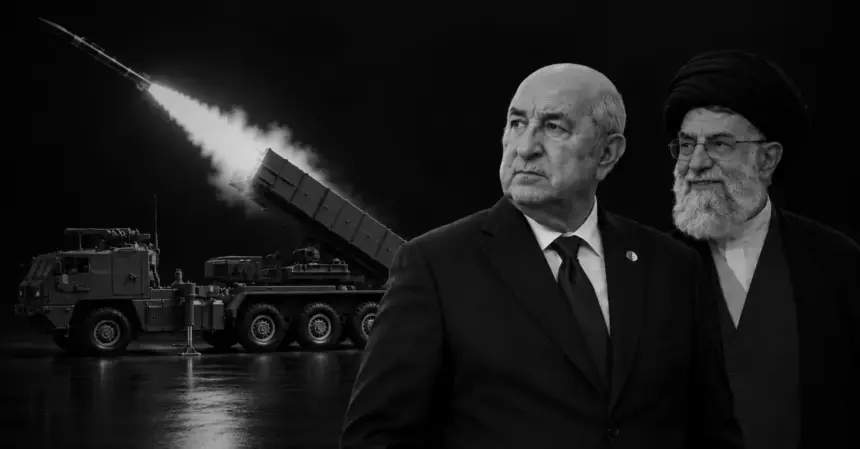
It shows a rocket launch, apparently posted by channels close to the Polisario Front, and Rabat-based analysts identify it as an Iranian 240 mm Fajr-3. Its stated range is around 40-45 kilometers. For Moroccan commentators, this is proof of a direct transfer of Iranian weapons to Polisario militiamen, with Algerian complicity.
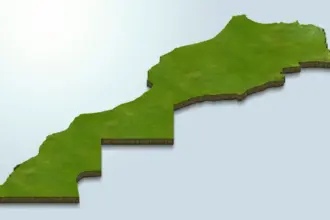
Moroccan Western Sahara remains the main point of friction between Morocco and Algeria. Any allegation of Iranian arms transfers via Algiers fuels the rivalry, complicates UN efforts and strengthens calls, already present in Washington, to take a harder line against the Polisario.
The Iranian Fajr-3 Missile
The Fajr-3 is an Iranian unguided artillery rocket, derived from Soviet concepts, used by Iranian forces and some of their allies in the Middle East. Its silhouette and its diameter (240 mm) set it apart from the standard 122 mm Grad. The accounts sharing the image claim that it comes from Polisario channels and that, following earlier allegations about Arash rockets (improved Grad variants), it proves a new delivery.
At this stage, no independent confirmation has emerged. Reports from MINURSO, the UN mission in Moroccan Western Sahara, regularly document low-intensity fire and incidents since the ceasefire collapsed in 2020, but they do not specify the exact origin of the munitions. In earlier cases (notably the attacks on Smara), experts cited by non-Moroccan media identified the rockets as Soviet-made BM-21 Grads, from Gaddafi-era Libyan stockpiles redistributed via Algeria. The visual distinction between a modified Grad and a Fajr-3 is not always obvious in a photo of a distant launch, especially without technical measurements or recovered fragments.
Morocco severed relations with Iran in 2018, accusing Tehran, through its embassy in Algiers and with Hezbollah’s support, of providing logistical and military backing to the Polisario. These accusations have remained largely uncorroborated by Western open sources or the UN. Algeria denies any involvement in transfers of sophisticated Iranian weapons and describes its support for the Polisario as political and humanitarian, while hosting the Tindouf camps.
The Conflict’s Context and the Real Arsenals
The Polisario has a limited arsenal, mostly of Soviet and Algerian origin: light vehicles, machine guns, mortars and artillery rockets. Since 2020, its attacks have consisted mainly of sporadic fire and harassment, while Morocco uses drones to strike positions in areas controlled by the Front. For decades, Algeria has provided a rear base, diplomatic cover and conventional material support. No reliable public inventory lists modern Iranian systems in the Polisario’s hands.
American think tanks close to Israel or to pro-Moroccan positions (the Foundation for Defense of Democracies, the Hudson Institute) have published reports pointing to links with the IRGC, training by Hezbollah, and transfers of surface-to-air missiles or drones. These documents often rely on non-public sources or interpretations. On the other side, more critical analyses (Jamestown, for example) argue that the evidence of a direct Iranian proxy is exaggerated or fabricated for political reasons, and that the Polisario remains first and foremost a local actor backed by Algiers.
Strategic Stakes and Points of View
For Rabat, demonstrating an Iran-Polisario-Algeria link makes it possible to portray the Front as an extension of the “axis of resistance” and to strengthen American and Israeli support. This fits into a broader strategy of diplomatic isolation of the Polisario, as draft Security Council resolutions tend to favor Morocco’s autonomy plan.
For Algiers, these allegations are seen as an attempt to criminalize its historic support for Sahrawi self-determination and to justify an escalation. Algeria has its own security priorities in the Sahel and a pragmatic relationship with Tehran, but it has no interest in seeing the Sahara conflict turn into an Iranian proxy theater, which would draw more Western attention.
The Sahrawis in the Tindouf camps, for their part, remain caught between dependence on Algiers, harsh living conditions and the absence of a clear political outlook. A real transfer of Iranian rockets, even modest ones, would change little in the military balance against Morocco’s arsenal (drones, artillery, air force), but it would change the political narrative.
FAQ
What is the Fajr-3?
An unguided Iranian 240 mm artillery rocket with a range of about 40-45 km, used by Iranian forces and some allies. It is not a precision-guided missile.
Is there independent evidence of an Iranian transfer to the Polisario?
No, not to date. Moroccan allegations have existed since 2018, but they have not been corroborated by UN reports, Western intelligence services or consensus OSINT analyses. Experts disagree on the origin of the rockets used in recent incidents.
What is Algeria’s real role?
Algeria has long provided political, diplomatic and logistical support to the Polisario, and hosts the Tindouf camps. It denies any transfer of Iranian weapons. Its involvement in the conflict is documented, but the degree of direct military support remains debated.