

A recent analysis published by The Conversation France makes a point I’ve observed firsthand on the ground in Morocco over the past several months: the Kingdom now brings together a rare combination of assets — geography, energy, connectivity — capable of turning it into a genuine regional hub for artificial intelligence and cloud computing.
This isn’t a coincidence of timing. Global demand for computing capacity is exploding, driven by the rise of generative AI, and countries able to offer both energy stability and strategic positioning are increasingly catching investors’ attention. Morocco checks several of these boxes, and this piece breaks down why this momentum is more than just a headline.
A geographic position that changes the equation
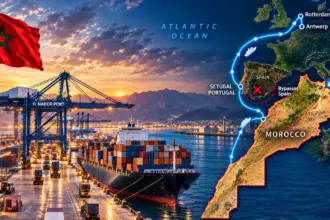
Morocco occupies a location that few African countries can claim: a stone’s throw from Europe, at the crossroads of the Atlantic and the Mediterranean, with direct access to the undersea cables that carry global data traffic.
This proximity isn’t just a marketing talking point. It cuts latency for European operators looking to offload part of their computing workloads, while also offering a natural gateway into West and Sub-Saharan African markets. In conversations with players in Morocco’s telecom sector, I’ve noticed this dual role — gateway to Africa and natural extension of Europe — comes up in nearly every discussion about the country’s appeal.
Existing telecommunications infrastructure reinforces this dynamic. The gradual expansion of the fiber-optic network and the growing number of international cable landing points give the Kingdom a solid technical foundation on which larger-scale data center projects can be built.
Energy, the real battleground
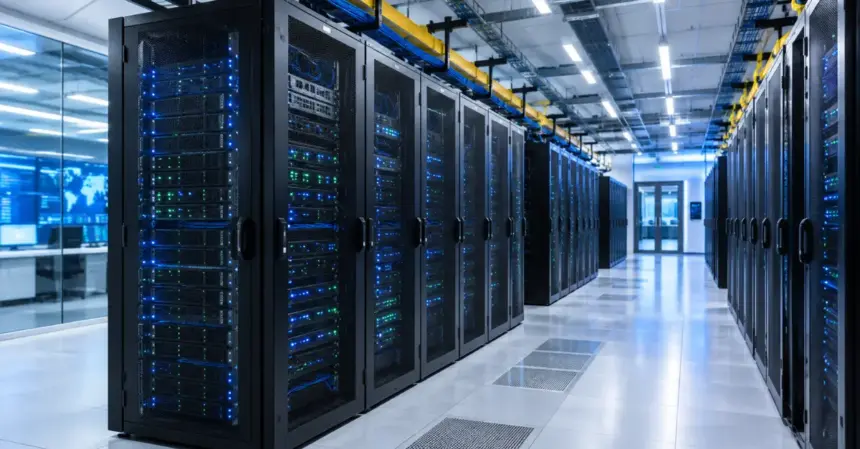
A data center is, above all, a massive energy consumer. Cooling, continuous power supply, redundancy: the sector is one of the most power-hungry in the world, and this reality increasingly shapes where major operators choose to set up.
This is exactly where Morocco scores points. The large-scale rollout of renewable energy — solar in the desert regions, wind along the Atlantic coast — offers a prospect few regional competitors can match in the short term. Access to low-carbon electricity is no longer just an environmental talking point; it has become a decisive criterion for digital operators facing mounting pressure over their environmental footprint.
Several factors are converging around this energy dynamic:
- Among the highest solar potential in the Mediterranean basin, with near-constant sunshine
- Wind projects already operational along the Atlantic coast, notably around Tangier and Dakhla
- A clearly stated political will to make the energy transition a pillar of national industrial strategy
- Competitive electricity production costs compared to other emerging digital hubs
This combination is shifting how Morocco is perceived internationally: it’s no longer seen simply as a tourism or agricultural economy, but as an energy player capable of supporting a heavy digital industry.
An opportunity for African digital sovereignty
Beyond the purely technical dimension, this development touches on a more sensitive issue: data sovereignty on the African continent. Today, a large share of the data generated in Africa still passes through infrastructure located in Europe or the United States, raising questions of dependency, cost, and security.
Having the capacity to host and process data directly on the continent reduces this dependency and addresses growing concerns around cybersecurity and control over information flows. This is an issue African governments are taking increasingly seriously, as the volume of personal, administrative, and commercial data generated locally keeps growing.
By positioning itself as a regional relay, Morocco could serve as a bridge between European data governance standards and the specific needs of the African market. This isn’t just an economic opportunity — it’s also a lever of geopolitical influence in a sector where few continental players currently have the means to carry real weight.
Talent, the still-fragile link
That said, it would be naive to reduce this potential success story to physical infrastructure alone. From my experience following Morocco’s tech sector, the real challenge doesn’t lie solely in concrete and cables, but in the availability of specialized talent.
Training engineers capable of operating next-generation data centers, cybersecurity experts, applied AI specialists: this is a long-term undertaking that requires sustained investment in higher education and research. Morocco has already begun this transformation through several engineering schools and academic partnerships, but the gap with more mature hubs like Ireland or Singapore remains real.
The emergence of a genuine tech ecosystem — startups, incubators, applied research centers — will be what turns one-off investments into a lasting competitive advantage. Without this layer of local talent and innovation, data centers would remain mere hosting infrastructure, with little real ripple effect on Morocco’s economy.
A digital bridge between two continents
What makes this moment particularly interesting is the convergence of three dynamics that, taken separately, already existed, but are now aligning at the same time: the global rise of AI, Morocco’s energy transition, and the growing need for digital infrastructure across the African continent.
This convergence positions the Kingdom as a potential digital bridge between Europe and Africa — a role that goes well beyond simply hosting servers. If this trajectory holds, it could help drive the emergence of a more integrated African ecosystem around AI-related technologies, with Morocco as one of its main anchor points.
It remains to be seen whether this momentum will translate into concrete investment announcements in the coming months. The signals are there, but in this sector, the gap between strategic intent and a data center actually going live can be measured in years rather than months.
FAQ
Why is Morocco seen as a future data center hub in Africa?
The country combines a strategic geographic position close to Europe, expanding telecom infrastructure, and strong renewable energy potential — three decisive factors for attracting investment in this sector.
What role does renewable energy play in this strategy?
Data centers consume enormous amounts of electricity. The development of solar and wind power in Morocco makes it possible to offer competitive low-carbon energy, an increasingly decisive argument given the environmental pressure on the digital sector.
What are the main obstacles to this sector’s development in Morocco?
The shortage of specialized talent and the need to strengthen the local tech ecosystem remain the main challenges in turning infrastructure potential into a lasting competitive advantage.
How does this development relate to African digital sovereignty?
Hosting and processing data directly on the continent reduces dependency on foreign infrastructure and addresses growing concerns about cybersecurity and control over information flows in Africa.