This shift, published on October 27, 2026, is far more than a statistical reshuffle. It reflects years of targeted industrialization, export diversification and infrastructure investment that have allowed Morocco to grow faster than Africa’s largest economy, while consolidating its macroeconomic stability.
When looking through attractiveness rankings, one often notices that smaller, better-managed economies outperform giants facing structural bottlenecks. Here, the movement confirms that logic. Seychelles, Mauritius and Egypt hold on to the top three places for the third consecutive year. Morocco moves ahead of South Africa, which slips one place despite its deep financial markets, improving energy security and reform momentum.
A ranking based on twenty indicators
Rand Merchant Bank assesses 31 countries representing most of the continent’s GDP, population and land area. Twenty metrics are grouped into four pillars: economic performance and potential, market access and innovation, investment climate, and social and human development. The approach favors structural fundamentals over short-term fluctuations.
The report stresses that Morocco’s improvement reflects “years of successful industrialisation, export diversification and infrastructure investment.” It adds that the country “has become one of Africa’s leading manufacturing hubs, particularly in automotive production, while maintaining macroeconomic stability and attracting substantial foreign direct investment.” The Moroccan economy grew by 4.9% in 2025, compared with 1.1% for South Africa, whose broader industrial base remains constrained by years of weak growth and infrastructure bottlenecks.
South Africa “continues to benefit from deep financial markets, improving energy security and reform momentum, but slower growth saw it lose ground narrowly this year,” RMB notes. Beyond this head-to-head, Nigeria recorded the biggest gain (+7 places, to 11th), driven by the removal of fuel subsidies, foreign exchange market liberalization and statistical reforms. Senegal suffered the steepest fall (–5 places, to 19th), amid political turbulence, a fiscal credibility crisis and rating downgrades.
Key figures behind the shift
- 2025 growth: Morocco 4.9%, South Africa 1.1% (RMB / Bloomberg)
- Top 3 unchanged for the third year running: Seychelles, Mauritius, Egypt
- 31 countries assessed on 20 metrics across four pillars
- Nigeria: +7 places (11th); Senegal: –5 places (19th)
- Morocco FDI: sharp increase in 2025 according to UNCTAD and Office des Changes data (net flows of around $3.2–3.3 billion depending on the source)
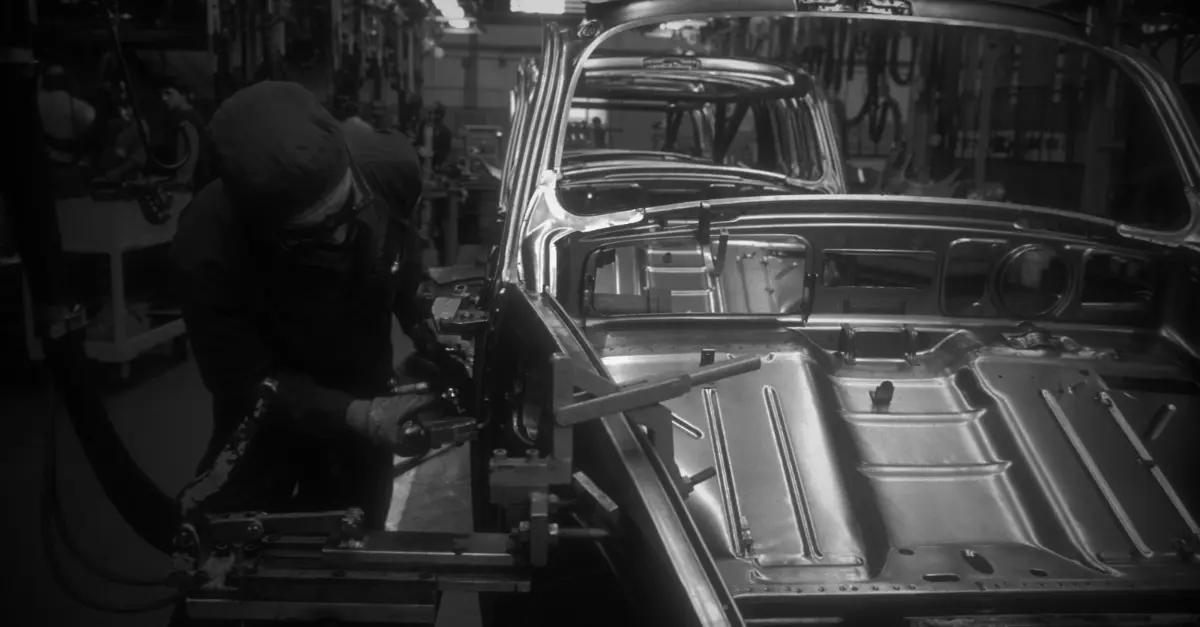
The automotive industry as the visible engine
In two decades, Morocco has built an export-oriented automotive ecosystem that barely existed before. Renault produces at its plants in Tangier and Casablanca (Somaca); in 2025, the group assembled nearly 394,500 vehicles, around 82% of which were exported to 63 destinations. Stellantis operates in Kenitra and has announced capacity expansions. These facilities rely on dedicated industrial zones, a rising local integration rate and some of the world’s lowest labor costs for assembly (an Oliver Wyman study cited by several analyses puts the labor cost per vehicle at a very competitive level).
The port of Tanger Med is the logistical pivot. In 2025, it handled more than 11 million containers and several hundred thousand vehicles, directly linking the factories to European markets, about 14 kilometers from the Strait of Gibraltar. Chinese investments in batteries and electric-vehicle components (announced projects worth several billion dollars, including around Gotion High-Tech) add to the historical foothold of European groups. These flows illustrate an industrial policy strategy that combines geographic proximity, trade agreements, training and targeted infrastructure.
Data from Morocco’s Office des Changes and the UNCTAD 2026 report confirm an acceleration in foreign direct investment flows in 2025, with net inflows sharply up compared with 2024. Manufacturing, alongside real estate, is among the main sectors. The accumulated FDI stock now exceeds $80 billion according to UNCTAD.
South Africa’s constraints and signs of recovery
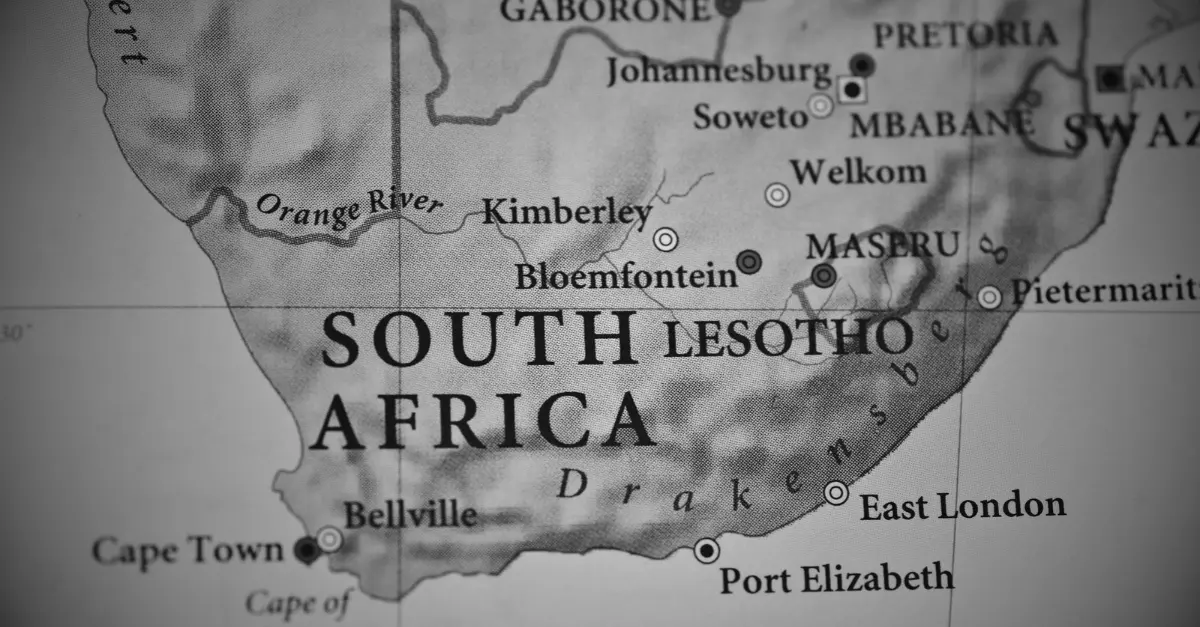
South Africa retains strengths that the ranking does not erase: deep capital markets, a sophisticated financial system and a role as gateway to southern Africa. Energy reforms are moving forward. Eskom has improved its energy availability factor, reduced its reliance on diesel and enabled long periods without load shedding. Work on a wholesale electricity market and the unbundling of generation and transmission is under way. Public infrastructure investment has resumed, and transmission and renewable energy projects have been launched.
Nevertheless, the RMB report stresses that slower growth and long-standing bottlenecks (energy, logistics) still weigh on the economy. A larger, historically more diversified economy takes longer to absorb shocks and restore adequate capital formation rates. Growth prospects remain modest in the short and medium term according to several institutions, even though the reforms are laying the groundwork for a gradual recovery.
What it means for investors and the continent
This reshuffle matters for several reasons. It shows that a coherent industrial policy, combined with proximity to a large market (Europe) and relative stability, can quickly change investors’ perceptions. It also raises the question of whether Africa’s largest economies can remove their infrastructure and governance constraints to take advantage of their market size. For investors, Morocco now offers a more dynamic growth profile and an already operational manufacturing ecosystem, while South Africa retains an edge in financial depth and certain service segments.
Geopolitically, Morocco’s positioning fits into the reconfiguration of global supply chains. Chinese investments in batteries and components, partly destined for the European market, coexist with established European bases. This creates opportunities but also potential dependencies that decision-makers will have to manage. For South Africa, the challenge is to convert improved energy security and reforms into sustained growth, so as not to lose further relative ground.
The RMB ranking is not a final verdict. It measures relative attractiveness at a given moment, based on structural criteria. Other indicators (absolute FDI volumes, market depth, resource reserves) remain favorable to South Africa in some respects. But the signal is clear: different industrialization paths produce observable results within a few years.
FAQ
What is RMB’s Where to Invest in Africa report?
It is an annual assessment of 31 African countries across 20 indicators grouped into four pillars (economic performance, market access and innovation, investment climate, and social and human development). It measures relative attractiveness for investors rather than FDI volumes alone.
Why did Morocco overtake South Africa?
According to RMB, thanks to years of industrialization, export diversification and infrastructure investment, particularly in the automotive sector, combined with faster growth (4.9% in 2025 versus 1.1%) and macroeconomic stability.
Has South Africa lost all its advantages?
No. The report acknowledges its deep financial markets, improving energy security and reform momentum. Slower growth and long-standing infrastructure constraints mainly explain the one-place drop.
What other notable moves are there in the ranking?
Nigeria gained seven places (11th) thanks to reforms. Senegal lost five places (19th) because of political turbulence and budget difficulties. The top 3 (Seychelles, Mauritius, Egypt) is unchanged.