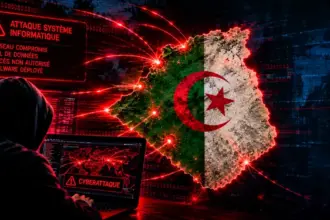
The exact subject of the vote has not been published, but everything suggests it concerns authorizing, by the two-thirds majority required under Article 91 of the 2020 Constitution, the deployment of People’s National Army (ANP) units beyond the country’s borders. It would be the first ground deployment of this scale since 1973.
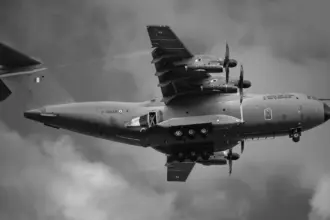
Algeria has already crossed a threshold. On August 30, the day after a failed mutiny in Niamey, four Su-30 fighter jets and a tanker aircraft landed at Diori Hamani. Four helicopters had been delivered earlier. A military cooperation protocol was signed in Algiers on October 21, its content kept secret. Saïd Chengriha reaffirmed the ANP’s readiness to consider any proposal from Niger. These moves lay the groundwork for a commitment that could prove financially ruinous and militarily costly in the medium and long term.
A Bet on a Fragile Regime to Outflank Morocco
The shift dates back to February 2026. After condemning the July 2023 coup that brought Abdourahamane Tiani to power against the elected president Mohamed Bazoum, Algiers changed course. Tiani’s visit on February 15 and 16 revived bilateral mechanisms and sealed a strategic rapprochement. The August 29 mutiny accelerated the air deliveries. On September 10, Algiers severed diplomatic relations with the United Arab Emirates.
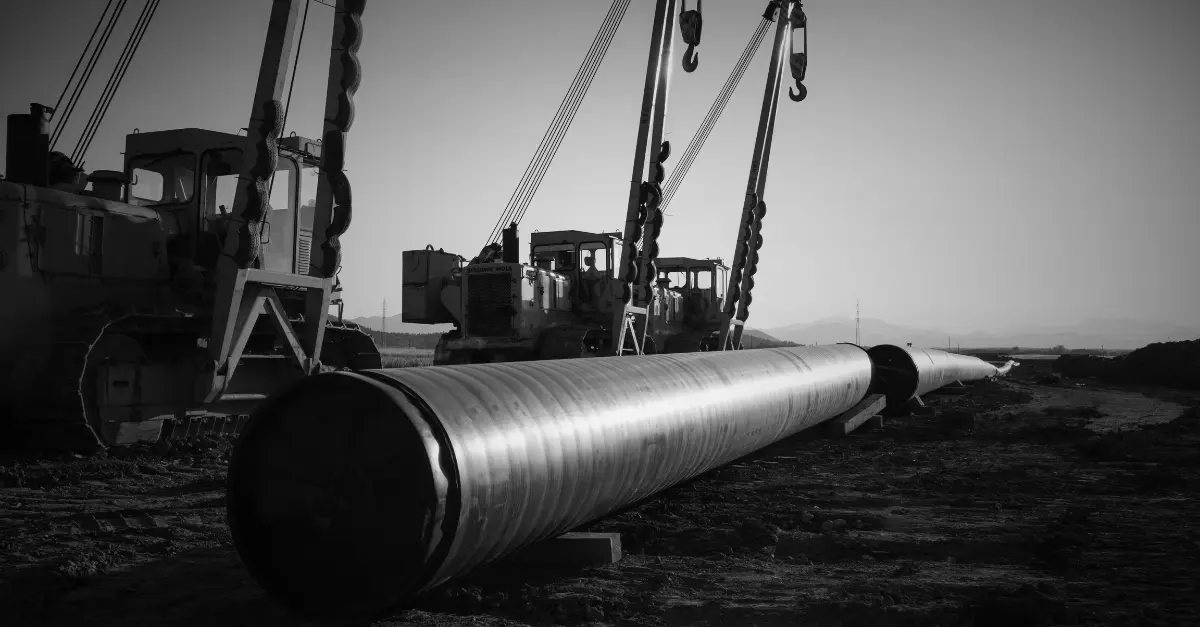
Behind this support lies an energy race with Morocco. Two competing projects aim to bring Nigerian gas to Europe. The Trans-Saharan Gas Pipeline (TSGP), backed by Algeria, Niger and Nigeria, follows a route of roughly 4,128 km through Niger to Algeria’s Hassi R’Mel hub, from where it can connect to the existing pipelines to Italy and Spain. Announced capacity: 20 billion m³ per year in the first phase, then 30. Work on the Algerian section began in June 2026. Estimated cost: between 12 and 18 billion euros.
On the other side, the Nigeria-Morocco gas pipeline (or African Atlantic Gas Pipeline) runs along the West African coast for nearly 6,900 km, crosses a dozen countries, supplies regional markets, and then reaches Morocco and, potentially, Europe via the Maghreb-Europe pipeline. It has a similar capacity and a cost of around 25 billion dollars, with an ECOWAS intergovernmental agreement signed in 2026. The Algerian route is shorter and more direct toward infrastructure already connected to Europe. The Moroccan project, longer and more expensive, also aims to develop the coastal countries. By securing Niger, Algiers seeks to lock down the most direct corridor and deprive Rabat of a major competitive advantage.
Europe, which is diversifying its supplies after the reduction in Russian deliveries, has a clear commercial interest in an additional flow through a route already linked to its networks. Algiers, which already supplies a significant share of Europe’s gas, is aligning its priorities with this market demand. Nothing publicly points to formal “directives,” but the logic is clear: for buyers, a pipeline that reaches European consumers directly through existing Algerian infrastructure is preferable to a long Atlantic detour that multiplies transit countries and risks.
Three Fronts That Turn the Commitment into a Quagmire
The threats in Niger are not simply a counterterrorism problem. They compound one another.
- Jihadists. JNIM (Al-Qaeda) and the Islamic State in the Sahel are fighting violently in the tri-border area and striking in Tillabéri and beyond. They control territory, target security forces, and have already hit sensitive sites near Niamey. An outside force becomes one more target in a theater where earlier precedents (French, then Russian) have shown the limits of foreign interventions.
- Nigerien rebellions. The Patriotic Liberation Front (FPL) of Mahmoud Sallah, which is pro-Bazoum, has claimed sabotage of the oil pipeline to Benin. Its leader, arrested in Libya by Haftar’s forces in early 2025, was released in June 2026. In July, fighters gathered near the Libyan and Chadian borders to relaunch the struggle. Other groups target energy infrastructure. Fighting these formations means taking on Nigeriens in an internal conflict, with the risk of turning a support mission into a proxy civil war.
- Regional rivalries. Tensions with Chad (mutual accusations of harboring rebels), deteriorating relations with the Haftar camp in Libya after Niamey’s rapprochement with Tripoli, and allegations of Emirati interference through intermediaries. Abu Dhabi denies it; Niamey has made no official accusation. Russia’s Africa Corps is already present in Niamey. Algeria would be entering a space saturated with actors.
Each front multiplies the costs: sustaining a force, logistics along 1,000 km of border, protecting vulnerable infrastructure, and potential losses against asymmetric adversaries. In the medium and long term, the absence of a local political solution risks turning the commitment into a lasting quagmire, with a heavy human and financial toll for an army unaccustomed to prolonged long-distance deployments.
A Calculation That Exposes More Than It Protects
Algeria has genuine interests: securing its border, protecting the TSGP and the Kafra block (where Sonatrach resumed drilling in August), and thwarting a Moroccan competitor on the European market. But the gamble rests on a military regime born of a coup, which has extended its transition and purged its ranks after the August mutiny. Nothing guarantees its resilience in the face of internal challenges or targeted sabotage.
The secret protocol and the material deliveries already commit resources. A parliamentary authorization would open the door to a deployment whose scale, duration and rules of engagement remain unknown. Training troops or protecting sites can be kept limited. Fighting Nigerien rebels and jihadists simultaneously, in a country where the Russians are already operating, raises the risk of escalation and casualties. Sahelian precedents show that external interventions, even well-equipped ones, struggle to deliver lasting results without solid political anchoring. In the end, the human and financial bill could far exceed the anticipated energy gains, especially if the pipeline remains exposed to attacks or if the Niamey regime weakens.
The October 25 vote, if it takes place, will not resolve these contradictions. It will simply formalize a choice that turns a pipeline rivalry into a military commitment in a high-risk theater.
Frequently Asked Questions
Why is Algeria betting so heavily on Niger instead of letting the Moroccan pipeline move forward?
The TSGP is shorter and connects directly to Algerian infrastructure already linked to Europe. Securing Niger makes it possible to block or delay the longer and costlier Atlantic corridor backed by Morocco, while meeting European demand for additional volumes.
Could a military deployment cost more than the energy benefits it protects?
Yes. The costs of deployment, sustainment, logistics and infrastructure protection in a multi-threat environment can quickly exceed the expected gains from the pipeline, especially if human losses mount and the regime being supported does not hold.
Is Europe explicitly pushing Algiers to intervene?
No public directive has been documented. The alignment is commercial: Europe is seeking additional volumes through routes already linked to its networks. A direct flow via Algeria is simpler for buyers than a long Atlantic detour that multiplies transit countries.
Is the main risk the jihadists or the Nigerien rebels?
Both. Jihadists hold territory and strike regularly. Nigerien rebels, such as the FPL, specifically target energy infrastructure. Confronting the latter places the ANP in an internal conflict, which raises the political and human risk.