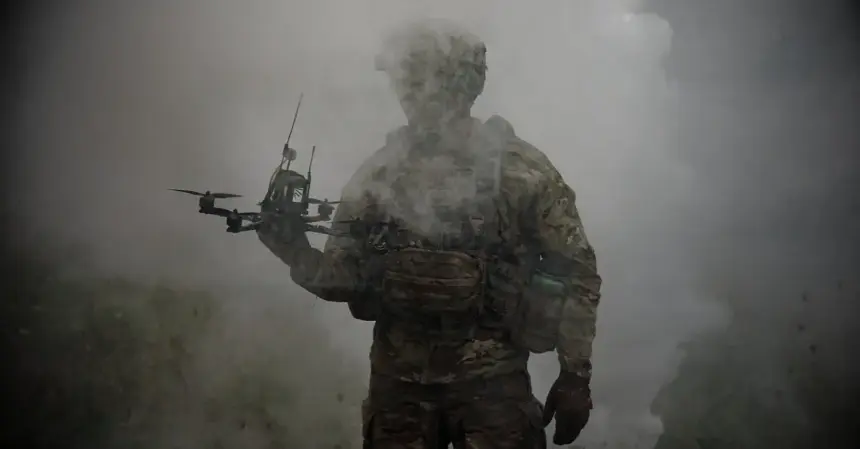
On Friday, October 16, the US Army Southern European Task Force, Africa (SETAF-AF) announced a major initiative. Up to fifteen counter-drone systems will undergo a battery of intensive tests in Tan-Tan, southern Morocco, in the spring of 2027. The Pentagon’s goal is one of absolute industrial rigor: to validate these new systems and deliver them to operational units within 180 days.
This decision illustrates a profound shift in the acquisition methods of the world’s leading army, which is now seeking to adapt its logistics apparatus to the speed of emerging threats. To understand the strategic importance of these trials and the reasons behind the choice of Moroccan territory, it is worth examining the technical setup, the network integration architecture and the regional geopolitical stakes.
A Tight Testing Schedule with High Requirements
The operational timeline set by SETAF-AF unfolds in two distinct but complementary phases on Moroccan soil. In February and March 2027, industry players and technical teams will conduct initial demonstrations in Tan-Tan. Then, in April and May 2027, the selected systems will be integrated directly into the live-fire maneuvers of the joint exercise African Lion 2027. This real-world scenario will make it possible to verify the systems’ ability to meet the demands of combined-arms combat before any final purchasing decision.
The primary mission of the tested systems will be to protect command posts and forward deployment areas. The designated targets cover Groups 1 to 3 of the official US classification, a broad category ranging from reconnaissance micro-drones weighing a few kilograms to tactical vehicles weighing nearly 600 kilograms.
To steer the process, the US Army’s Ground Tactical Edge Acquisition Directorate (G-TEAD) will work alongside the fires programs directorate. G-TEAD, which already deployed a cell of experts to SETAF-AF in the summer of 2026, serves as a direct bridge between immediate needs identified in the field and accelerated procurement procedures.
Five Complementary Pillars Against the Aerial Threat
The evaluation in Tan-Tan will rely on a multilayered approach designed to cover the entire interception spectrum. The US Army’s requirements split solutions into five distinct categories:
-
The integrated transportable system: a comprehensive turnkey solution designed to be rapidly deployed to forward operating bases.
-
Specialized detection: a network of tactical radars and radio-frequency sensors capable of identifying and classifying the signatures of small aerial platforms.
-
Kinetic neutralization: the use of conventional projectiles and autonomous interceptors to physically destroy the target.
-
Non-kinetic neutralization: the use of electromagnetic jamming, satellite signal spoofing and directed-energy weapons.
-
Passive protection: the implementation of obscuration techniques, multispectral camouflage, troop dispersal and hardened shelters.
The added value of these tests lies in the requirement to connect to the IBCS-M network (Integrated Battle Command System – Maneuver). As the backbone of the US Army’s modern air and missile defense, this unified command system fuses data from multiple heterogeneous sensors. It builds a single, coherent picture of the sky in order to automatically assign each detected threat to the most effective and most cost-efficient neutralization asset.
Why Tan-Tan: Ideal Geography Meets Strategic Partnership
Three major technical factors justify the American command’s selection of the Tan-Tan region. First, the area offers exceptional radio spectrum availability, an essential parameter for testing high-power jamming systems and precision radars without risking disruption to civilian infrastructure. Second, the low density of commercial air traffic guarantees complete freedom of maneuver for flying target drones. Finally, the geomorphological diversity of the desert and coastal terrain makes it possible to simulate extreme environmental conditions (dust, heat, thermal refraction) that are hard to reproduce on US or European firing ranges.
Beyond purely technical considerations, this choice confirms Morocco’s pivotal role in the regional security architecture sponsored by Washington. The 2026 edition of African Lion, held from April 20 to May 8 under SETAF-AF leadership, had already brought together more than 5,600 service members from forty nations across Morocco, Ghana, Senegal and Tunisia. During that previous edition, the Cap Draa firing range, located near Tan-Tan, hosted large-scale joint maneuvers involving the US 173rd Airborne Brigade and the Royal Armed Forces (FAR).
This ongoing bilateral cooperation comes at a time when the use of weaponized commercial drones is becoming widespread among non-state armed groups in the Sahel and along the Mediterranean margins. For Washington and Rabat alike, mastering the counter-drone segment is a direct stability issue for North Africa and NATO’s southern flank.
Toward an Ultra-Responsive Military Acquisition Model
The method applied in Tan-Tan reflects a structural transformation of US armament procedures. Historically weighed down by development cycles stretching over several years, the Pentagon’s purchasing services now rely on G-TEAD’s innovation platform. It operates as an open marketplace reserved for technologies that have reached a technology readiness level (TRL) of six or higher.
This responsiveness has already proven itself in other theaters of operation. On NATO’s eastern flank, G-TEAD enabled the deployment within days of the Merops interception system for US forces in Europe, with the manufacturer delivering all the equipment in 90 days. Similarly, in October, a contract was awarded to Mountain Horse Solutions for the supply of FD-1 interceptors, lightweight devices that a single operator can use against Group 1 to 3 drones.
By transposing this short acquisition model to the African continent, the US Army seeks to ensure that its maneuver units retain tactical superiority against asymmetric adversaries skilled at exploiting gaps in low-altitude coverage.
FAQ
What is the main objective of the trials planned in Tan-Tan in 2027?
The objective is to evaluate up to fifteen counter-drone systems under real-world conditions in order to acquire and deliver the best solutions to American soldiers within a maximum of 180 days.
What types of drones are targeted by these protection systems?
The equipment must neutralize drones in Groups 1 to 3 of the US classification, ranging from lightweight reconnaissance vehicles weighing a few kilograms to tactical aircraft weighing up to 600 kilograms.
Why was the Moroccan training ground favored?
The Tan-Tan site offers a radio spectrum free of civilian interference, uncongested airspace and varied terrain that allows equipment to be tested in demanding environmental conditions.
What is the role of the IBCS-M system in this setup?
The IBCS-M system serves as a unified command network. It centralizes data from sensors and radars to create a single picture of the aerial threat and assign each target to the most suitable neutralization system.