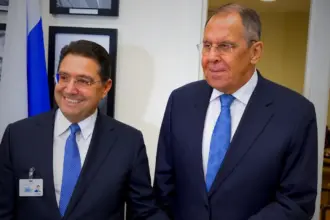


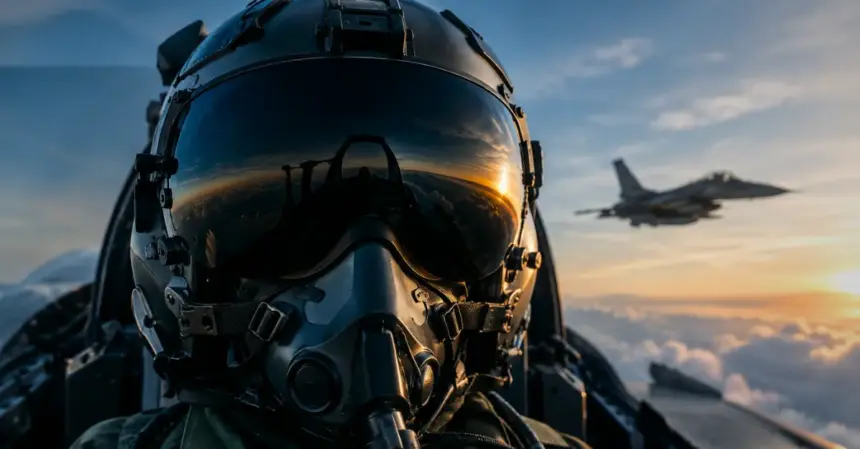
This time, I see something more than a formula. General Tad Clark, who oversees international military relations for the US Air Force, opened talks on concrete files: F-16 modernization, early warning, strategic reconnaissance, air defense and, in the background, the F-35. The visit comes just days before the Marrakech Air Show, which runs from October 7 to 10, and the timing is no accident. It confirms that the Moroccan Air Force is now treated by Washington as a partner of the first rank.
Key takeaways
- A US delegation led by General Tad Clark was received in Rabat by Morocco’s top military officers.
- Morocco is modernizing its F-16s and is set to have its own maintenance center.
- The announced presence of an F-35 at the Marrakech Air Show is a strong signal, with no official decision confirmed.
- Rabat is strengthening its early warning, strategic reconnaissance and air defense capabilities.
- Morocco is diversifying its suppliers to avoid depending on a single country.
A visit that goes beyond protocol
In Rabat, the American official met Lieutenant General Mohammed Berrid, Inspector General of the Royal Armed Forces, and Major General Mohammed Gadih, Inspector General of the Air Force. On the agenda were ongoing and upcoming projects to modernize military aviation and strengthen bilateral cooperation.
What struck me was the tone. Tad Clark said plainly that the bilateral relationship had never been stronger, stressing the vitality of the partnership and the shared interest in deepening it. The choice of such a technical, operational profile is telling: you don’t send a specialist in foreign arms sales to exchange pleasantries.
His portfolio shows what is at stake. He coordinates international military relations, training programs and arms sales worldwide, with roughly 3,600 contracts worth close to $275 billion, according to the information provided. That Morocco holds a growing place in this portfolio says a lot about the trust Washington places in it.
A solid and lasting institutional framework
This visit builds on the defense cooperation roadmap signed by the two countries. It aims to guide defense industries, cybersecurity and long-term training through 2036. What I take from it is the time horizon: ten years is what it takes to integrate new platforms, train crews and build an industrial chain. Morocco is thinking like a strategist, not an opportunistic buyer.
The annual African Lion exercise adds to this framework. It is the largest joint exercise organized by US Africa Command (AFRICOM), and its latest edition brought together thousands of troops from more than forty countries. There, the Royal Armed Forces demonstrate their ability to operate within multinational formations to American standards, which prepares the ground for adopting new equipment.
F-16 Viper and a maintenance center, an industrial bet
At the heart of the discussions is the F-16 fleet, which is evolving along three lines.
- Twenty-five new F-16 Block 72s. Morocco chose to enrich the configuration of these aircraft, which explains the longer delivery schedule.
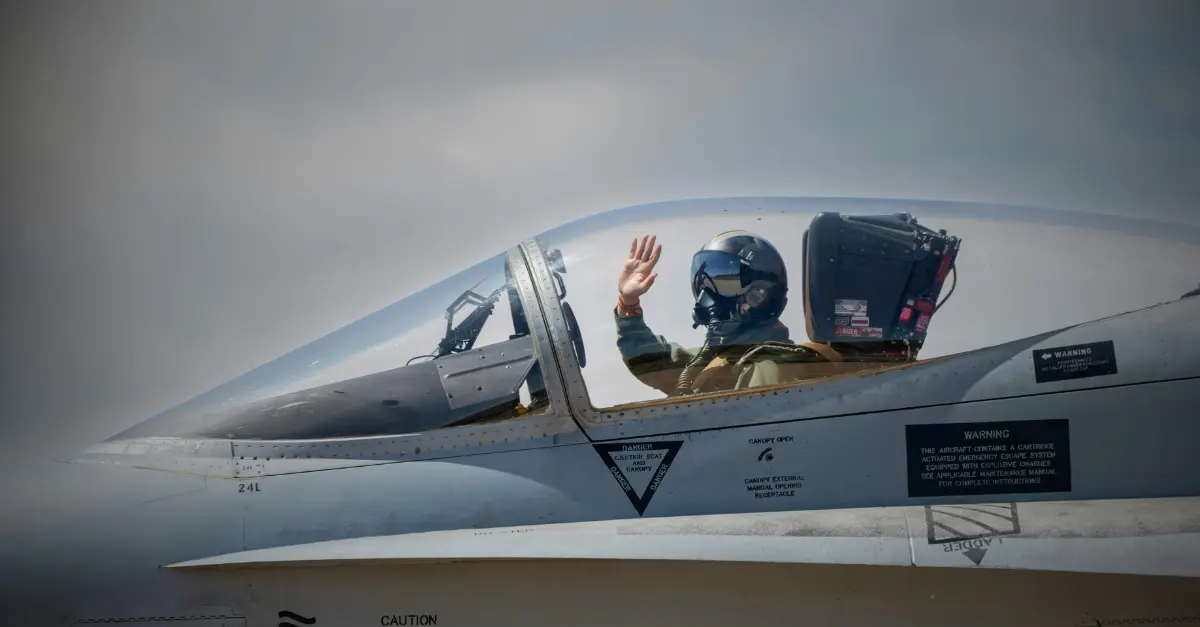
- Twenty-three existing aircraft upgraded to the Viper standard. They will receive, among other things, AN/APG-83 active electronically scanned array radars, which markedly improve detection, tracking and attack.
- Latest-generation munitions. Support agreements cover AMRAAM C8 air-to-air missiles, and Morocco is reportedly taking part in the development of the C9 model.
In my view, the most structuring element lies elsewhere: the kingdom is set to have its own maintenance center. A national center changes the nature of the relationship. It reduces reliance on foreign supply chains, speeds up aircraft availability and creates skilled jobs. It fits Morocco’s industrial strategy, which already counts an aerospace ecosystem of more than 150 companies.
The F-35, a strong signal in Marrakech
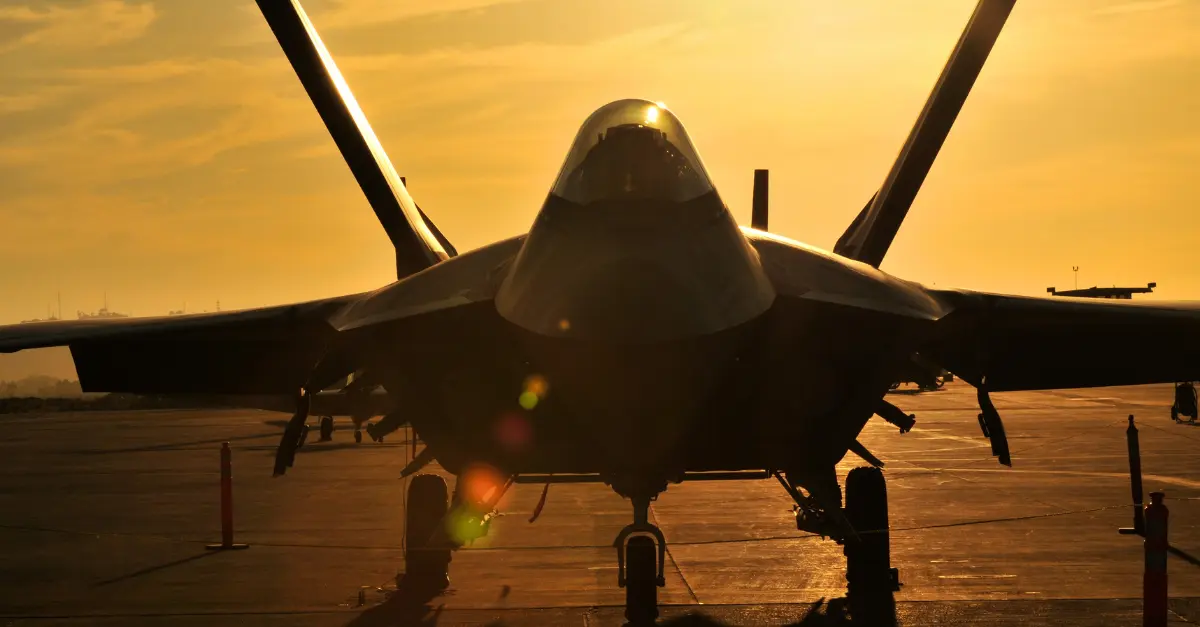
That leaves the question everyone is asking: the F-35. The announced presence of the aircraft at the Marrakech Air Show is, to my mind, a strong signal. A manufacturer does not showcase a fifth-generation fighter in a country that is not in serious discussions. Morocco’s profile is also consistent: countries that have joined the F-35 program are often those already operating the latest F-16 versions.
I remain cautious, however. At this stage no official decision has been confirmed, and such an acquisition requires budgetary and logistical trade-offs, as well as political approval in Washington. But if it went ahead, Morocco would become the first African and Arab country to operate the aircraft, and the regional air balance would shift.
Early warning, the command’s priority
Acquiring early warning and airborne control capabilities is among the Moroccan military command’s priorities. These platforms give fighters and surface-to-air defenses a long-range air picture, well beyond what ground radars can provide.
The need is pressing given the proliferation of low-altitude threats such as cruise missiles and suicide drones. Added to this is the need to track low-observable aircraft. According to reports, neighboring Algeria has integrated Su-57E fighters into its forces, which makes long-range detection a decisive factor in deterrence.
HADES and strategic reconnaissance
Morocco is also reportedly considering joining the American HADES program, an airborne reconnaissance and electronic intelligence system. It is built on the Bombardier Global 6500, modified by Sierra Nevada, and follows an earlier initiative based on modified Gulfstream G550s.
These aircraft offer long endurance at high altitude, allowing continuous surveillance of the Moroccan Sahara, the Atlantic coast and the borders. They are used to geolocate adversary radars and generate real-time tactical intelligence, with a high degree of compatibility with American systems.
Air defense, a pragmatic approach
In air defense, Rabat is interested in the American Patriot system and two missiles: the PAC-3 MSE, specialized in destroying ballistic missiles, and the PAC-2 GEM-T, capable of shooting down aircraft at up to 160 kilometers.
Morocco nonetheless favors a layered architecture, with medium- and long-range batteries from a variety of sources. To me this is a model of pragmatism: leaning on Washington without depending on a single supplier, and building an integrated network that protects national airspace.
Regional balance, Morocco moves forward while Spain hesitates
This dynamic must be understood in its strategic environment. Faced with Algeria’s procurement programs, Morocco offsets numerical asymmetry with quality: electronic warfare, advanced surveillance, layered defense. Washington backs this trajectory and has confirmed its recognition of Moroccan sovereignty over the Moroccan Sahara, which gives the military agreements solid diplomatic cover. The armed group Polisario and Algiers contest this reading, but the diplomatic balance is shifting clearly in Rabat’s favor.
Across the strait, the contrast is striking. Spain, long on the sidelines of the Sahara issue before its late endorsement of the autonomy plan in 2022, gives the impression of undergoing regional change rather than shaping it. Madrid struggles to define a clear doctrine facing a neighbor that invests, plans and builds alliances consistently. While Rabat assembles a coherent posture with its partners, Spanish policy in the western Mediterranean remains marked by hesitation and budget trade-offs. In my view, that is a real risk: in defense, lost time is paid for over a long period.
What I take away
The message of this visit is twofold. Washington confirms its commitment to Rabat in a complex regional situation. And military cooperation is moving from statements to substance: F-16 modernization, advanced munitions, early warning, strategic reconnaissance, air defense, national maintenance and, perhaps, the F-35.
The Marrakech Air Show will show whether the signals sharpen. In my view, it is the event to watch in the coming days.
FAQ
Who is General Tad Clark?
He is the American official who coordinates international military relations, training and foreign arms sales for the US Air Force.
Will Morocco acquire the F-35?
No decision has been officially confirmed. The announced presence of the aircraft at the Marrakech Air Show is, however, a strong signal of mutual interest.
What does a national maintenance center change?
It reduces logistical dependence, improves aircraft availability and strengthens Morocco’s industrial ecosystem.
Why doesn’t Morocco rely solely on the Patriot?
Rabat favors a layered defense drawing on several suppliers to avoid dependence on a single source.