

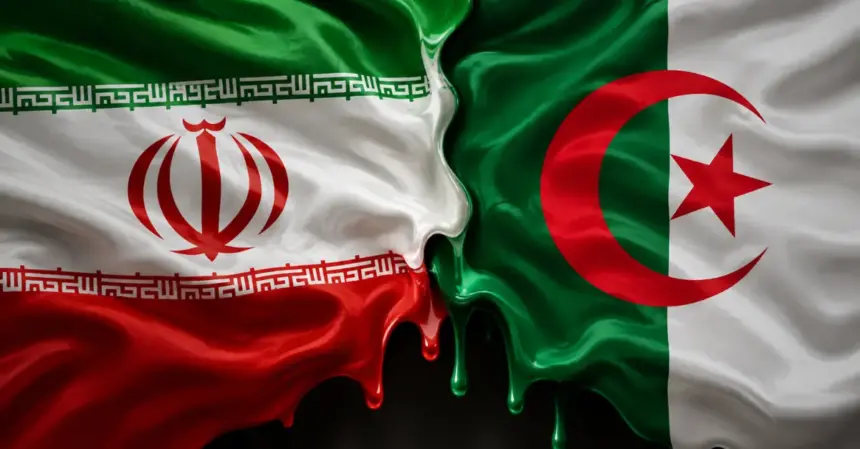
Officially, it was a technical stopover. But in diplomacy, context matters just as much as protocol. And the context is particularly unfavorable for Algiers.
At a time when Kuwait, Bahrain and other countries in the region are facing the consequences of the confrontation with Iran, seeing the Iranian president welcomed in an Arab capital with official honors inevitably carries a political message.
Algiers can explain that this was simply a diplomatic or logistical stop. Gulf capitals, however, are perfectly entitled to interpret it differently.
The problem with Algeria’s double standard
This is where the real problem lies.
Algeria regularly promotes a foreign policy based on state sovereignty, the defense of peoples and opposition to foreign interference. These principles occupy an important place in Algerian diplomatic rhetoric.
But when Arab states are directly confronted with Iranian strikes, the issue becomes more complicated.
Why display such proximity to Tehran while several Arab partners are bearing the military consequences of Iranian policy?
Algiers will likely respond by reaffirming its commitment to dialogue and an independent foreign policy. In principle, that is an entirely defensible position.
But it also reveals a contradiction: defending dialogue with Iran is one thing; projecting an image of closeness with its president while Arab countries are being bombed is another.
A coherent foreign policy is not judged solely by the principles it proclaims. It is also judged by how its actions are perceived by its partners.
An image that could leave lasting consequences
For Gulf governments, this sequence comes at a particularly sensitive moment.
The United Arab Emirates has officially condemned Iranian attacks targeting several countries in the region, notably Bahrain and Kuwait. Emirati authorities have denounced attacks against the sovereignty and security of the states concerned.
In this context, Pezeshkian’s reception in Algiers could be perceived as a lack of solidarity between Arab states.
It would be excessive to claim that every Arab capital views it as a “betrayal.” But it would be equally naive to assume that these images will have no diplomatic consequences.
Diplomacy is also a matter of trust.
When an Arab state is attacked and, at the same time, another Arab state welcomes the leader of the country held responsible for that attack, the question of regional solidarity inevitably arises.
Algiers risks isolating itself
This sequence could ultimately come at a cost for Algiers.
Algeria has long sought to maintain an autonomous foreign policy while preserving relations with actors as different as the United States, Iran, Russia and European countries.
This strategy can work as long as tensions remain manageable.
It becomes much more complicated when two partners enter into direct confrontation.
During a military crisis, the principle of “talking to everyone” can quickly be interpreted as a desire to choose no side, even when partners expect a clearer position.
For Algiers, the risk is therefore less an immediate rupture than a gradual erosion of trust with certain Arab capitals.
The paradox with Washington
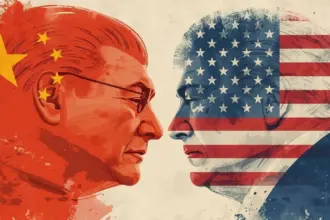
Another troubling element is that Algeria is simultaneously seeking to develop its relations with Washington.
On economic, energy and strategic issues, Algiers has an interest in maintaining a functional relationship with the United States.
But Washington is precisely one of Tehran’s main adversaries in the current crisis.
The message being sent therefore becomes difficult to read.
With the United States, Algiers is seeking closer ties and greater engagement. With Iran, it maintains a visible diplomatic relationship.
This balancing
act can be presented as an expression of an independent foreign policy. But it can also create the impression of a foreign policy applied differently depending on the interlocutor.
That perception could become increasingly problematic over time.
The Gulf is also watching the economic consequences
The potential economic consequences should not be underestimated.
The Gulf monarchies are major players in both the Arab and global economies. Saudi Arabia, the United Arab Emirates and Qatar have substantial financial resources and maintain significant economic relations with North Africa.
For Algeria, maintaining good relations with these countries is therefore not merely a matter of protocol.
Investment, energy, infrastructure, tourism, air transport and economic cooperation are all areas in which a deterioration in political trust could have indirect consequences.
This does not mean that a presidential stopover will automatically lead to sanctions or an economic rupture. There is no basis for such a conclusion.
But every diplomatic crisis can accumulate resentment, and states ultimately factor these signals into their decisions about cooperation.
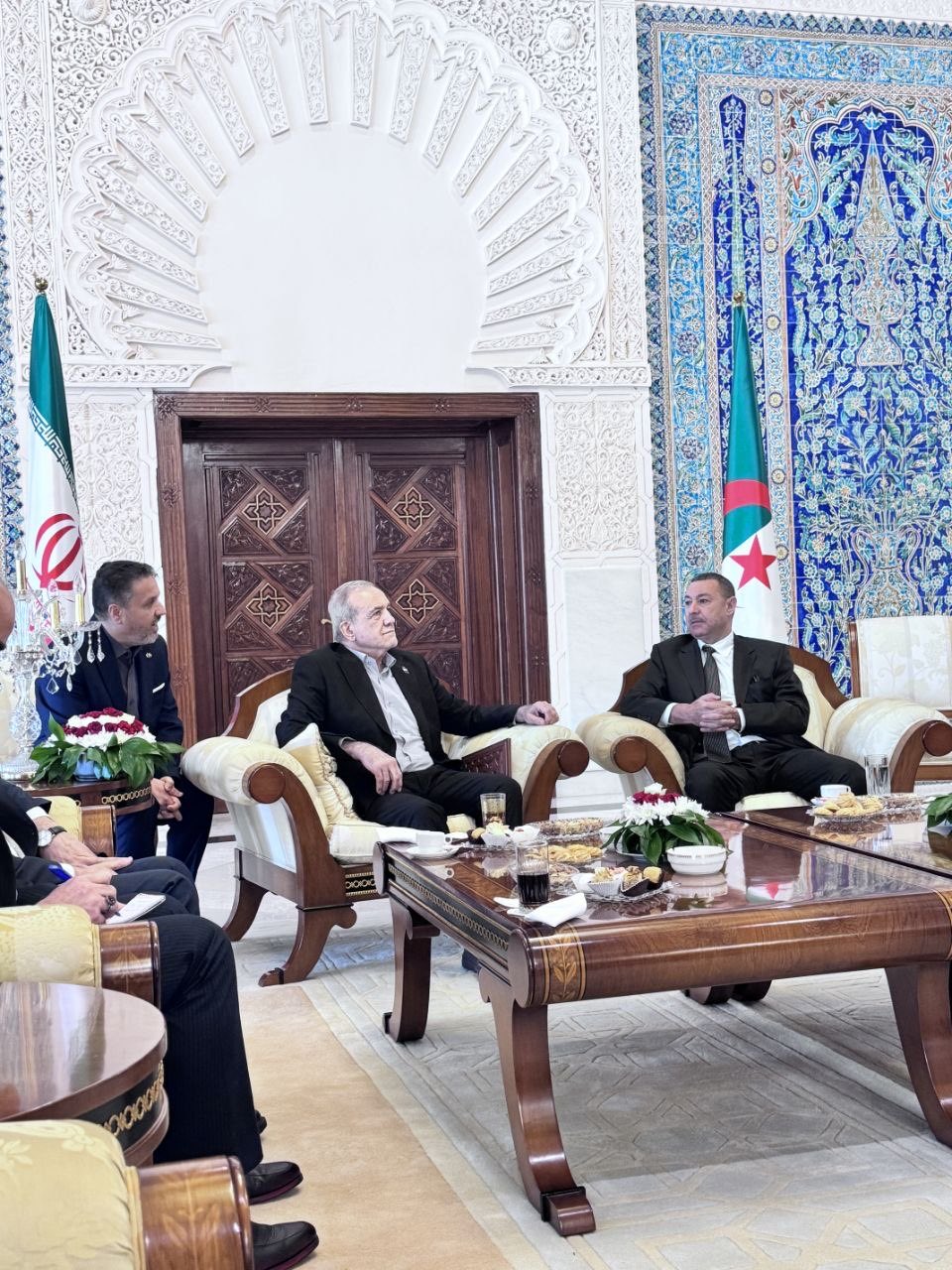
Algiers will have to bear the consequences of its choices
This episode alone is unlikely to trigger a rupture between Algiers and the Gulf capitals.
But it contributes to a broader perception of Algerian foreign policy.
By trying to maintain relations with everyone simultaneously, Algiers risks reaching a point where its partners feel that it does not genuinely share anyone’s concerns.
The issue, therefore, is not that Algiers talks to Tehran. The issue is the timing and the message being sent.
When Arab cities are being struck, when energy infrastructure and civilian populations in several countries are exposed to danger, and when the region is experiencing one of its most dangerous periods in years, officially welcoming the Iranian president is clearly not a diplomatically neutral gesture.
Algiers can invoke its sovereignty and its diplomatic independence.
But diplomatic independence also means accepting that other states will judge those choices and draw their own conclusions from them.
And this is probably where the image could prove costly for Algiers: not through immediate sanctions, but through a gradual loss of trust among Arab partners who, unlike Algeria, do not have the luxury of observing the Iranian crisis from a distance.
FAQ
Why is Pezeshkian’s reception in Algiers controversial?
Because it comes at a time when several Arab Gulf countries have been affected by Iranian attacks or attacks carried out by actors supported by Tehran.
Is this proof that Algeria supports Iranian attacks?
No. A diplomatic reception alone is not sufficient to establish support for Iranian military operations.
Why could the consequences be diplomatic?
Because Algeria’s Arab partners may interpret its visible proximity to Tehran as a lack of solidarity at a time when they are directly confronted with the Iranian threat.
What is the main risk for Algiers?
A gradual deterioration in trust with certain Arab capitals, particularly if Algiers continues to display proximity to Tehran while the conflict continues.