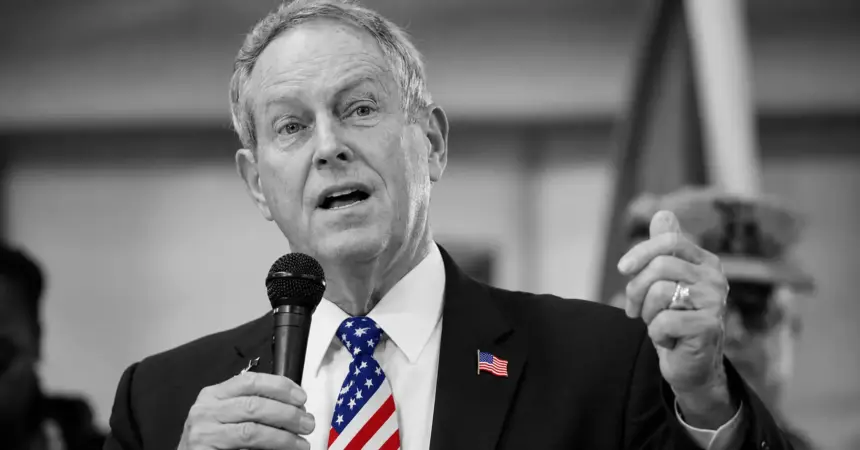
We have all been following, since the spring of 2025, the quiet but steady progress of a bill in the U.S. Congress. Introduced on June 24, 2025 by Republican Representative Joe Wilson (South Carolina) and Democrat Jimmy Panetta, H.R. 4119 — the Polisario Front Terrorist Designation Act — asks the Secretary of State to examine whether the Polisario Front meets the criteria of a Foreign Terrorist Organization (FTO).
The bill has not yet been voted on; it remains in committee. It has nevertheless gathered cosponsors, mostly Republican, and found a parallel echo in the Senate (notably an initiative by Ted Cruz) as well as a complementary House bill (H.R. 9982). In September 2026, after meeting Moroccan Foreign Minister Nasser Bourita in New York, Wilson publicly reaffirmed the need for this designation.
The issue is not a mere lobbying quarrel. It fits into a regional context in which the United States has, since the December 2020 proclamation, recognized Moroccan sovereignty over the whole of Western Sahara and regarded the 2007 autonomy plan as the only realistic basis for a settlement. At the Security Council, a U.S. draft resolution aimed at further anchoring this framework and changing the MINURSO mandate was met with a Russian veto on October 30, 2026; the mission’s mandate expired the next day without a formal renewal. Against this backdrop, the question of a possible terrorist designation of the Polisario is no longer merely symbolic.
What the bill says
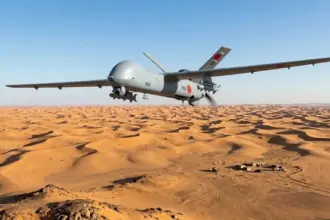
H.R. 4119 sets out several findings. It recalls the ideological and operational ties claimed with Iran since at least 1980, cites a Jeune Afrique report on the presence of Hezbollah trainers in Tindouf in 2018 (one of whom, sanctioned by the United States, had taken part in the 2007 Karbala attack), and draws on an April 2025 Washington Post article on drone training and supply. It also mentions the participation of the PKK’s Syrian branch in a summit held in the camps in January 2025.
The bill calls for a detailed report on the Polisario’s relations with Iran, Russia, Hezbollah, the IRGC and the PKK, as well as an analysis of possible attacks on civilian targets. It provides for a determination by the Secretary of State on the criteria for FTO designation and for sanctions under Executive Order 13224 and the Global Magnitsky Act. A waiver clause exists: the president could suspend the measures if the Polisario engaged in good faith in negotiations on the Moroccan autonomy plan.
These elements rest on open sources and statements that are already public. On their own, they do not amount to an executive decision. FTO designation ultimately rests with the Secretary of State, on the advice of the Treasury and the Department of Justice. Congress can guide, press and set conditions; it cannot decree. This is a point the bill’s own sponsors acknowledge.
Direct consequences for Algiers
An effective designation would not automatically lead to Algeria being classified as a “State Sponsor of Terrorism.” That status requires repeated, documented support for attacks targeting American interests. However, material support (weapons, funding, logistics, operational shelter) to an organization designated as an FTO exposes those responsible to secondary sanctions. Banks, insurers and service providers dealing in dollars or with American counterparties then tend to apply extreme caution.
Polisario officials would see their assets under U.S. jurisdiction frozen, their travel restricted and their international funding channels dried up. NGOs operating in the Tindouf camps would need to obtain OFAC licenses to continue certain activities.
For Algiers, this translates concretely into the risk of complications for financial flows linked to the camps, pressure on military supply chains and greater visibility of any equipment transfer. The report requested by H.R. 4119 on relations with Iran and Russia could, if made public in broad terms, fuel debates in Congress on additional measures, notably under CAATSA in the event of new significant purchases of Russian arms. Nothing is automatic; everything remains political. But the threshold of tolerance is shifting.
The Tindouf camps, where the Polisario exercises effective control under Algerian protection, would become an additional point of friction. The absence of a complete official census — UN planning estimates hover around 90,000 vulnerable people, whereas Algiers and the Polisario cite much higher figures — is already criticized. A terrorist designation would amplify calls for transparency, independent humanitarian oversight and control over aid flows, which European reports have in the past flagged as subject to diversion.
Indirect and strategic effects
Beyond sanctions, the main cost would be narrative and diplomatic. Openly supporting an organization labeled terrorist by Washington weakens Algeria’s position in the international forums where the Sahara issue is discussed. It complicates Algiers’ efforts to present the conflict as a pure matter of decolonization, particularly with African or European partners who have already moved toward the autonomy plan. Several African states have withdrawn their recognition of the SADR in recent years; a U.S. designation would accelerate this erosion.
On the bilateral front, U.S.–Algerian relations — already marked by differences over the Sahara, the Sahel and energy and military partnerships — would come under additional strain. According to reports, Algiers has tried to engage with some of the bill’s cosponsors. This effort shows that the matter is being taken seriously. At this stage, it has not made the bill’s promoters back down.
Strategically, the Polisario gives Algiers a lasting means of pressure on Morocco, a way of maintaining a dispute that ties up resources in Rabat and limits Moroccan projection toward West Africa. A forced reduction of this lever — through financial drying-up, diplomatic isolation or pressure toward demobilization — would alter the regional balance. Some analysts believe this could, paradoxically, push Algiers to seek an arrangement or, on the contrary, to harden its support for more radical factions, with risks of limited escalation. The choice remains in the hands of the Algerian authorities.
Finally, in the Sahel, where historical or personal links between former Polisario members and jihadist groups have been documented (without making the movement a jihadist organization), a designation would strengthen the security arguments of those who want to fold the Sahara issue into the fight against regional terrorism. This is not neutral for a country that presents itself as a key player in Sahelian stability.
Key points of H.R. 4119
- Introduced on June 24, 2025 by Wilson and Panetta; still in committee as of October 31, 2026.
- Calls for an FTO determination and a report on ties with Iran, Russia, Hezbollah and the PKK.
- Refers to open sources (Jeune Afrique, Washington Post) and documented episodes (Hezbollah trainers in 2018, drones).
- Waiver clause tied to good-faith negotiations on the 2007 Moroccan autonomy plan.
- Parallel bills in the Senate and House reinforcing the political signal.
FAQ
Is FTO designation automatic if the bill passes?
No. The bill asks the Secretary of State to make a determination. The final decision rests with the executive branch, based on the statutory criteria (8 U.S.C. § 1189).
Would Algeria automatically become a “State Sponsor of Terrorism”?
No. That status requires repeated support for attacks against U.S. interests. However, material support to an FTO can trigger secondary sanctions and financial complications.
What is the link with the Moroccan autonomy plan?
H.R. 4119 provides for a possible presidential waiver if the Polisario engages in good faith in negotiations on that plan.