

Headlines tend to go to the spectacular arms deals: fighter jets, helicopters, missiles. The contract I want to examine here is more discreet, yet I find it more revealing of the direction the Royal Armed Forces are taking. In May 2026, the Danish software company Systematic won a contract covering perpetual licences for its SitaWare command suite, training for collective exercises, and expert support, for the benefit of Morocco. The envelope comes to about $9.5 million. That is modest by defence-budget standards, but the nature of the purchase deserves a closer look.
What the contract says, and what it does not
According to information published by the Moroccan press, based on the US announcement, $8.5 million has been obligated, for a maximum value of $9.5 million, with performance scheduled through April 30, 2029. The contract falls under the US Foreign Military Sales (FMS) programme. Under this framework, the US government places the order with the manufacturer on behalf of the client country and oversees its execution.
I am deliberately sticking to what can be attributed. To my knowledge, the available documents do not specify the exact list of SitaWare modules ordered, the number of licences, or the units that will be equipped. A focus on land forces is consistent with the product’s historical purpose, but at this stage it is a reading of the context rather than an official detail. Rabat, true to its habits, has not commented on the acquisition.
The key points at a glance:
- Vendor and framework: Systematic, through the US FMS programme
- Award date: May 2026
- Amount: $8.5 million obligated, $9.5 million at most
- Scope: perpetual licences for the SitaWare suite, training for collective exercises, expert support
- Performance deadline: April 30, 2029
SitaWare, what are we talking about
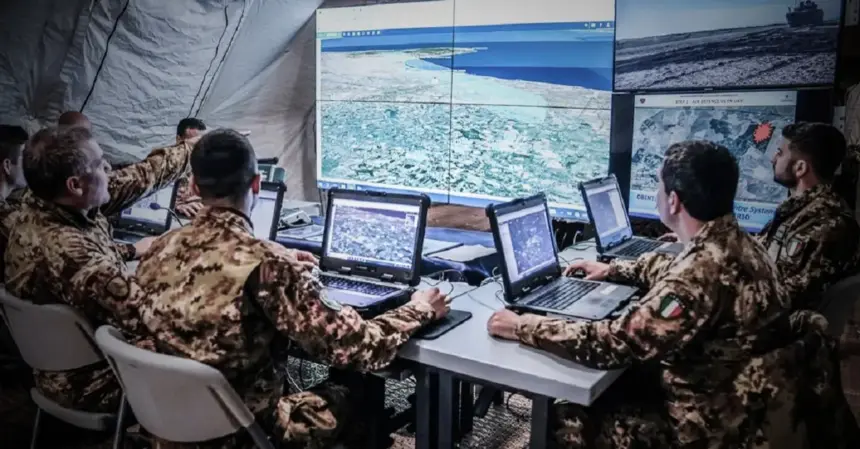
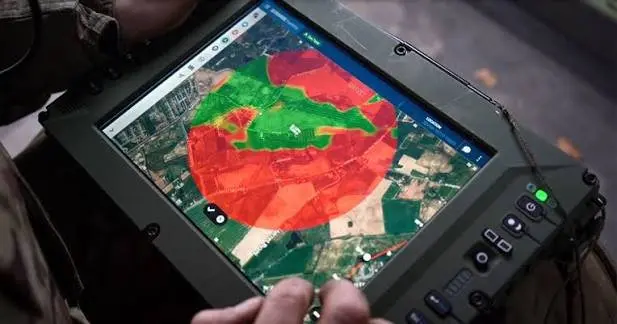
For the non-specialist reader, a word of explanation. C2, or C4ISR, refers to the systems that allow a headquarters to see, decide and transmit orders: command, control, communications, computers, intelligence, surveillance and reconnaissance. The BMS, for Battle Management System, is its tactical version. In practice, it is a “living map” of the battlefield, showing in real time the position of friendly units, information on the presumed adversary, orders and reports.
SitaWare, developed by Systematic, is one of the most widely used software packages in this category. According to the company and to statements from the Danish authorities, it is used in more than 45 countries, including the United States and Germany. The Danish army has used it since 2008. The suite includes SitaWare Headquarters, for command posts, SitaWare Frontline, for vehicles and deployed units, and SitaWare Edge, designed for dismounted soldiers and small teams. The US Army selected the solution as early as 2017 for certain command needs, which gave it considerable visibility among Western customers.
Why perpetual licences
The detail that interested me most is the perpetual licences. In military software, the subscription model is gaining ground because it guarantees continuous updates. A perpetual licence, by contrast, grants a right of use with no time limit on the version purchased. For a client state, the argument is twofold: more predictable budgeting, and less dependence on a renewal contract that could become a political lever.
The choice is not trivial for a country that, like Morocco, has for years sought to diversify its suppliers while deepening its partnership with Washington. A perpetual licence does not remove dependence, since maintenance and software evolution remain in the vendor’s hands, but it makes it less tight. One question the public documents do not settle is how much of the training and support will be transferred locally, and how much will still be provided by outside contractors through 2029.
A digital building block within a broader effort
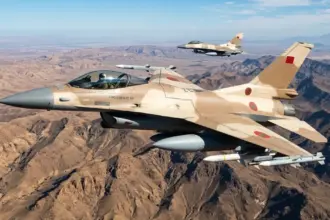
It would be misleading to read this purchase in isolation. In recent months, several US contracts have mentioned Morocco: support for its F-16 Block 72 fighters, training simulators for those aircraft, components for AIM-120 missiles, and radar-warning and electronic-warfare equipment for Apache helicopters. The overall logic is that of an army that complements the acquisition of platforms with what makes them effective: training, maintenance, interoperability and, now, digital command.
That, in my view, is the real stake. A tank or an armoured vehicle remains a limited tool if it is not part of a shared information chain. Morocco has already invested in US-origin communications and radio systems. The arrival of tactical command software fills a missing layer, the one that links sensors, units and headquarters. I remain cautious about the real scale of the deployment, because a contract worth under ten million dollars suggests a first step, perhaps a pilot scope or a foundation for one specific command, rather than a network covering the entire army.
Interoperability and strategic stakes
SitaWare’s main appeal lies in its compatibility with NATO information-exchange standards. Morocco is not a member of the Alliance, but it is a major non-NATO ally of the United States and regularly takes part in multinational exercises, including African Lion, held each year on its territory. Having a tool able to communicate with the systems of American and European partners makes planning and conducting these manoeuvres easier. The contract’s reference to training for collective exercises points in that direction.
At the regional level, the acquisition fits into a context of accelerated modernisation of the Maghreb armies and of a Moroccan effort that the authorities describe as defensive and aimed at professionalisation. Analysts differ on how to read it. Some see a classic capability catch-up, following the renewal of equipment. Others see a strengthening of deterrence in an environment where the rivalry with Algeria, itself rearming heavily, fuels a capability race. I have no evidence to settle the question, and the opacity of defence budgets in the region does not help.
Limits and grey areas
Three reservations seem necessary to me. The first concerns opacity: a commitment amount is not an operational scope, and without details on modules and quantities, any extrapolation remains fragile. The second concerns integration: command software creates value only if it is fed by compatible radios, networks and sensors, and if units actually use it. The experience of many armies shows that the difficulty is rarely the software, but its adoption by the teams. The third is cybersecurity: a system that centralises the tactical picture is a prime target, and its protection will depend on the network architecture chosen, which no public source describes.
An open conclusion
This $9.5 million contract will not make the headlines, but it signals a shift: the Moroccan army is investing in information as much as in hardware. It remains to be seen whether this building block will be followed by extensions, to other branches or to unit mobility and connectivity, and how Rabat will reconcile this software dependence with its ambitions for industrial autonomy, particularly around local production of equipment. I believe that will be the best indicator of how serious the effort is over the next three years.
FAQ
What is SitaWare?
It is a command-and-control software suite developed by the Danish group Systematic. It gives headquarters and units a shared picture of the tactical situation, and according to the company it is used in more than 45 countries.
How much did Morocco pay?
The contract shows $8.5 million obligated and a maximum value of about $9.5 million, with performance scheduled through April 30, 2029.
Why go through the FMS programme?
Under this framework, the US government buys on behalf of the client country and manages the contract, which provides a secure channel and structured support.
What do perpetual licences mean?
They grant a right of use with no time limit on the version acquired. Maintenance and upgrades may be covered by separate services.