


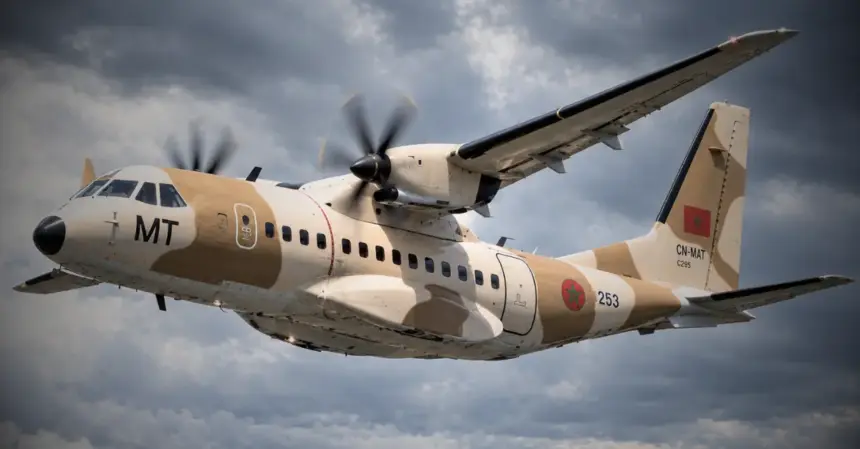
Le360, citing the FAR-Maroc forum, dates the landing to Tuesday, September 29. This C295W in Morocco closes a discreet saga that began on May 12, when the aircraft was spotted in Seville after its test flights, without a single official statement.
I’ll admit it: I did not see this contract coming. There was no announcement, no figure, no ceremony. The news came from aviation enthusiasts, then from specialized forums, well before any institutional channel. That way of proceeding already says something about how Rabat is managing the modernization of its military aviation.
What we know, and what we don’t
Let me start with caution, which is essential here. Rabat has communicated neither the price, nor the full delivery schedule, nor the number of aircraft. The most recent reports mention two or four aircraft, depending on the source. Morocco World News, relying on converging Spanish military sources, puts the minimum at two. Le360 adds that a second unit is expected. I therefore treat two aircraft as the floor, while leaving open the possibility of four.
Here is what is established at this stage:
- The first C295W was delivered to Morocco from the Airbus Defence and Space site in Seville, where all aircraft of this type are assembled
- It carries the registration CN-AMT and serial number 253
- It was received at Kenitra, according to Le360
- The total number of aircraft ordered (two or four) has not been officially confirmed
- The contract value and the schedule for later deliveries remain confidential
A larger, more capable CN-235
To understand this choice, one has to look at its lineage. The C295 is a direct evolution of the CASA CN-235, which the Royal Air Force has operated for decades. Airbus describes it as a twin-turboprop tactical transport aircraft. It is longer and more powerful than its predecessor. The W stands for winglets, the redesigned wingtips that reduce fuel consumption and improve performance in high heat and at altitude. For a country with scorching summers and pronounced terrain, these are not minor details.
The capabilities change markedly. The CN-235 carries 51 passengers or 35 paratroopers, while the C295W can carry up to 70 soldiers or 48 paratroopers. Morocco World News cites more than seven tonnes of cargo, while Le360 mentions nine tonnes. The gap probably reflects the configurations considered. The aircraft can also operate from short, unpaved runways and serve for medical evacuation or maritime patrol. This versatility matters for missions as varied as logistical support, paradrops or relief operations after natural disasters.
An aging transport fleet
The context interests me more than the aircraft itself. According to Morocco World News, Morocco’s transport fleet currently includes six CN-235s, four C-27J Spartans and fourteen C-130H Hercules. Abdelhamid Harifi, a military analyst and administrator of the FAR-Maroc forum, describes to Le360 a fleet that is getting older. The most recent arrivals, the C-27Js, already have about fifteen years of service, and both the C-130s and the CN-235s have logged many flight hours. Renewal, he says, is a priority.
Two timelines need to be distinguished, however. The C295W is meant to eventually succeed the CN-235. Mr. Harifi specifies that this replacement will happen logically, but “not immediately.” The C-130s follow a different logic.
The C-130s and the question of their successor
This is probably the most strategic piece of information in this affair. According to reports in circulation, another aircraft model is to be introduced to replace the oldest C-130s. The name of that aircraft has not been officially confirmed. Bladi.net has mentioned, without further detail in the material I was able to consult, the expected acquisition of KC-390 Millennium tactical transport aircraft. I therefore present it as a lead reported in the press, not as a settled choice.
This replacement fits into a long timeline. Le360 recalls that Morocco signed a contract with the American company L3Harris to extend the service life of its C-130s, including a technology transfer, running until around 2040. Replacement orders remain envisaged from 2030 onward, in small numbers and spread over time, so as to avoid any loss of operational capability, according to the analyst cited.
The C295W is therefore not the successor to the Hercules. I read it rather as a complement to the range: lighter and cheaper to operate, taking on lower-scale tactical missions and leaving heavier aircraft to carry large loads over longer distances.
The industrial and diplomatic equation
Two dimensions matter more, in my view, than the number of aircraft.
The first is industrial. Mr. Harifi points out that some parts of the C295 are manufactured in Morocco, within the aerospace ecosystem the kingdom has built up in recent years. Buying an aircraft part of which is produced locally strengthens an existing value chain and eases, in time, maintenance on Moroccan soil. The same analyst also mentions a possible cooperation with India for the local production of aircraft, though nothing has been finalized at this stage.
The second is diplomatic. Morocco World News places this order within the rapprochement between Rabat and Madrid, which has led to several purchases of Spanish military equipment, including a Spanish-built warship for the Royal Navy. Choosing an aircraft assembled in Seville therefore consolidates a fast-growing defense partnership across the Strait.
What remains to be clarified
Several points will determine the real scope of this contract: the final number of aircraft, the value and pace of subsequent deliveries, the share Moroccan industry will take in maintenance, and the identity of the future aircraft meant to replace the oldest C-130s.
What I take from this episode is that the modernization of Moroccan military aviation moves forward in successive steps, often without prior announcement. It is specialized observers who reveal each stage, before the authorities confirm or choose to stay silent. This discretion is nothing unusual in defense matters, but it requires a careful distinction between confirmed information and rumor, which is precisely what I have tried to do here.
FAQ
How many C295Ws has Morocco ordered?
No official figure has been released. Available information mentions two or four aircraft. Two appears to be the best-supported minimum, but nothing is confirmed.
Does the C295W replace the C-130 Hercules?
No. It will eventually succeed the CN-235. Another aircraft model is to be introduced to replace the oldest C-130s, with replacement orders envisaged from 2030.
What is the difference between the CN-235 and the C295W?
The C295W is longer, more powerful and fitted with winglets. It carries up to 70 soldiers, compared with 51 passengers for the CN-235, and uses less fuel.
Where was the first aircraft delivered?
It was received at the Third Air Base in Kenitra, according to Le360, at the end of September 2026, after being assembled in Seville.










The distinction between the C295W and the C-130 replacement is particularly interesting, especially the idea of building a transport fleet with different aircraft for different missions. The article also does a good job of separating confirmed information from reports that remain unverified, which is important when discussing milit