With less than four years to go before the 2030 World Cup, co-hosted with Spain and Portugal, the event brings together investors, hotel chains, developers and financing institutions around one simple question: how can a peak of attention be turned into lasting capacity?
An event rooted in the 2030 preparations
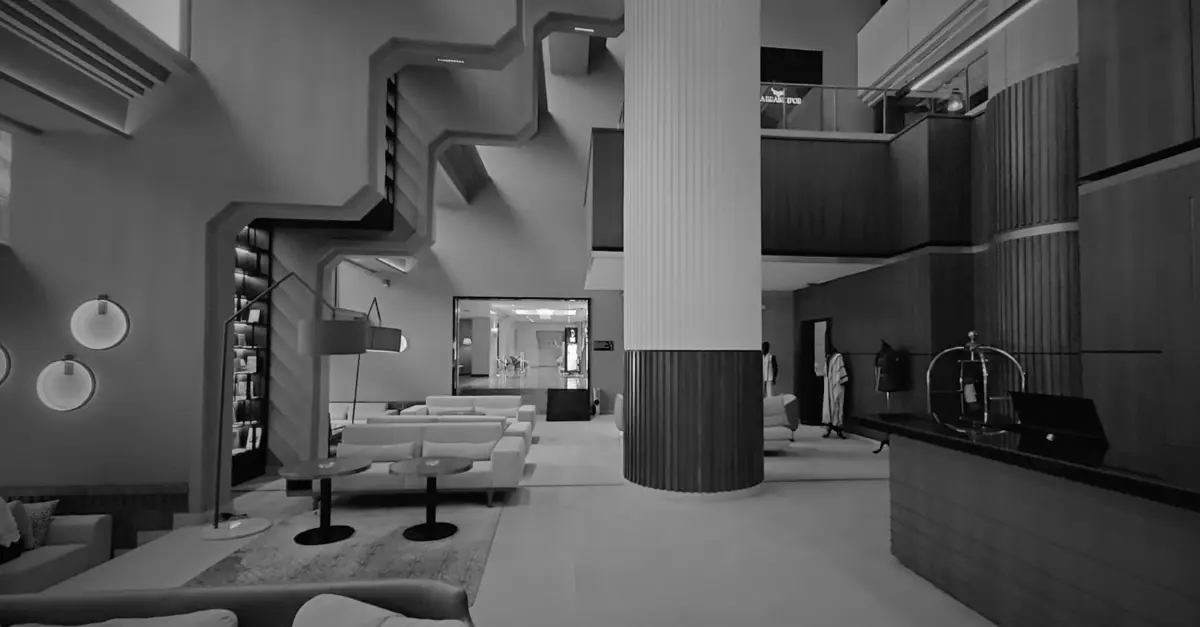
Organized by API Events, with the Moroccan Society for Tourism Engineering (SMIT) as institutional partner for investment, the event takes place at the Marriott hotel in Casablanca. It is held in French and English and aims to attract more than 300 participants from around fifteen countries. The program includes sessions on occupancy rates and room prices, the expansion of local and international operators, capital structures, mixed-use projects, logistics demand along the Tangier-Mediterranean axis and special economic zones. To close, Casablanca, Tangier, Marrakech and Rabat present their available land, prices and suitable asset types. The day ends with a gala dinner and the Morocco Showcase Awards, in the categories of hospitality, commercial and residential real estate, sustainable development and innovation.
This format is not new, but its timing is. The organizers and speakers draw on an already documented context: the Ministry of Tourism plans to add 60,000 hotel beds by 2030, roughly one fifth of current capacity (just over 300,000 beds, after 45,000 were added in recent years). At the same time, the government is investing more than 190 billion dirhams in rail, road and airport infrastructure, stadiums and urban development.
The figures shaping the market
Public data makes it possible to gauge the scale without overstating it.
- W Hospitality Group’s 2026 report on hotel chain development pipelines in Africa ranks Morocco second on the continent, with 75 projects representing 10,606 rooms. Around 70% of these rooms are expected to open in 2026 and 2027.
- In 2025, Morocco welcomed 19.8 million visitors. The official target is 26 million by 2030. As of September 30, 2026, arrivals had reached 15.7 million (+5% year on year) and overnight stays in classified establishments exceeded 34.8 million (+7%).
- According to the High Commission for Planning (HCP), tourism accounted for 7.5% of GDP in 2025 (129.7 billion dirhams of tourism GDP), up from 7.2% the previous year.
- Radisson Hotel Group, present with a portfolio of around 11 hotels, aims to reach 30 properties in Morocco by 2030. Erwan Garnier, associate vice-president development Africa, stated that infrastructure investment and the national tourism ambition support development opportunities, working with owners to choose the right brand and operating model for each site.
These elements are attributed to their respective sources (Ministry of Tourism via Reuters, W Hospitality Group, HCP, Radisson statements). They point to a real acceleration, but also to a possible gap between project signings and actual openings.
International operators and capital on the move
Hotel chains are not the only ones making moves. Since 2025, Risma has completed two acquisitions for a combined amount of around $67 million (land on the Tangier Corniche and CMG, owner of the Radisson Blu Marrakech Carré Eden and its shopping center). The group has also sold the Sofitel Casablanca Tour Blanche. On the funds side, Kasada Capital Management, backed by the Qatar Investment Authority and partnered with Accor, was selected by the Mohammed VI Investment Fund to manage a tourism vehicle. The company has opened an office in Casablanca and announced its first transactions for 2026, targeting Casablanca, Marrakech, Agadir and Tangier in particular.
Murray Anderson, commercial director of API Events, pointed to growing engagement from international capital, in particular Gulf sovereign wealth funds and development finance institutions. The forum’s sessions also look at how some Moroccan family offices are shifting from direct development to co-investment and funds, and at the conditions needed to convert diaspora interest into concrete commitments.
On the operators’ side, the logic is not purely quantitative. Garnier and other players stress adapting brands and formats (business, lifestyle, residences, resorts) to the specifics of each city rather than uniform replication. Recent Radisson projects in Casablanca (Gauthier, Anfa, Finance City) illustrate this approach.
Beyond the event, what is really at stake
The main issue is not the number of announced beds, but the quality and distribution of the offering, and the ability to sustain occupancy rates and returns after 2030. Tourism Minister Fatim-Zahra Ammor described the World Cup as an accelerator rather than an end in itself, insisting on investments that create lasting value. The Morocco Showcase discussions on mixed-use projects, logistics real estate and special economic zones reflect a desire to broaden the scope beyond purely tourist accommodation.
Questions remain open. A significant part of the W Hospitality Group pipeline is due to materialize in 2026-2027; the actual pace of delivery, construction costs and the availability of skilled labor will determine the results. The historical concentration on Marrakech and Casablanca is starting to spread (Rabat, Tangier, Agadir, Fez), but the depth of demand in secondary destinations will also depend on air connectivity and local infrastructure. Finally, mobilizing domestic savings and the diaspora, mentioned in the program, depends on the liquidity of the vehicles offered and on confidence in fund governance.
FAQ
When and where is the Morocco Showcase 2026 held?
On November 26, 2026 at the Marriott hotel in Casablanca, organized by API Events with SMIT as institutional partner.
How many additional beds does Morocco plan to add by 2030?
The Ministry of Tourism has announced a target of 60,000 additional hotel beds, or about 20% of current capacity.
Where does Morocco rank in the African hotel pipeline?
According to W Hospitality Group’s 2026 report, Morocco is second in Africa with 75 projects and 10,606 rooms, behind Egypt.
What is Morocco’s tourism target for 2030?
26 million visitors, compared with 19.8 million in 2025.