


What’s slowing down isn’t our capacity to create, it’s our capacity to produce ruptures as radical as electricity, aviation, or the internet. I’ve been watching this sector for years, between daily tech monitoring and conversations with engineers, researchers, and investors, and I can tell you one thing: the debate between “we’ve already invented everything” and “we haven’t seen anything yet” has rarely been this heated.
This piece separates fact from fiction, with recent data, concrete examples, and a clear-eyed take on what’s actually coming next.
The myth of the technological ceiling
The idea that humanity has run out of big ideas keeps resurfacing, and it isn’t new. Back in the late 19th century, some physicists believed physics itself was essentially finished, right before relativity and quantum mechanics turned everything upside down. This cognitive bias even has a name in economic circles: the illusion of technological end-of-history, the tendency to mistake the present moment for a final destination rather than a waypoint.
Macroeconomic data tells a more nuanced story, though. Several economic studies, including work relayed by France’s central bank, document a stepwise slowdown in productivity growth across advanced economies since the 1970s, particularly in Europe. This finding feeds an ongoing debate between “techno-pessimists,” who point to the exhaustion of gains from information technologies, and “techno-optimists,” who bet on AI’s exponential capabilities to jump-start the engine again.
Researchers have also shown that the pace of scientific progress has slowed across surprisingly varied fields, from crop yields to life expectancy to Moore’s law, despite patent output continuing to climb. Part of the paradox comes down to team size: larger research teams, now the norm, tend to produce more incremental science than genuinely disruptive science, unlike the smaller teams that historically drove bigger upheavals.
Why innovation feels slower even as it accelerates
There’s a simple explanation for this contradictory feeling: we confuse speed of diffusion with depth of rupture. A smartphone that gains 20% more computing power every year creates an impression of fast, continuous progress, when really it’s just incremental optimization of an invention that’s already mature.
Real ruptures, by contrast, are rare and take decades to bear fruit. Generative AI is the perfect example: its theoretical foundations date back to the 1980s and 1990s, but it took the massive computing power of modern GPUs and unprecedented volumes of data for it to explode into public view.
In 2026, this dynamic plays out very concretely:
- Autonomous AI agents, capable of executing complex tasks without constant supervision, are becoming the norm inside tech companies, according to the latest trend reports from firms like Capgemini.
- Quantum computing is gradually stepping out of the lab and into targeted industrial use cases, particularly in cryptography and molecular simulation.
- Edge computing and sovereign cloud infrastructure are redrawing the very architecture of the internet, bringing computation closer to users instead of distant data centers.
- Moore’s law, slowed but not dead, is finding a second wind through the “More than Moore” approach, which relies on 3D chip stacking rather than miniaturization alone.
These advances don’t look like a single, spectacular invention the way the lightbulb did. They look like a quiet accumulation of technological building blocks that, stacked together, are reshaping our societies almost without us noticing.
What artificial intelligence really changes in the equation
It’s hard to talk about a technological ceiling without dwelling on AI, since it alone concentrates every fantasy of the moment. Some see it as ultimate proof that progress is accelerating exponentially and uncontrollably. Others, more cautious, note that raw model power alone doesn’t generate genuinely new scientific discoveries, and that automating code or writing isn’t the same as a Kuhnian paradigm shift.
My own take, after following several hype cycles up close, is that generative AI is less an invention in its own right than a speed multiplier for every other kind of innovation. It shortens research cycles in chemistry, speeds up new material design, and optimizes entire supply chains. It’s a tool that makes the rest of progress move faster, rather than an isolated breakthrough comparable to the discovery of penicillin.
That nuance changes everything about how we should frame the question of a technological summit. If AI acts as a cross-cutting accelerator, then the overall pace of innovation could paradoxically pick back up in the coming years, after decades of structural productivity slowdown.
The real limits aren’t technical
This is probably the most underestimated point in the whole debate: what’s actually holding back technological progress today is almost never scientific in nature. The real bottlenecks lie elsewhere, and they’re far harder to remove than a simple equation.
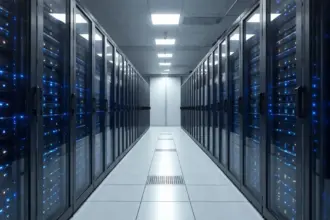
Energy is a striking example. The data centers powering large AI models consume staggering amounts of electricity, to the point that their expansion is now bumping up against the capacity of national power grids. Building ever more powerful technological systems comes with a rising energy cost, and that physical constraint increasingly weighs on innovation’s trajectory.
Social tolerance for risk also plays a central role. Our contemporary societies tolerate failure and accidents far less than in the era of the space race, when losing lives was accepted as the price of moving faster. That aversion to risk, legitimate in many respects, mechanically slows the rollout of disruptive technologies like next-generation nuclear power, autonomous vehicles, or certain biotechnologies.
Finally, regulation increasingly shapes the playing field for innovation. The progressive rollout of frameworks like the European AI Act illustrates this tension well, between the need to protect citizens and the desire not to hamper technological competitiveness against the United States and China.
What history teaches us about false endings
Every generation has, at some point, believed it had reached the limits of what was technically possible. 19th-century engineers thought the steam train was unbeatable. Experts in the 1970s considered the personal computer useless for the general public. These misjudgments share a common thread: they systematically underestimate humanity’s ability to recombine existing technologies into entirely new uses.
Nothing suggests 2026 escapes that rule. Today’s technological building blocks, taken separately, sometimes look almost trivial. Combined with one another, they could produce transformations nobody clearly anticipates yet, much the way the smartphone emerged from the unlikely convergence of mobile telephony, the internet, touch sensors, and battery miniaturization.
My take as an industry observer
Having covered tech news through several cycles of euphoria and disillusionment, I remain convinced that the idea of a definitive summit owes more to journalistic fantasy than industrial reality. What I actually see on the ground is more of a change in nature: fewer spectacular, isolated ruptures, and more convergence between disciplines that used to be siloed, like synthetic biology, AI, and materials science.
The real risk, in my view, isn’t that innovation stops, but that it concentrates in the hands of a very small number of players able to finance the necessary infrastructure, whether giant data centers or quantum computing capacity. That’s where the next technological decade will really be decided, more than on the purely scientific front.
FAQ
Is technological progress actually slowing down?
Productivity indicators show a structural slowdown since the 1970s across advanced economies, but the diffusion of new building blocks like generative AI and quantum computing could reignite the pace in coming years.
Why don’t we see inventions as significant as the internet or electricity anymore?
Those inventions benefited from a radical novelty effect on societies that were still barely technologized. Today, innovation plays out more through combining existing technologies than through isolated ruptures.
Can artificial intelligence revive technological progress on its own?
It mainly acts as a cross-cutting accelerator for research in other fields, rather than as a standalone rupture comparable to the great inventions of the past.
What are the main limits on technological progress today?
Energy constraints tied to data centers, social risk aversion, and regulatory frameworks, particularly in Europe, now weigh as heavily as purely scientific challenges.